How to Safely Use Brake Cleaner on Guns
If you own guns, keeping them clean and well-maintained can sometimes feel like a daunting task. Many shooters worry about damaging their firearm’s finish or risking their health with harsh chemicals. You’re not alone—proper cleaning methods matter, especially when using products like brake cleaner.
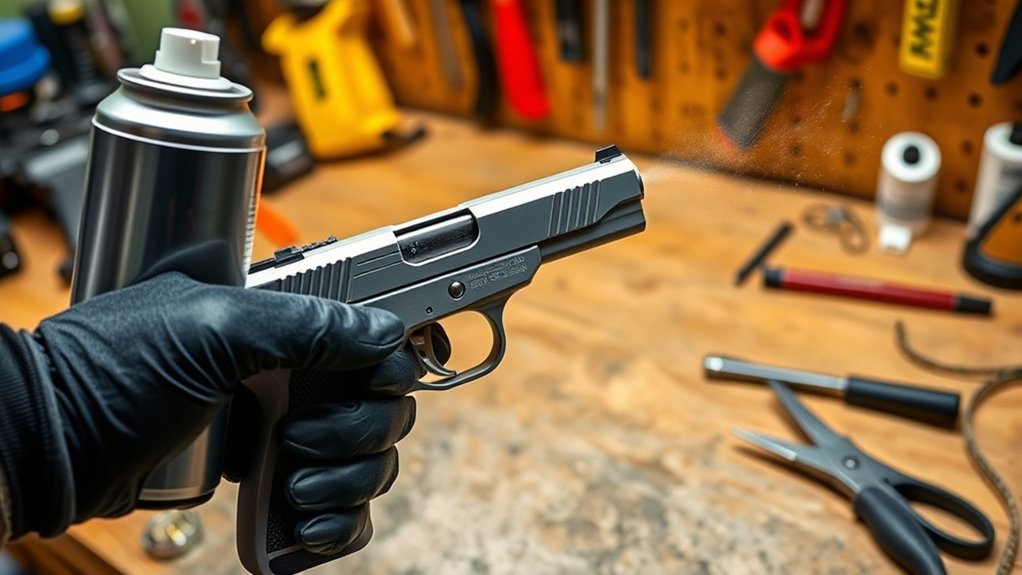
To safely use brake cleaner on guns, first make sure your firearm is unloaded and disassembled in a well-ventilated area. Wear protective gloves, goggles, and a mask, and avoid spraying on plastics or rubber parts.
Apply the cleaner generously to remove grime, then scrub gently with brushes or cloths. Dry all parts thoroughly and apply light lubrication before reassembling.
Following these safety tips helps protect your gun’s finish and your health—continue for more detailed guidance.
Key Takeaways
- Make sure your firearm is unloaded and disassembled before you start applying brake cleaner.
- Work in a well-ventilated area, and wear protective gloves, goggles, and a respirator mask for safety.
- Test the brake cleaner on a small, hidden spot to see if it damages the finish or any materials.
- Spray the brake cleaner generously, then use brushes or cloths to gently scrub away any buildup.
- Before reassembling, dry all parts thoroughly and apply lubricant sparingly to prevent rust.
Why Brake Cleaner Can Be Effective for Gun Cleaning
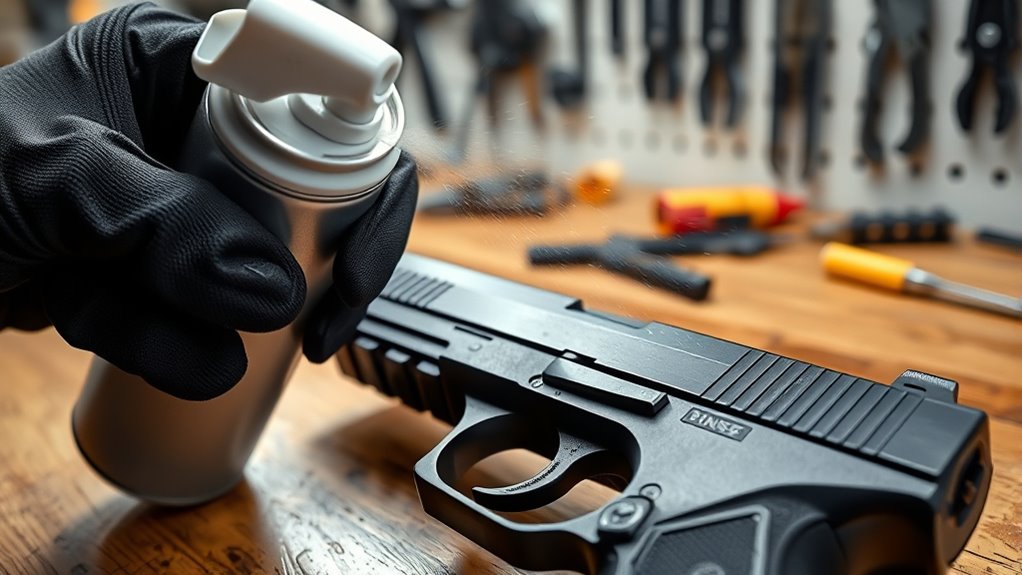
While brake cleaner isn’t specifically made for guns, it can be pretty effective for cleaning firearm parts because of its strong solvent properties. It quickly dissolves grease, carbon buildup, and grime, making it a popular choice for gun cleaning.
If you’re looking for alternatives to traditional gun cleaners, brake cleaner might be handy since it removes stubborn residue efficiently. Just keep in mind, safety always comes first when cleaning guns—using a harsh chemical solvent can cause damage if you’re not careful.
Brake cleaner evaporates quickly, which means it leaves behind minimal residue. This helps your firearm stay clean and dry after cleaning. Its strength can make cleaning heavily soiled parts much easier and faster.
However, not all brake cleaners are suitable for guns. Some contain chemicals that could harm the finish or internal components. Knowing which products are safe and understanding how brake cleaner works explains why it can be a powerful tool, but also a risky one, when cleaning firearms.
Safety Precautions Before Using Brake Cleaner on Your Firearm
Before you reach for brake cleaner to clean your firearm, it’s essential to prioritize safety. First, make sure your firearm is unloaded and properly disassembled. Double-check the chamber and magazine to confirm there’s no ammunition present.
Store all ammunition separately in a safe place, away from your cleaning area, to prevent any accidental discharge. Ensure you’re working in a well-ventilated space to avoid inhaling fumes, as brake cleaner contains harsh chemicals.
Wear protective gloves and safety goggles to shield your skin and eyes from potential splashes or vapors. Keep flammable objects away from your cleaning area because brake cleaner is highly combustible.
Never try to clean your firearm near heat or open flames. Also, make sure your firearm storage area is secure and out of reach of children or anyone else who shouldn’t be handling it.
Following these precautions will keep you safe while you’re preparing to clean your gun effectively.
Choosing the Right Brake Cleaner for Firearm Maintenance
When you’re choosing a brake cleaner for your firearm, it’s really important to look at what’s actually in it. You want to make sure it’s safe to use on guns, so checking the chemical makeup is a good first step.
Also, don’t forget to see if the cleaner is compatible with your firearm’s finish. Some cleaners can be harsh and may damage paint, bluing, or other coatings. Picking the right product means your gun stays clean and in good shape without risking any wear or corrosion.
Chemical Composition and Safety
Choosing the right brake cleaner for firearm maintenance means understanding its chemical makeup and safety features. Many contain chemicals like chlorinated or petroleum-based solvents, which can be hazardous if mishandled.
Look for products labeled as non-chlorinated or citrus-based for a safer experience. Always follow safety guidelines—wear gloves, goggles, and work in well-ventilated areas to protect yourself from harmful vapors and skin contact.
Check the product’s MSDS for detailed hazard information and proper handling instructions. Avoid inhaling fumes, and never ingest or let it touch your skin or eyes. Choosing a safer chemical formula reduces risks and makes firearm cleaning safer and more effective.
Compatibility With Firearm Finishes
Selecting a brake cleaner that is compatible with your firearm’s finishes is key to preventing damage during cleaning. Different finishes like bluing, anodizing, or parkerizing react differently to chemicals.
Compatibility issues happen when the cleaner’s ingredients dissolve or dull the finish, which can lead to costly repairs. To avoid this, pick a product labeled as safe for firearms or specifically for your finish type.
Check the labels for firearm-specific formulations and always test on a small, hidden area first. Avoid harsh solvents if your finish is fragile and opt for brake cleaners with minimal corrosive ingredients.
Set Up a Safe Workspace for Gun Cleaning
Setting up a safe workspace is essential before you start cleaning your guns with brake cleaner. First, choose a well-ventilated area to avoid inhaling fumes. Clear the space of clutter and unnecessary items to prevent accidents.
Designate a specific spot for gun storage away from children or pets, making sure firearms are secure and safe. Gather all your cleaning accessories like brushes, rags, gloves, and safety glasses so everything is within reach.
Use a sturdy work surface that won’t easily tip or get damaged from chemicals. Keep brake cleaner bottles upright, away from heat sources, and properly labeled. Remember to avoid working over carpet or upholstery to prevent staining from spills.
Disassemble Your Firearm Safely Before Cleaning
Before you start disassembling your firearm, be sure to follow all the safety precautions. It’s really important to prevent any accidents from happening while you’re cleaning your gun. Make sure you’re in a safe, well-lit area and that the firearm is unloaded before you begin.
When it’s time to take the gun apart, use the right tools and handle each part carefully. This helps avoid any damage and keeps everything in good condition. If you’re unsure about any step, don’t hesitate to look up instructions or ask for guidance.
Taking these simple steps makes sure you can clean your firearm safely and effectively, keeping it in great shape for your next use.
Ensure Proper Safety Measures
Have you guaranteed your firearm is completely safe to handle before starting to clean it? Ensuring proper safety measures is essential to prevent accidents and exposure to chemical hazards.
Prioritize firearm safety by confirming the firearm is unloaded and the magazine removed. Always wear safety glasses and gloves to protect against chemical splashes or fumes.
Never handle cleaning chemicals near open flames or heat sources. Keep your workspace well-ventilated to reduce inhalation of fumes.
Moreover, store brake cleaner and other chemicals in labeled containers away from children and pets. By taking these precautions, you minimize risk and maintain a safe environment during firearm cleaning.
Use Appropriate Tools
Disassembling your firearm correctly is key for thorough cleaning and safety. Using the right tools makes gun cleaning more effective and helps prevent damage.
Before you apply brake cleaner, carefully disassemble your gun following the manufacturer’s instructions. Use appropriate screwdrivers and punches to avoid stripping screws or scratching metal surfaces.
Keep small parts organized so you don’t lose any components. Proper disassembly exposes all the nooks and crannies that need cleaning. This allows brake cleaner to reach areas where dirt, carbon, and residue hide.
Avoid makeshift tools that could cause damage. A well-practiced disassembly ensures you can clean every part thoroughly and reassemble your firearm safely, keeping it functional and safe.
How to Use Brake Cleaner Without Damaging Your Gun
While brake cleaner is great for removing grime and grease, using it on guns needs some care to avoid damage.
Brake cleaner works well but use sparingly on guns to prevent damage and preserve functionality.
Try not to overuse it—clean only when necessary to help prevent unnecessary wear on your firearm.
After cleaning, store your gun in a dry, cool spot to help keep corrosion at bay.
Always use brake cleaner in a well-ventilated area so you don’t inhale too many fumes.
Use only small amounts and keep the cleaner away from sensitive parts like rubber or plastic to prevent damage.
Tips for Removing Stubborn Grime and Residue
When you’re dealing with stubborn grime and residue, it’s really important to protect yourself first. Wearing the right protective gear, like gloves and maybe even glasses, helps keep you safe while you’re cleaning.
Next, focus on using the proper cleaning techniques. Instead of harsh scrubbing, go for gentle, consistent motions—this way, you won’t accidentally damage your gun’s finish. And when it comes to cleaning products, pick ones that are effective at breaking down grime but gentle enough so they don’t harm your firearm.
Use Proper Protective Gear
Before you start using brake cleaner on your gun, it’s really important to wear the right protective gear. This helps keep you safe from harmful chemicals and tough grime.
Protective clothing keeps your skin protected from splashes, and eye safety is crucial to prevent chemical irritation or injury. Always make sure to wear gloves and long sleeves, and don’t forget safety goggles.
Key protective gear includes chemical-resistant gloves, safety goggles or glasses, a long-sleeved shirt or protective suit, and a respirator mask for fumes.
Wearing the proper gear reduces health risks and allows you to focus on cleaning effectively. Never overlook the importance of protective clothing and eye safety when working with brake cleaner, especially on stubborn grime. Staying safe is the top priority.
Apply Correct Cleaning Techniques
To effectively remove stubborn grime and residue with brake cleaner, you need to apply the right cleaning techniques. Start by making sure the firearm is disassembled if needed, and hold it in a well-ventilated area.
Spray the brake cleaner generously on the surfaces, focusing on heavily fouled areas like the barrel and action. Use a clean brush or cloth to scrub away grime, being careful not to force debris into the barrel.
Regularly inspect the barrel during cleaning to check for any buildup or corrosion. Proper cleaning helps prevent rust, which can weaken your firearm’s integrity.
After cleaning, wipe down all parts thoroughly and let everything dry completely. These techniques maximize rust prevention and ensure residues are thoroughly removed, keeping your gun’s performance in top shape.
Choose Suitable Cleaning Products
Have you chosen the right cleaning products for your firearm to effectively tackle stubborn grime and residue? Picking suitable cleaning solutions is key to staying safe and keeping your firearm looking good.
Use cleaning products made specifically for firearms or safe options like brake cleaner, but always double-check if they’re compatible. Consider these tips:
- Avoid harsh chemicals that can damage gun finishes or be dangerous to handle.
- Check labels to make sure the product is suitable for firearms.
- Test in small, hidden areas first to see if it causes any damage.
- Use non-abrasive tools to prevent scratching or other harm.
Choosing the right products makes cleaning more effective and protects your firearm’s look. Using the wrong ones can cause residue buildup or even corrosion. Always prioritize products that remove tough grime without damaging your gun’s finish or function.
Dry and Lubricate Your Gun After Cleaning
Once you’ve finished cleaning your gun, make sure to thoroughly dry all parts to prevent rust and corrosion. Proper drying is key before moving on to lubrication.
Using the right gun oil is essential. Apply it sparingly to moving parts and metal surfaces to keep everything running smoothly.
Use a clean cloth or microfiber towel to absorb any excess moisture and wipe away leftover cleaner residue. Effective drying can be done with air drying or a soft, lint-free cloth for quicker results.
Be sure to reach all crevices and tight spaces when drying and lubricating. Avoid over-application to prevent buildup.
After applying oil, slide the parts back into place and gently cycle the action to spread the lubricant evenly.
Proper drying and lubrication will help keep your gun reliable and protected for future use.
Common Mistakes to Avoid When Using Brake Cleaner on Guns
Using brake cleaner on guns can be effective, but many shooters make common mistakes that can damage their firearm or compromise safety. One mistake is overusing it instead of trying other cleaning methods, which should be reserved for heavy grime, not routine maintenance.
Using brake cleaner for guns is effective but should be reserved for heavy grime, not routine maintenance.
You also want to be careful about ventilation. Ignoring proper airflow can lead to inhaling harmful fumes, which isn’t good for your health. Always use it in a well-ventilated area.
Applying brake cleaner directly on delicate parts like plastic or rubber components can cause damage or deterioration. Be cautious about where you spray it.
Skipping thorough drying afterward is another mistake. Residue or moisture left behind can lead to corrosion and affect your gun’s performance over time.
It’s important to understand when brake cleaner is appropriate and when safer, alternative cleaning methods are better options. Follow manufacturer instructions carefully.
Best Practices for Post-Cleaning Maintenance and Safety
After cleaning your firearm, focusing on proper post-cleaning maintenance and safety techniques helps guarantee it stays in top condition and remains safe to operate. First, verify all cleaning residues, like brake cleaner, are completely wiped away to prevent corrosion.
Regularly check your gun’s moving parts and lubricate them as recommended to maintain smooth operation. This helps with firearm calibration and keeps your gun accurate and reliable.
Always perform a safety check before handling or firing again. Confirm the safety is engaged and the chamber is clear. Store your firearm in a safe, dry place away from unauthorized users.
Remember, good gun safety practices include inspecting your firearm regularly and practicing safe handling at all times. Proper maintenance not only prolongs your firearm’s lifespan but also guarantees safety and precision during use.
Incorporate these habits into your routine for peak performance and peace of mind.
Frequently Asked Questions
Can Brake Cleaner Damage All Types of Firearm Finishes?
Brake cleaner can damage some firearm finishes, especially if they aren’t compatible. You need to consider finish compatibility before using it, because certain coatings like blued, anodized, or painted surfaces can discolor or deteriorate.
Always be aware of the risk of corrosion. If your firearm isn’t properly protected after cleaning, rust can develop easily. It’s a good idea to test the cleaner on a small, hidden area first. Follow up with a suitable firearm protector to help prevent damage.
Is It Safe to Use Brake Cleaner Indoors for Gun Cleaning?
It’s not safe to use brake cleaner indoors because of the chemical fumes. Indoor safety is really important since brake cleaner releases strong, toxic vapors that can hurt you.
Instead, choose chemical options like dedicated gun cleaning solvents made for indoor use. Always ensure good ventilation, wear protective gear, and work in a well-ventilated area to stay safe while cleaning your gun.
How Long Should Brake Cleaner Sit on Gun Parts Before Wiping?
Did you know brake cleaner evaporates quickly? For gun parts, just let the brake cleaner sit for a few seconds—around 10 to 15—until any wetness disappears, leaving a dry surface.
This ensures proper cleaning without risking damage to the surfaces. Always check if the finish on your gun parts is safe with brake cleaner before using it.
Afterward, wipe the part thoroughly to remove any lingering residue. This way, your gun stays clean and safe to use.
Are There Environmental Concerns When Disposing of Brake Cleaner?
Yes, there are environmental concerns with disposing of brake cleaner. It contains chemicals that can harm wildlife and pollute waterways if not thrown away properly.
You should never pour it down drains or onto the ground. Instead, take used brake cleaner to a hazardous waste facility. This helps reduce environmental impact and keeps your community safe from chemicals.
Always read the label instructions for safe disposal guidelines. Following these steps makes sure you’re doing your part to protect the environment.
Can Brake Cleaner Be Used to Clean Firearm Magazines?
Yes, you can use brake cleaner to clean firearm magazines, but it’s not the best choice for lubrication or preventing rust.
Brake cleaner does a great job removing dirt and debris, which helps prevent corrosion. However, it can also strip away your magazine’s lubrication.
After cleaning with brake cleaner, make sure to re-lubricate your magazines. This will help them operate smoothly and stay protected over time.
Just remember to handle brake cleaner in well-ventilated areas because of its fumes.
Conclusion
When used properly, brake cleaner can be a powerful ally in your gun cleaning arsenal. Just remember, safety isn’t just a precaution; it’s the foundation of your firearm’s longevity.
Think of it as tending a delicate garden. With care and the right tools, your gun will thrive — not just in performance but in safety. Handle it with respect, and it’ll serve you reliably through many seasons to come.
Using brake cleaner safely on guns helps keep your firearm in top shape without risking damage or injury. Always follow the instructions and take the necessary precautions when using brake cleaner for gun cleaning.