How to Adjust Pistol Sights in 10 Steps
Getting your pistol sights dialed in can be a real challenge, especially if you’re new to shooting or trying to improve your accuracy. You’re not alone—many people struggle with ensuring their sights are perfectly aligned for precise shots. But don’t worry, adjusting your pistol sights is straightforward once you know the right steps.
To adjust your pistol sights in 10 steps, start with ensuring the firearm is unloaded and secure for safety.
Identify whether your sights are fixed or adjustable, then gather the right tools like screwdrivers or a sight pusher.
Begin by checking and aligning your sights for a clear sight picture, then make small adjustments for windage and elevation, testing your shots after each tweak.
Carefully tighten screws and verify results, and if you keep adjusting, you’ll improve your accuracy even more.
Key Takeaways
- Make sure the firearm is unloaded and do a thorough safety check before you start adjusting sights.
- Identify what type of sights you have—fixed, adjustable, or fiber optic—and gather the right tools for the job.
- Use the proper sight adjustment tools, like a sight pusher or screwdrivers, to make precise movements.
- Make small, incremental adjustments to windage and elevation, and assess your shot grouping and impact after each change.
- Test and verify the sight accuracy at different ranges, fine-tuning as needed for the best precision.
Why Proper Pistol Sight Adjustment Matters
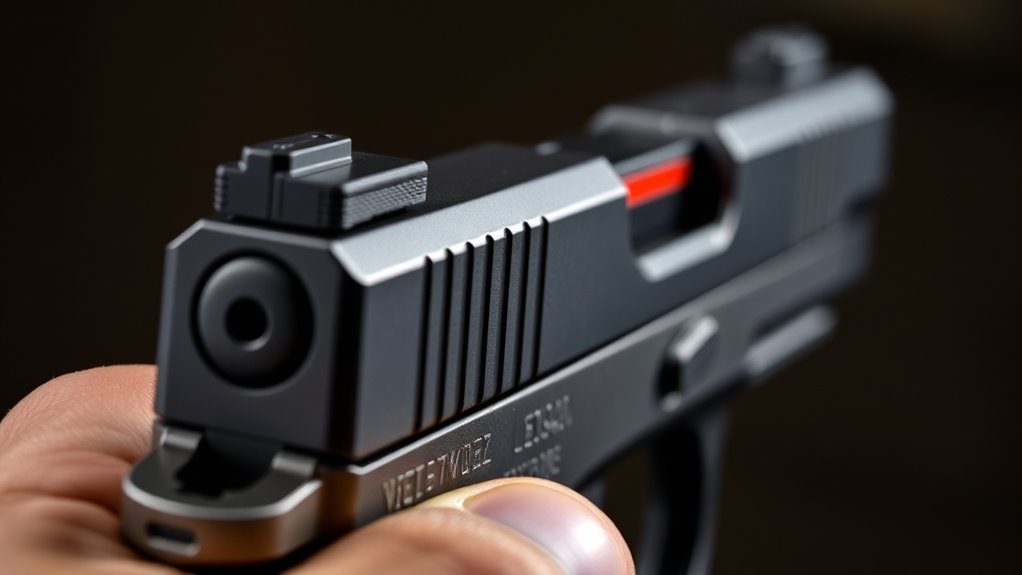
Have you ever fired a shot that completely missed the target? Proper pistol sight adjustment is crucial because even small misalignments can throw off your aim.
One important factor is ammunition consistency. If your ammo varies, it impacts accuracy, making precise sight adjustments necessary. When your ammunition is consistent, you can better see how sight changes affect shot placement.
Grip stability also matters a lot. A steady grip keeps your sights aligned and prevents your firearm from shifting during firing. If your grip is shaky, even perfect sight settings won’t guarantee accurate shots.
Properly adjusted sights help compensate for minor inconsistencies in ammunition or grip. But they’re most effective when your shooting fundamentals are solid. Without proper sight alignment, you risk missing the target altogether.
Making sure your sights are correctly adjusted improves accuracy, helps every shot count, and boosts your confidence in shooting.
Getting to Know Your Pistol Sights
Understanding your pistol sights is the first step toward accurate shooting.
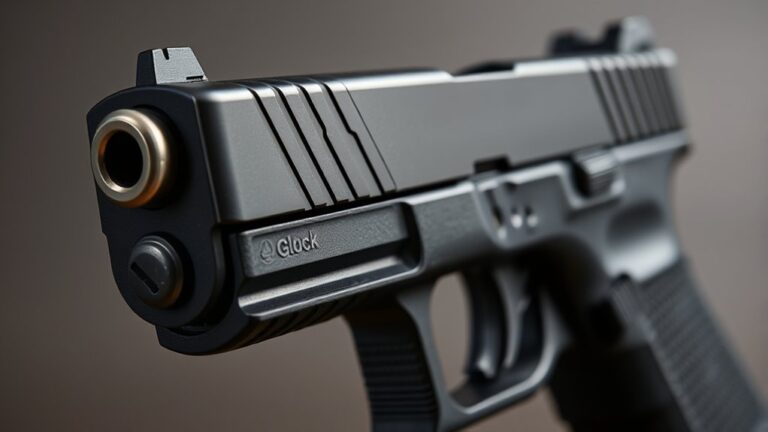
Familiarize yourself with the type of sights on your pistol—whether they’re fixed, adjustable, or fiber optic.
Check for sight obscuration, meaning how well you can see the sights against your target, especially in different lighting conditions.
Proper grip alignment is essential; your hands should hold the pistol comfortably with consistent positioning to maintain sight picture.
When you aim, make sure the front and rear sights are aligned evenly and centered within your view.
Notice how your sight picture looks and how the sights sit in your line of sight.
Recognizing these elements helps you develop a natural focus and reduces eye strain.
The more you understand the alignment of your sights and how sight obscuration affects your target acquisition, the easier it becomes to make precise adjustments and shoot accurately.
Preparing Your Pistol for Sight Adjustment
Before you start tweaking your sights, it’s really important to make sure your gun is completely unloaded. Safety first, right? Once you’ve confirmed that, gather the tools you’ll need, like a sight adjustment tool or a screwdriver. Having everything ready makes the process smoother and helps you make precise adjustments. And don’t forget—clear out the area where you’ll be shooting to keep things safe and stay focused on the task.
Verify Firearm Safety
Ensuring your firearm is safe to handle is the vital first step before making any sight adjustments. Start by following proper gun safety rules—always keep the muzzle pointed in a safe direction.
Do a thorough firearm check: look for loaded chambers, safeties, and make sure the magazine is empty. Confirm there’s no ammunition nearby. When handling your pistol, stay aware of its status and double-check that it’s unloaded.
This vigilance helps prevent accidental discharges. Verifying safety is crucial to protect yourself and others. Once you’re confident your firearm is safe, you can go ahead with sight adjustments.
Prioritizing gun safety and routine checks creates a controlled environment and cuts down on risks during the process.
Gather Proper Tools
To prepare your pistol for sight adjustments, gather the necessary tools you’ll need for the job. Safety is key, so make sure your gun is unloaded and resting on a stable surface.
You’ll want basic handgun accessories like a small screwdriver and a sight adjustment tool, depending on your firearm. Having these ready helps prevent unnecessary delays and keeps safety practices a top priority.
Here’s a quick look at common tools:
| Tool | Purpose |
|---|---|
| Small Phillips screwdriver | Loosening or tightening sights |
| Sight adjustment tool | Precise alignment |
| Flat-head screwdriver | Alternative for certain sights |
Having the right tools on hand allows you to make precise adjustments safely and efficiently.
Clear the Shooting Area
Make sure the shooting area is clear before you start adjusting your sights. Safety comes first, so check that there are no people, animals, or obstructions nearby.
Choose a designated shooting spot with a stable surface. This helps keep your shooting stance consistent throughout the process.
Use the same type and load of ammunition you plan to shoot regularly. Different ammo can change your point of impact, so it’s important to be consistent.
Clear the area of any objects that might cause ricochets or distractions. Keeping the environment safe lets you focus on making precise sight adjustments.
A secure and well-prepared space helps improve your accuracy and boosts your confidence when shooting.
Tools You Need for Adjusting Pistols
Adjusting your pistol sights requires the right tools to do the job accurately and safely. The most essential tool is a small screwdriver, usually a flat-head or Phillips, used to make precise adjustments to your sights.
Some pistols have adjustable front or rear sights that need these screwdrivers to fine-tune your sight picture and ensure proper target focus. A sight pusher is another valuable tool; it allows you to move sights without scratching or damaging them.
Furthermore, a punch tool can assist in minor adjustments or removing sights. Don’t forget a good light source, like a flashlight or headlamp, to illuminate your sights clearly.
Finally, keep a pair of tweezers or needle-nose pliers handy for handling tiny parts. With the right tools, you’ll make accurate adjustments, sharpen your sight picture, and ensure consistent target focus for better overall shooting accuracy.
How to Sight in Your Pistol at the Range?
Sighting in your pistol at the range is an essential step to guarantee accuracy and consistency with each shot. Start by verifying your firearm is unloaded and your holster safety is secure.
Select high-quality ammunition consistent with your typical carry load to get reliable results. Load your pistol and aim at a target placed 25 yards away. Focus on your front sight, aligning it with the target center.
Keep your stance steady and breathe naturally. Dry fire a few shots to confirm your sight picture before live firing. Pay attention to where your shots land, and make small adjustments to the sights as needed.
Remember, consistent grip and stance help, but also keep your finger off the trigger until ready. Check your holster safety between shots. Use stable shooting positions and record each shot placement for reference.
Stay relaxed and focused throughout the process. This approach helps ensure your sights are properly aligned for reliable shooting.
Adjusting the Rear Sight for Windage
To adjust the rear sight for windage, start by figuring out whether it’s shifted left or right from where you’re aiming. It’s a good idea to have the right tools on hand, like a small screwdriver, to help you make those precise tweaks.
Once you’ve figured out the direction you need to move it, gently use your tools to shift the sight accordingly. Just take your time and make small adjustments to get everything aligned perfectly.
Determine Windage Adjustment Needed
When you notice your shots consistently veer left or right of the target, it’s a clear sign that the rear sight needs adjustment for windage. To figure out how much correction is needed, watch how your sight drifts and where your shots land.
If your rounds drift right, you’ll want to move the rear sight left, and vice versa. Keep in mind, small tweaks can make a big difference in accuracy.
Check if your shots are always veering in one direction and see if sight drift is causing the inaccuracy. Also, consider whether your stance or grip might be affecting your shot grouping.
Use your previous shot patterns as a guide to help you determine the necessary windage correction. Making small adjustments will help you align your sight more precisely with the target.
Use Proper Tools for Adjustment
Using the proper tools guarantees your windage adjustments are accurate and safe. You’ll need a small screwdriver or a sight adjustment tool designed specifically for your pistol.
These tools prevent damage to the sight or slide and help you make precise movements. When adjusting for windage, make sure your sight picture is aligned and think about the sight radius—the distance between the front and rear sights.
This distance affects how small adjustments influence where your shot hits. Using the right tools lets you make fine, controlled tweaks without slipping or misaligning your sight.
Always double-check that you’re turning the correct adjustment screws, usually on the rear sight, and avoid over-tightening. Proper tools make the process easier and give you confidence that your sight is correctly aligned for maximum accuracy.
Setting the Elevation on Your Front Sight
Adjusting the elevation on your front sight is key for accurate shooting at different distances. Proper elevation helps your sight picture align correctly, whether you’re shooting close or far targets.
To change the sight height effectively, use the right tools like a sight pusher or another appropriate tool for precise adjustments. Make small, incremental changes so you don’t overshoot your target.
Remember to keep your sight picture consistent while making adjustments. Check your target distance and adjust accordingly to hit your mark.
It’s also helpful to record your adjustments for future reference, so you know what works best at different distances.
Proper sight elevation really makes a difference in your accuracy, especially when shooting at varying ranges. Align your sights to optimize sight height and ensure your shot hits where you want it.
Fine-Tuning Your Sights for Better Accuracy
To get better accuracy, it’s important to really focus on lining up your sights just right. Make sure they’re perfectly aligned before you take your shot—that way, you’re giving yourself the best chance for a bulls-eye. When adjusting, take your time with windage and elevation, turning the screws slowly and carefully so you don’t overshoot.
After you’ve made your adjustments, try firing a few shots to see how they group. Check to see where your bullets are hitting and tweak your sights if needed. Keep doing this—making small adjustments and testing again—until your shots are landing right at the center. It’s all about patience and fine-tuning until you hit that sweet spot consistently.
Sight Alignment Techniques
Achieving precise shot placement means finely tuning your pistol’s sights so they line up perfectly before you shoot. Proper sight alignment is key for accuracy and consistency.
To improve your technique:
- Keep a firm, steady grip to reduce sight movement because grip influence really matters.
- Make sure your holster lets you draw quickly and steadily without messing up your sights.
- Focus on lining up the front sight evenly with the rear sight.
- Keep your eyes relaxed and avoid tension, which can shift your sight alignment.
- Practice smooth, steady presses to keep the sights aligned through the shot.
Mastering these tips helps build muscle memory and boost your accuracy when it counts. Remember, a consistent grip and good holster fit are essential for maintaining the correct sight alignment every time you shoot.
Adjusting Windage and Elevation
Fine-tuning your pistol’s sights involves making precise adjustments to windage and elevation so your shots hit exactly where you aim. First, confirm your sight picture is clear and consistent, focusing on the target and sight alignment.
Maintain grip stability to prevent movement that could affect shot placement. To adjust windage, move the rear sight left or right until your shots are centered horizontally. For elevation, raise or lower the front sight or rear sight until your point of aim aligns vertically with your shots’ impact.
Be patient and make small adjustments, testing your aim after each change. Proper grip stability and a consistent sight picture are key to accurate adjustments, helping you refine your shooting precision effectively.
Verifying Shooting Accuracy
Have you ever wondered if your pistol shoots exactly where you intend? Verifying shooting accuracy is essential to fine-tune your sights properly.
Start by analyzing your target: review your shot groupings for consistency. Use laser training tools to check your real-time alignment and spot any discrepancies.
Focus on these key steps:
- Shoot multiple groups at your usual distance
- Mark shot placements for precise analysis
- Adjust your sights based on grouping patterns
- Record your results to track improvement
- Include laser training drills for instant feedback
This process helps you find flaws in your aim and ensures your sight adjustments are spot-on. Regular testing with target analysis and laser training will boost your confidence and improve shot accuracy, helping you take your pistol skills to the next level.
Common Mistakes When Adjusting Pistol Sights and How to Avoid Them
When adjusting pistol sights, it’s easy to make mistakes that can hurt your accuracy. One common error is not paying attention to proper aiming techniques during adjustments.
If you don’t keep a consistent sight picture, your adjustments won’t be precise. Rushing through the process can cause uneven or exaggerated changes that don’t actually improve your accuracy.
Another mistake is assuming the sights are perfectly aligned right from the start. It’s important to check their initial position before making any adjustments. Skipping this step can lead to unnecessary readjustments.
Making large adjustments instead of small, incremental ones can also cause you to overshoot your target point of impact. Always verify your sight picture after each change and keep your stance steady.
Staying patient and methodical is key. Constantly evaluate your aim and stick to a careful adjustment process to avoid errors.
Tips for Maintaining Accurate Pistol Sights
To guarantee your pistol sights stay accurate over time, regular maintenance is essential. Consistent care makes sure your sighting techniques remain precise, and your shooting stance stays effective.
Keep your sights clean by wiping off dirt and residue after each use to prevent buildup that can throw off accuracy. Check for loose screws or misalignments and tighten or adjust as needed. Use a soft brush or cloth to remove debris from the sighting elements.
Keep sights clean and debris-free for consistent, accurate shooting.
Practice proper sight alignment and a stable shooting stance to reinforce accuracy. Regularly verify your sight picture at different ranges to detect any shifts.
Consider lubricating moving parts to prevent wear. Also, inspect for any damage or corrosion that may distort your sight picture.
Frequently Asked Questions
How Often Should I Realign My Pistol Sights?
You should realign your pistol sights during regular maintenance schedules or if you notice accuracy issues. Sight calibration isn’t a one-time task—it needs periodic checks, especially after rough handling or dropping the firearm.
A good rule of thumb is to inspect and adjust your sights every few months or after any impact. Regular checks help keep your sights accurate and ensure you’re shooting safely and effectively every time.
Can Adjusting Sights Affect My Pistol’s Accuracy?
Think of sight calibration as tuning your inner compass; it directly affects your pistol’s accuracy.
When you adjust sights, you’re aligning them with precision, which sharpens your aim. Proper firearm maintenance helps keep these adjustments accurate, preventing drift that could throw off your shot.
Yes, adjusting sights can greatly improve or impair your accuracy if done incorrectly. So, treat sight adjustments as an essential part of your firearm’s harmony.
Are There Different Sight Adjustment Techniques for Different Pistol Models?
Yes, different pistol models may require unique sight calibration techniques due to variations in sight design and scope compatibility.
Always check your pistol’s manual for specific instructions, since methods can differ between iron sights and optics.
Proper calibration is key for accurate shooting, and using compatible scopes can help boost precision.
Adjustments might need different tools or steps depending on your pistol’s sight system, so be sure to follow the manufacturer’s guidelines carefully.
What Is the Typical Range for Sighting in a Pistol?
Ever wonder about the ideal range for sight calibration? Typically, you’ll aim for about 25 yards (23 meters) for standard pistol sight adjustments. This is a good starting point for most handguns.
This range helps you estimate distances effectively and make precise sight adjustments. Keep in mind, different models might need slight tweaks, but starting at 25 yards ensures accurate targeting and consistent shot placement.
How Do Weather Conditions Impact Sight Adjustments?
Weather conditions, like wind drift and temperature influence, heavily affect your sight adjustments. Wind drift pushes your shot off course, so you need to compensate by adjusting your sights accordingly.
Temperature changes can also impact your aim. They affect the steel sights and your firing mechanism, causing small shifts in where you’re aiming.
It’s important to account for these factors, especially in extreme weather. Making precise adjustments helps keep your shots accurate and makes sure they hit the target where you want them to.
Conclusion
Mastering sight adjustments isn’t just a good idea; it’s the secret weapon to turning your shot from a mere arrow into a laser beam of precision. With these 10 steps, you’ll be hitting bullseyes like a legendary sharpshooter.
Turning every target into a piece of cake, so grab your pistol, get those sights spot-on, and prepare to marvel at how effortlessly you become the hero of your own shooting story. The range won’t know what hit it, especially once your pistol sights are dialed in perfectly.