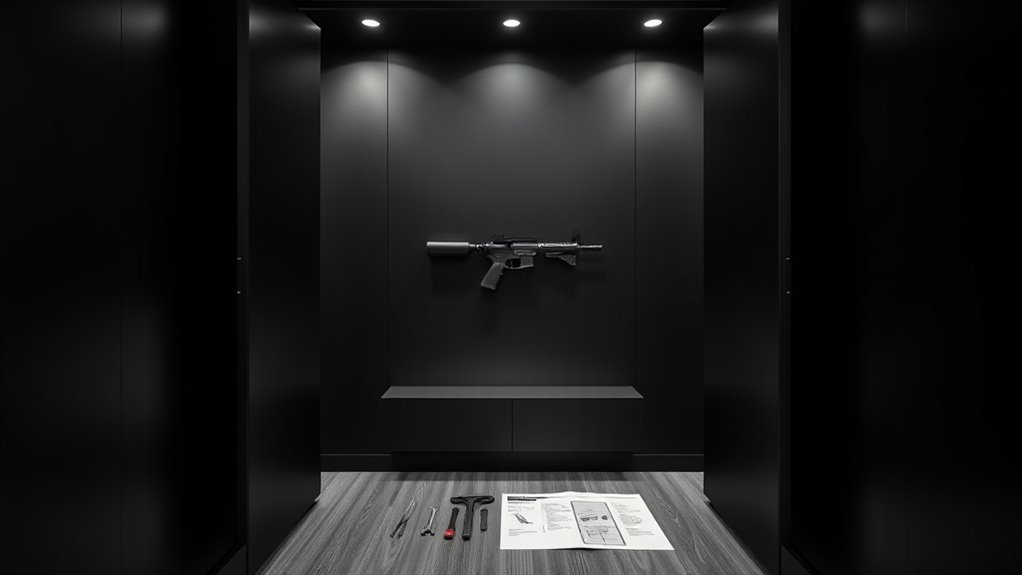
How to Turn a Closet Into a Gun Safe in Five Simple Steps
Many gun owners struggle with finding a discreet, secure way to store their firearms at home. You’re not alone—creating a safe space that’s both accessible and hidden can seem overwhelming.
To turn a closet into a gun safe, start by measuring your space and evaluating its security needs. Choose a suitable locking mechanism, like a biometric or digital keypad, and hide it behind panels or furniture for discretion.
Install sturdy shelves, dividers, and secure everything to the walls or floor for stability. Add ventilation, lights, and safety features like alarms to improve functionality.
If you keep these steps in mind, you’ll create a safe, discreet storage space. Learn more to perfect your design.
Key Takeaways
- Measure and assess the closet space and security vulnerabilities for proper planning.
- Select and conceal appropriate locking mechanisms, and use camouflage to hide the safe.
- Install sturdy shelves, dividers, and reinforce mounting points securely.
- Incorporate lighting, ventilation, and safety features like fire alarms and tamper sensors.
- Ensure discreet access, proper organization, and regular maintenance for safety and concealment.
Why Turn a Closet Into a Gun Safe? Benefits and Considerations
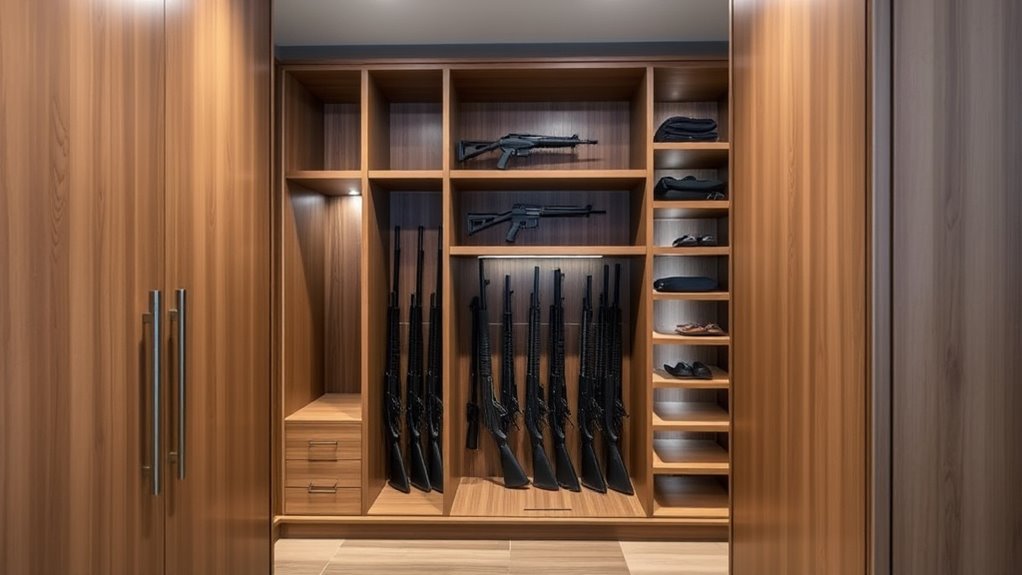
Turning a closet into a gun safe can be a practical way to protect your firearms while saving space. It keeps guns secure and out of reach from unauthorized users, especially children.
It also offers a discreet storage solution that blends seamlessly into your home decor. When thinking about decorating, you can customize the interior with shelves, hooks, or foam padding to keep your guns organized and protected.
Plus, converting a closet can be more affordable than buying a standalone safe, especially if you already have a suitable space. Regular cleaning is important too—keep the area dust-free and dry to prevent rust and damage.
Ventilation is key to reducing moisture buildup and helping maintain your firearms’ condition. Overall, transforming a closet into a gun safe combines safety, convenience, and style. It lets you securely store your firearms while keeping the look and feel of your home.
How to Measure and Assess Your Closet’s Space and Security Needs
First things first, grab a tape measure and get the basic measurements of your closet—length, width, and height. Knowing these dimensions helps you figure out exactly how much space you have to work with.
Once you’ve got that down, think about what kind of security features you really need. Are you just looking to keep kids out, or do you want a heavy-duty safe that can deter thieves? This step is all about figuring out what will give you peace of mind and keep your firearms secure.
Putting these two things together — the space and the security needs — makes it much easier to choose the right size safe and the features that will work best for you.
Assess Closet Dimensions
Before you can turn your closet into a secure gun safe, you need to see if the space is right for your needs. Start by measuring the closet’s height, width, and depth with a tape measure. This gives you a clear idea of how much room you have for shelves, safes, or hidden compartments.
While checking, think about how closet accessories like hooks or extra storage might affect your layout. Pay attention to the closet’s color scheme, as darker or busier backgrounds could make safety signs or security features less visible.
Make sure there’s enough space for locks or safes without overcrowding the area. Accurate measurements help you plan effectively, balancing storage options with security needs. Clear space and good planning are key for a safe, functional transformation.
Evaluate Security Requirements
Once you’ve measured your closet’s dimensions, it’s time to focus on its security needs. First, consider the paint color—a neutral, non-reflective shade helps minimize drawing attention to the safe.
Next, evaluate the lighting fixtures; installing discreet, tamper-proof lighting ensures visibility but avoids obvious security features.
Finally, assess the space for potential security enhancements:
- Check the strength of the walls and see if reinforcement is needed.
- Identify vulnerable points like hinges or locks, and plan discreet upgrades.
- Decide on monitoring options, such as concealment cameras or alarm sensors.
This evaluation helps keep your closet functional and secure without revealing its hidden purpose, maintaining both safety and discretion.
How to Choose the Right Locking Mechanism for Your Gun Safe Closet
Choosing the right locking mechanism is key to keeping your gun safe closet secure and easy to use.
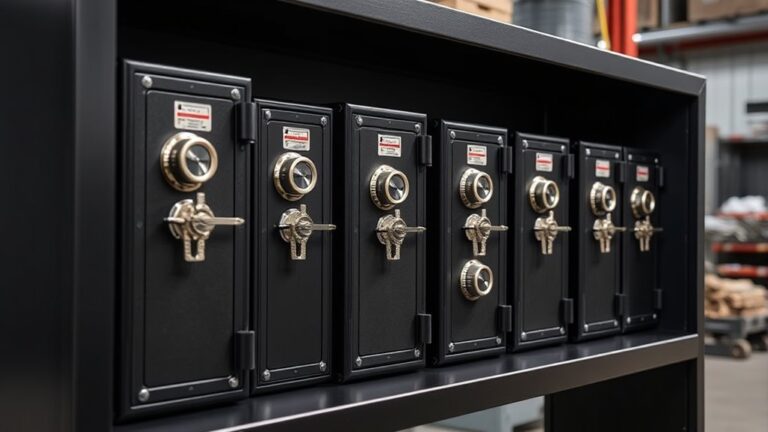
You’ve got options, from traditional keyed locks to digital keypad and biometric systems.
Think about how often you’ll need to access the safe and who needs to get in.
This can help you decide if a simple lock or a more high-tech system is the best fit.
Locks with security sensors add an extra layer of protection by alerting you if someone tries to tamper with or break into the lock.
Biometric locks use your fingerprint, making it quick and secure to access your firearms.
Digital keypad systems can give multiple user codes, which is perfect for sharing with family or trusted friends.
Be sure to choose a system that matches your security needs and your comfort level for handling it.
The right locking mechanism helps keep your firearms safe and makes sure only the right people can get to them.
How to Install Shelves and Dividers for Gun Storage
When you’re setting up shelves and dividers for gun storage, the first thing to do is pick sturdy materials that can handle the weight of your guns and accessories. You don’t want anything flimsy that might give way over time. Once you’ve got that sorted, think about where to place your dividers. The idea is to maximize your space and keep everything organized so you can find what you need without hassle. And finally, make sure all the shelves are securely fastened. That way, you’ll prevent any accidents or shifting pieces that could cause problems down the line.
Choosing Durable Shelf Materials
Have you thought about what materials will hold up best over time when installing shelves in your safe? Durable shelf materials guarantee longevity and safety. Metal or solid wood are better choices than particleboard for strength.
When selecting materials, think about:
- Color choices – go for neutral tones like black, gray, or natural wood finishes to blend seamlessly.
- Shelf accessories – add liners or rubber mats to prevent gear from slipping and protect your firearms.
- Material quality – choose high-quality, moisture-resistant materials to avoid warping or corrosion over time.
These factors help keep your shelves in good shape and your guns secure. Picking the right shelf materials and accessories makes sure your safe stays reliable and organized for years to come.
Planning Effective Divider Placement
After selecting durable shelves, arranging effective dividers is key to maximizing your safe’s storage capacity and keeping firearms organized. Think about how you’ll use the space—adjustable dividers can give you flexibility, or you might choose fixed ones for specific calibers.
Measure carefully to ensure the dividers fit snugly without wasting space. To make the interior look better, consider applying decorative paint around shelves and dividers that match your decor, giving it a polished, professional look.
Installing interior lighting will help you easily find firearms and accessories, especially in darker areas. Place dividers strategically to prevent rifles, handguns, or accessories from shifting or falling.
With thoughtful spacing and careful placement, you’ll create an organized, safe environment that works well and looks great.
Securing Shelves Properly
Securing your shelves and dividers properly is essential to prevent shifting or tipping during use. Stable shelves improve overall stability and help ensure weight is evenly distributed, which reduces the risk of damage or collapse.
To do this, follow these steps: Attach brackets or L-brackets to the wall and shelf to lock them in place securely. Use heavy-duty screws or anchors that support the combined weight of stored items, prioritizing weight distribution.
Double-check that all anchors are flush and tight to prevent wobbling or uneven weight loads. Taking these simple steps will keep your shelves safe and sturdy for everyday use.
How to Add Locks or Digital Keypads for Safe, Discreet Access
To keep your firearm hidden but still easy to access, adding locks or digital keypads is a smart move. Discreet locks like digital keypads offer security without bulky hardware. Pick a system that blends seamlessly with your closet interior for better concealment.
When installing, place the keypad at a comfortable height, maybe behind a panel or false shelf. This keeps it hidden from casual observers and prevents anyone from uncovering the lock easily.
Here’s a visual to help you imagine the setup:
| Closet door | Digital keypad | Shelf concealment |
|---|---|---|
| Hidden panel | Discreet lock | Easy access drawer |
| Storage bags | Secret compartment | Security feature |
| Clothing rack | Hidden entrance | Locking mechanism |
| Floor space | Electronic lock | Concealed hardware |
This setup ensures quick access while keeping the safe discreet and out of sight.
How to Hide or Camouflage Your Gun Safe for Extra Security
Once your digital keypad lock is in place, the next step is to guarantee your safe stays hidden in plain sight. Using clever camouflage techniques helps keep intruders at bay and keeps your firearms secure. Consider these simple strategies:
- Disguise the safe as a common household item, like a book or storage box, using an inconspicuous container.
- Blend in with your environment by matching the safe’s exterior to nearby decor or furniture so it doesn’t stand out.
- Apply scent masking by placing natural fragrances around the safe to block any odors that might give away its location.
These ideas add extra layers of security, making your safe less noticeable. The key is to think creatively and avoid any patterns or clues that could draw unwanted attention.
How to Anchor Your Closet to Walls or Floors for Stability
Implementing proper anchoring is essential to prevent your closet or safe from tipping or shifting, especially during emergencies or attempts at forced entry. Start by securing your closet to the wall studs or floor joists using heavy-duty brackets or straps.
Make sure to locate wall studs with a stud finder for maximum stability. Once anchored, check that your safe remains level; this helps prevent tipping if force is applied.
While working, consider painting tips to improve the space’s appearance. A coat of primer and durable paint can make the area feel more integrated and less like a secure storage space.
Lighting options such as discreet LED strips or battery-powered fixtures boost visibility inside the closet without risking damage to the safe or wiring.
Proper anchoring combined with thoughtful interior lighting ensures your safe stays stable and easily accessible, without compromising your closet’s structure or look.
Tips for Fire Safety, Ventilation, and Emergency Access in Your Safe Closet
When you’re setting up your safe closet, it’s really important to think about fire safety. Installing a smoke alarm nearby can give you that extra warning if something starts to go wrong. And having a fire extinguisher close at hand can make all the difference if you need to act fast.
Another thing to keep in mind is ventilation. Making sure there’s good airflow around your safe prevents moisture buildup, which can damage your valuables over time. It also helps keep the space fresh and safe to stay in if you’re retrieving things during an emergency.
And don’t forget about easy access! You want to be able to get to your safe quickly, especially in an emergency situation. Clear pathways and a well-thought-out placement will allow you to respond swiftly and keep everyone safe.
Fire Safety Measures
Making certain fire safety in your closet safe is essential to protect both your valuables and yourself. Focus on fire prevention by keeping the area clear of clutter and flammable materials. Use appropriate fire-resistant materials inside and around your safe to reduce heat transfer.
Secure locking mechanisms help prevent unauthorized access, which is crucial if fire emergency protocols are needed. To improve safety, install a smoke detector nearby for early fire detection. Maintain a fire extinguisher within easy reach outside the safe.
Ensure the safe’s lock is robust, preventing accidental opening during fire events. These measures help minimize fire risks and guarantee quick, safe access when needed, keeping both your stored items and your safety a priority.
Proper Ventilation and Access
Proper ventilation is essential for keeping your safe closet safe, especially during emergencies with heat or smoke. Good airflow helps control the temperature, preventing excessive heat that could damage your items or put you at risk.
It also helps reduce moisture, which can cause mold or rust. Make sure to install a discreet vent or small opening for air circulation and keep it clear so air can flow freely. This way, your space stays well-ventilated and safe.
Proper ventilation also helps keep pests away by discouraging insects or rodents that like dark, damp places. Lastly, ensure your safe closet has easy access points so you can quickly reach your firearms or emergency supplies when needed.
Focusing on good ventilation and easy access keeps your safe space secure, functional, and safe.
Common Mistakes to Avoid When Converting a Closet Into a Gun Safe
Have you thought about the common mistakes that can trip you up when turning a closet into a gun safe? One big mistake is skipping proper gun safety measures, which could lead to unauthorized access or accidents.
Avoid skipping essential gun safety measures to prevent accidents and unauthorized access.
Another issue is poor storage organization, making your firearms harder to reach quickly and creating safety hazards. Lastly, not paying attention to security measures leaves your guns vulnerable to theft or damage.
To avoid these problems:
- Don’t skimp on secure locking mechanisms to keep everything safe.
- Set up a clear organization system so you can find and access your firearms easily.
- Remember to consider ventilation and climate control to protect your firearms and accessories over time.
How to Keep Your DIY Gun Safe Discreet and Easy to Use
To keep your DIY gun safe discreet and easy to use, focus on blending it seamlessly into your environment while maintaining quick access. Aesthetic upgrades are essential—pick paint, hardware, and design features that match your room’s style so it doesn’t stand out.
Think about hiding the safe behind a false panel, picture frame, or furniture piece that looks natural in your space. Installing discreet LED strips or motion-activated lights inside helps you find your firearm quickly, even in low light.
Keep the outside unobtrusive by avoiding obvious locks or handles that hint at a hidden compartment. Regularly check that it remains discreet and consider adding a lock or cover that blends with your décor.
These simple steps help keep your safe both discreet and accessible, giving you peace of mind without calling attention to it.
Frequently Asked Questions
What Legal Considerations Should I Be Aware of Before Converting a Closet Into a Gun Safe?
Before converting your closet into a gun safe, you should be aware of legal considerations related to storage security and legal compliance. Check your local, state, and federal laws about firearm storage requirements, especially if you have children or share the space.
Make sure the safe design meets legal standards for secure storage. You want to avoid violating rules about firearm accessibility or theft prevention. Staying informed helps you avoid legal trouble.
It’s important to understand these regulations to ensure responsible firearm management and to keep everything legal. Being aware of the rules makes the process smoother and safer for everyone involved.
How Much Does It Typically Cost to Convert a Closet Into a Secure Gun Storage Space?
Converting a closet into a secure gun storage space usually costs between $200 and $1,000, depending on the materials and modifications you choose.
Budget considerations often overlap with important features like interior ventilation and fire safety. You might need to spend extra on proper ventilation systems or fireproofing.
While those elements add to the cost, they’re essential for safety and meeting compliance standards. Planning ahead helps ensure your project stays within budget while keeping your firearms secure and protected.
Can I Use a Closet Safe for Storing Other Valuables Besides Firearms?
Yes, you can use a closet safe to store other valuables besides firearms. Just be aware of safety concerns and consider adding hidden compartments to improve security. These compartments make it harder for intruders to find your items and offer extra protection.
Make sure the safe’s location and design suit your valuables. Keep it discreet to prevent unauthorized access. Proper organization and security measures help keep everything safe and accessible when you need it.
How Long Does the Installation and Conversion Process Usually Take?
You can usually finish the installation and conversion in about 3 to 6 hours, depending on your experience.
Keep in mind the ventilation needs to prevent moisture buildup, especially if you’re using fireproof materials like fire-resistant drywall or safes.
Taking your time is important for safety and proper setup. Rushing might compromise your security.
What Maintenance Is Required to Keep the Safe Secure and Functioning Properly?
To keep your converted closet safe and functional, regularly check the fireproof coating to make sure it’s still intact and providing fire resistance.
Make sure to maintain the ventilation systems so humidity doesn’t build up, which could damage your guns or cause rust.
Clean the lock and hinges from time to time to keep everything operating smoothly.
Also, look out for any signs of tampering or wear, and double-check that the door seals tightly for security.
Conclusion
Turning a closet into a gun safe is a smart, cost-effective solution to keep your firearms secure and discreet. You don’t need a secret chamber beneath the castle ruins—just a little planning.
With these five simple steps, you can create a safe haven for your firearms that’s both functional and undercover. Remember, even in a world of dragons and knights, safety and security should always be your top priorities.
This approach is practical and budget-friendly, giving you peace of mind knowing your guns are protected. Imagine having your own secret hideaway like Robin Hood’s archery den.
By following these steps, you can ensure your guns stay safe, accessible, and discreet. Just keep in mind, whether you’re fighting off bandits or protecting your home, proper security practices are timeless. Don’t skimp on the details when turning a closet into a gun safe.