How to Buy a Glock in California Step-by-Step
Buying a Glock in California can feel complicated if you’re unsure of the process. Many people struggle with understanding the legal requirements and steps involved. You’re not alone—learning the right way to do it makes all the difference.
To buy a Glock in California, you need to choose a model that fits your needs, complete a Firearm Safety Certificate, and pass a background check.
Find a licensed dealer, bring your ID and proof of safety training, and fill out the necessary forms. The dealer will conduct a background check and enforce the 10-day waiting period.
Once approved, you can pick up your Glock and register it with the California DOJ. Keep in mind, staying informed about the laws guarantees your ownership remains legal. Here’s what you need to know.
Key Takeaways
- Verify your eligibility, residency, and complete the necessary background checks before purchasing.
- Choose a Glock model that’s approved, fits your needs, and works with your accessories.
- Find a licensed dealer, show your ID, fill out DROS forms, and pay the required fees.
- Wait the mandatory 10-day period and keep the firearm secured during that time.
- Register your Glock with the California DOJ within 60 days and store it safely to stay compliant.
Understanding California Gun Laws and Glock Regulations
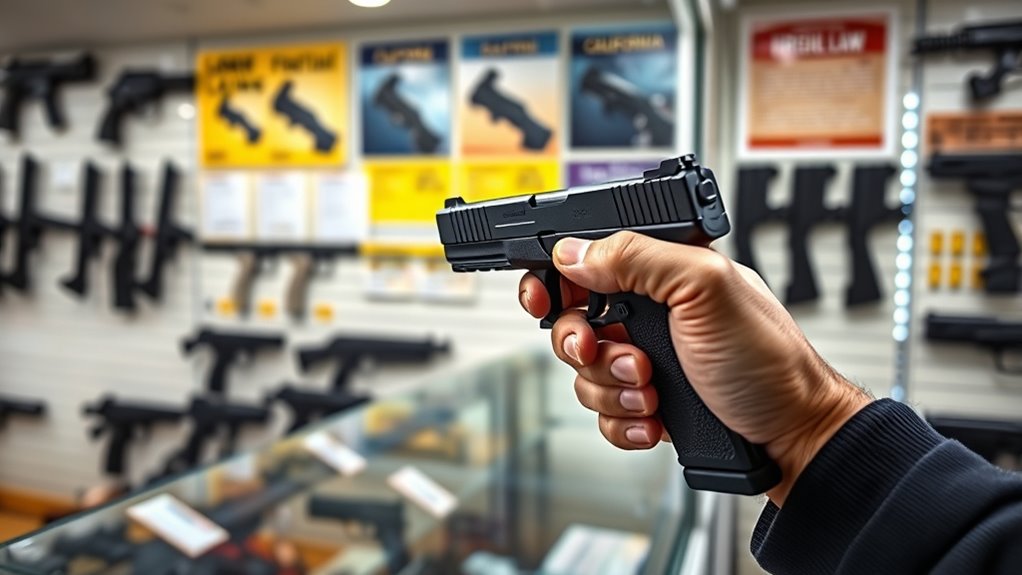
Because California has some of the strictest gun laws in the country, understanding these regulations is essential before purchasing a Glock or any firearm.
The state’s gun laws regulate firearm manufacturing, requiring manufacturers to comply with specific standards and restrictions.
When it comes to gun accessories, California limits modifications like aftermarket parts that improve firing rates or concealability, so you need to know what’s legal.
Handguns like Glocks must be on California’s approved roster, meaning they’re tested for safety and compliance.
You’ll also need a valid firearm safety certificate and must undergo a background check.
Be aware that firearm manufacturing labels must be clear, and some gun accessories are prohibited or restricted, impacting potential customization.
Staying informed of these laws helps you avoid legal pitfalls and makes buying a Glock smoother and compliant with California regulations.
Deciding Which Glock Model Works for You in California
Choosing the right Glock model really depends on what you plan to do with it, like self-defense, sport shooting, or everyday carry.
Think about how you’ll carry and handle the firearm daily because different models come in various sizes and capacities.
When selecting, pay attention to magazine compatibility—some Glock models use the same magazines, which makes reloading easier and accessories more versatile.
If you’re thinking about customizing your firearm, check if there are compatible accessories like lights or fancy sights that can improve your shooting experience.
Smaller models like the Glock 43 are great for concealed carry, while full-sized Glocks such as the Glock 17 are better for home defense or shooting at the range.
It’s also important to consider ergonomics, weight, and how easy it is to access the controls—especially when you’re under stress.
By understanding these factors, you can better match your needs with the right Glock model, making sure it performs reliably and works well with your accessories.
Taking the time to consider these points will help you make a confident and informed choice.
Are You Eligible to Buy a Gun in California? Residency and More
To buy a gun in California, you need to meet certain eligibility requirements, starting with your residency status. Being a California resident or meeting specific criteria that allow you to purchase firearms is essential. Non-residents face restrictions unless they qualify under special exceptions.
Your background also matters a lot. It’s thoroughly checked for restrictions like criminal history or other disqualifiers. This helps keep firearms out of the wrong hands.
Here’s what you should keep in mind:
- You must be at least 21 years old.
- You can’t have felony convictions or certain misdemeanor offenses.
- You should not be under restraining orders involving firearms.
- You must live legally in California or qualify under state residency rules.
Meeting these requirements means you’re legally eligible to purchase a firearm. Remember, California enforces strict background checks to prevent prohibited individuals from buying guns. Always verify your eligibility before starting the purchase process.
Getting Your Firearm Safety Certificate and Completing Background Checks
Before you can take possession of your Glock, you’ll need to get a Firearm Safety Certificate (FSC). This shows you understand the basic firearm safety rules and laws.
To get your FSC, you must pass a written test on firearm handling and safety. This proves you’re aware of responsible gun ownership and safe handling practices.
Passing a written test on firearm safety is required to get your FSC and demonstrate responsible gun ownership.
When applying for the FSC, you’ll also need to pass a background check to confirm you’re eligible. This checks for any disqualifying criminal history or mental health issues.
Once you pass, you’ll get your certificate, which is valid for five years. California also requires a background check during the firearm purchase process to prevent prohibited persons from getting guns.
Both the FSC and background checks work together to promote safe, lawful firearm use and reduce accidents or misuse. After completing these steps, you can proceed to buy and take home your Glock.
Finding Licensed Gun Dealers Near You in California
Finding a licensed gun dealer in California is straightforward if you know where to look. Start by checking the California Department of Justice’s list of licensed firearm dealers online.
You can also visit local gun stores or sporting goods shops with firearms departments, verifying they are licensed. When you’re there, ask about their selection of ammunition, as this is important for your future concealed carry plans.
Some shops specialize in concealed carry accessories and provide expert advice. Consider visiting dealer websites beforehand to compare inventory and services.
Look for shops with knowledgeable staff who can help you pick the right ammunition for concealed carry. Also, check reviews or get recommendations from local shooting clubs to find reputable dealers.
This way, you’ll save time and make sure you’re dealing with licensed professionals. It’s essential for a smooth Glock purchase process in California.
Preparing the Documents Needed to Buy a Glock
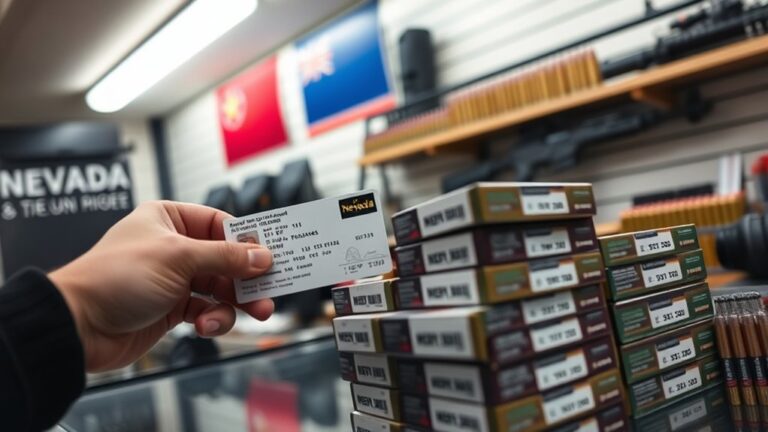
When you’re ready to buy a Glock in California, preparing the right documents ensures a smooth transaction. You’ll need a valid California driver’s license or state ID to prove your residency.
You’ll also have to provide proof of firearm safety training, like a certificate if required, especially for concealed carry permits. A completed Dealer’s Record of Sale (DROS) form is essential, as it kicks off the background check process.
Provide proof of firearm safety training and complete the DROS form to start the background check process.
If you’re buying gun accessories like holsters or sights, keep the receipts handy, but these aren’t part of the firearm purchase documents. For concealed carry, be prepared to show your CCW permit if you have one.
Always bring your Firearm Safety Certificate (FSC), showing you’ve passed the necessary test. Gathering these documents beforehand helps avoid delays and makes the whole process smoother.
Proper preparation not only speeds things up but also ensures you’re following California’s strict firearm laws.
Understanding the 10-Day Waiting Period and Transfer Procedure
In California, there’s a 10-day waiting period before you can take home your new Glock. This gives the state time to complete the necessary background checks. Basically, you won’t be able to walk out with the firearm right after buying it—it’s part of the rules to help keep everything safe and legal.
When it comes to the actual transfer, there are a few steps you’ll need to follow. You’ll have to fill out some paperwork and go through the background check process. Once all of that is done and the waiting period is over, you’ll be able to pick up your gun. Knowing these rules ahead of time helps make the whole process go smoothly and keeps everything on the right side of the law.
Waiting Period Regulations
Understanding the 10-day waiting period is crucial before buying a Glock in California. State law requires a mandatory delay between completing your firearm purchase and taking possession of the weapon. This waiting period is meant to promote firearm safety and make sure background checks are thorough.
During this time, you can’t transfer the firearm to yourself. Authorities need this time to finish the legal checks. If you don’t follow this rule, you could face legal penalties.
To make the process smoother, keep these points in mind: You can’t pick up the firearm until the wait is over. Delays can happen if there are issues with your background check. This waiting period applies even if you’re experienced with firearms. Ignoring it can lead to fines or legal trouble.
This regulation helps ensure firearm ownership remains responsible and safe.
Transfer Process Steps
Once you’ve completed your background check and the 10-day waiting period has passed, the next step is to proceed with the firearm transfer. Visit a licensed gun dealer where you chose to buy your Glock.
You’ll fill out the necessary paperwork, including the DOJ’s 4100A form, and pay the transfer fee. The dealer will verify your identification and conduct a final background check.
After approval, you’ll sign the transfer documents, and the dealer releases the firearm to you. If you’re interested in enhancing your shooting experience, consider browsing gun accessories at the dealer or planning a trip to nearby shooting ranges.
Finalizing Your Purchase: Signatures, Fees, and Compliance Checks
To wrap up your Glock purchase, make sure you’ve filled out all the paperwork correctly and signed everything as needed. It’s important to double-check that nothing is missed so the process goes smoothly.
You’ll also need to pay any applicable fees and pass certain compliance checks. Once you’ve taken care of these steps, you’re all set to legally and safely bring your firearm home.
Completing Paperwork Properly
When finalizing your Glock purchase, you’ll need to carefully complete all necessary paperwork to make sure everything is in order. Double-check that your information is accurate and signatures are clear to avoid any delays.
Make sure you’ve listed any firearm accessories you might add later, like sights or lights. Proper documentation can also help you figure out effective concealment techniques for your firearm.
Be prepared to pay any required fees to complete the process smoothly. Keep copies of all forms for your records and future reference.
Finally, ensure you understand California’s firearm regulations to stay compliant. Focus on accurately filling out all required fields, listing accessories correctly, and understanding concealment options.
Paying Fees and Checks
Have you prepared all the necessary payments and checks to finalize your Glock purchase? This step involves settling fees, signing paperwork, and passing compliance checks.
Make sure you’re aware of the current fees, which may include licensing, background checks, and firearm safety courses.
Achieving proper compliance is essential to avoid delays at the FFL. To help, here’s a quick comparison:
| Fee Type | Important Details |
|---|---|
| Background Check | Required for all firearm purchases |
| Firearm Accessories | Additional costs for accessories like sights or holsters |
| Shooting Range Fees | Optional, if you want to test or train with your Glock |
Once everything is checked, you’ll be ready to take your firearm home, including any accessories for peak shooting range performance.
Receiving and Registering Your Glock Safely in California
Once you’ve received your Glock, it’s important to handle the registration process quickly and carefully. California law requires you to register your firearm with the California Department of Justice within 60 days of getting it.
Be ready to provide details like the serial number and make of your firearm. After registering, store your Glock securely at home, preferably in a safe. This is especially important if you have other firearms or accessories.
When you’re ready to practice shooting, go to reputable shooting ranges to do so responsibly. Make sure your firearm always complies with local laws and avoid sharing your registration details unnecessarily.
Always carry proof of registration when transporting your Glock, especially if you’re heading to a range or training. Keeping your firearm registered and secure not only keeps you legal but also protects you.
Proper registration is a key step in staying responsible and legal with your new Glock.
Tips to Keep Your Glock Legal and Safe in California
If you want to keep your Glock legal and safe in California, the first thing to do is make sure you’re storing it properly. Using a secure safe or lockbox not only helps prevent accidents, but it also keeps you in line with the law. Nobody wants an unfortunate incident or legal trouble because a firearm wasn’t stored correctly.
Also, it’s really important to stay updated on California’s firearm regulations. Laws can change, so taking the time to understand what’s required for ownership and storage is a good idea. Being informed is the best way to handle your Glock responsibly and confidently at all times.
Proper Storage Practices
Proper storage is essential not only for keeping your Glock secure but also for making sure you’re following California’s strict firearm laws. To practice safe storage, always keep your handgun in a locked container or safe when you’re not using it.
Using trigger locks adds an extra layer of security, which helps prevent unauthorized access. Be sure to store your Glock out of children’s reach, in a place only you can access.
Regularly check that your safe or lock box is working properly. Remember, California law stresses the importance of preventing theft or misuse of your firearm.
Understand State Regulations
Understanding California’s firearm regulations is crucial to keep your Glock both legal and safe.
To do this, consider the historical context of firearm laws in the state, which have become increasingly strict over decades to improve public safety.
When comparing California’s laws to international standards, it’s clear the state maintains some of the most extensive restrictions.
You need to register your firearm, stick to magazine capacity limits, and follow strict storage rules.
Familiarize yourself with local restrictions, like bans on certain features or models.
Staying informed helps you avoid legal issues and ensures responsible ownership.
Make a habit of regularly checking updates from California’s Department of Justice to keep your knowledge current.
This way, you can be confident your Glock remains compliant and safely secured.
Frequently Asked Questions
Can I Buy a Glock Online and Have It Shipped to California?
You can’t buy a Glock online and have it shipped directly to California because of strict gun laws.
Instead, you need to purchase from an FFL dealer within the state, following gun safety rules.
When you buy, make sure the firearm meets California’s specific requirements.
Don’t forget to pick out firearm accessories that are permitted locally.
Always prioritize safety, legal compliance, and responsible gun ownership when you’re buying.
Are There Any Specific Glock Models Restricted in California?
Did you know California restricts certain Glock models, with over 15 banned due to magazine capacity or features? In California, models like the Glock 19X are restricted, preventing their purchase.
When choosing Glock accessories, focus on safety and storage safety measures to prevent accidents. Always verify model restrictions before buying, and store your firearm securely.
Make sure it’s inaccessible to kids or unauthorized users to stay compliant with state regulations.
How Do I Transfer a Used Glock Legally in California?
To transfer a used Glock legally in California, you need to make sure the firearm’s serial number is intact and documented.
Both parties must go through a licensed firearms dealer to complete the transfer, paying any applicable transfer fees.
The dealer will run a background check and record the transaction with the California Department of Justice. Make sure the firearm complies with state regulations and that you both follow all legal procedures for a smooth transfer.
What Are the Penalties for Owning an Unregistered Glock in California?
If you own an unregistered Glock in California, you could face serious penalties, including hefty fines and potential jail time. California enforces strict background checks and licensing requirements.
Failing to register a firearm violates these laws. Ignoring registration can lead to legal trouble, jeopardize your rights, and cause long-term issues.
Always make sure your firearm registration is up to date to stay compliant. This highlights the importance of background checks, licensing, and lawful ownership.
Can I Carry My Glock Concealed or Openly in California?
You can carry your Glock concealed or openly in California, but only if you have the right permit.
To carry concealed, you need a CCW permit from your county. This involves background checks and training requirements.
Open carry is mostly restricted, with a few limited exceptions, and most counties prohibit it.
Always check local rules because open carry laws vary across California. Carrying without a permit can lead to legal trouble.
Conclusion
Owning a Glock in California is like holding a symbol of responsibility and safety.
By carefully following the steps, you’re not just getting a firearm—you’re taking on a duty to protect others and uphold the law.
Remember, each step you complete builds a strong foundation for safe and lawful ownership.
Stay informed and stay compliant, and your journey to responsible gun ownership will be a steady path toward empowerment and security.
When buying a Glock in California, understanding the process is key to a smooth experience.
It’s all about being prepared and knowing what the state requires before bringing home your firearm.