7 Steps to Securely Mount Your Gun Safe to the Floor
Many people struggle with ensuring their gun safes are truly secure. It’s not just about having a safe; it’s about making sure it’s anchored properly to keep your valuables safe from theft or accidents.
If you’ve ever wondered how to prevent your safe from being easily moved or stolen, you’re not alone.
To securely mount your gun safe to the floor, first pick a sturdy, level spot away from heat and moisture. Gather the right tools and high-quality fasteners suited for your floor type.
Clean and level the surface before marking where to drill. Use anchors or bolts appropriate for concrete, wood, or tile, then firmly secure the safe.
After installing, test its stability and periodically check the fasteners.
Keep your safe reinforced and in top shape to maintain security and safety. More tips are ahead.
Key Takeaways
- Select a sturdy, level surface in a discreet spot that can handle the safe’s weight securely.
- Clean the floor and get rid of any debris, making sure the surface is flat for a good lock.
- Pick the right, high-quality fasteners suitable for your floor, like concrete anchors or lag bolts.
- Bolt the safe tightly, using the proper tools, making sure all anchors are fully set and the safe feels stable.
- Test it out by applying some force to see if it shifts or tips, so you know it’s securely attached.
Why Securing Your Gun Safe to the Floor Matters
Have you ever wondered why securing your gun safe to the floor is so important? It’s really key for fire safety because a properly mounted safe is less likely to fall or get damaged during a fire, helping protect your valuable firearms.
Plus, securing your safe helps you stay compliant with the law, especially if local regulations require firearms to be stored securely. When mounted to the floor, it becomes much harder for unauthorized people or burglars to move or access your safe, reducing the theft risk.
It also helps prevent accidents, especially if you have kids around. Making sure the safe stays in place and can’t be easily opened keeps everyone safer. Many insurance companies also want safes to be bolted down for coverage, which highlights how important proper installation is.
Choosing the Best Spot for Your Safe
Picking the perfect spot for your safe really depends on your floor type and how quickly you’ll need to access it. You wanna find a sturdy surface that can handle the weight without giving way, and a spot that’s convenient yet secure.
Think about where you’ll feel comfortable getting to it when you need to—without making it too obvious or easy for someone else to find. Taking these little things into account can make a big difference in keeping your belongings both safe and easy to reach.
Floor Material Considerations
The type of flooring where you install your gun safe really matters for its stability and security. Different surfaces offer varying levels of support and anchoring options.
For example, carpet durability varies depending on the thickness and material, which affects how well you can secure the safe. Thick carpets might need extra reinforcement or special mounting anchors.
Concrete is usually the best choice since it provides a solid, immovable surface that can support sturdy attachment. If you opt for a wooden or tiled floor, make sure it can handle the weight and hardware without cracking or shifting.
Always assess your flooring type beforehand to determine what adjustments might be needed. A stable, compatible surface helps prevent movement or tipping over. Choosing the right floor material is key to keeping your safe secure and ensuring it stays stable over time.
Accessibility and Privacy
Selecting the right spot for your gun safe means balancing easy access with privacy and security. You want a spot that lets you get to your safe quickly when needed but also limits unauthorized entry, so access stays controlled.
Pick a discreet area that isn’t obvious to visitors but is still easy for you to reach. A closet or a less-trafficked room can work well, helping to keep the safe hidden from prying eyes.
Privacy measures are important to prevent others from uncovering your safe. Avoid placing it near windows or in busy spaces that could make it an easy target or compromise security.
Keep your safe out of plain sight while maintaining convenient access. Proper placement helps manage access control efficiently and keeps your valuables safe from theft or unwanted observation.
Gather the Tools and Materials You Need
Before you start mounting your gun safe, gather all the necessary tools and materials. First, you’ll need a drill with suitable bits to make holes in the floor and secure the safe.
You’ll also need anchors or bolts that match your safe’s mounting points to support different installation surfaces. A wrench or socket set is essential for tightening bolts securely.
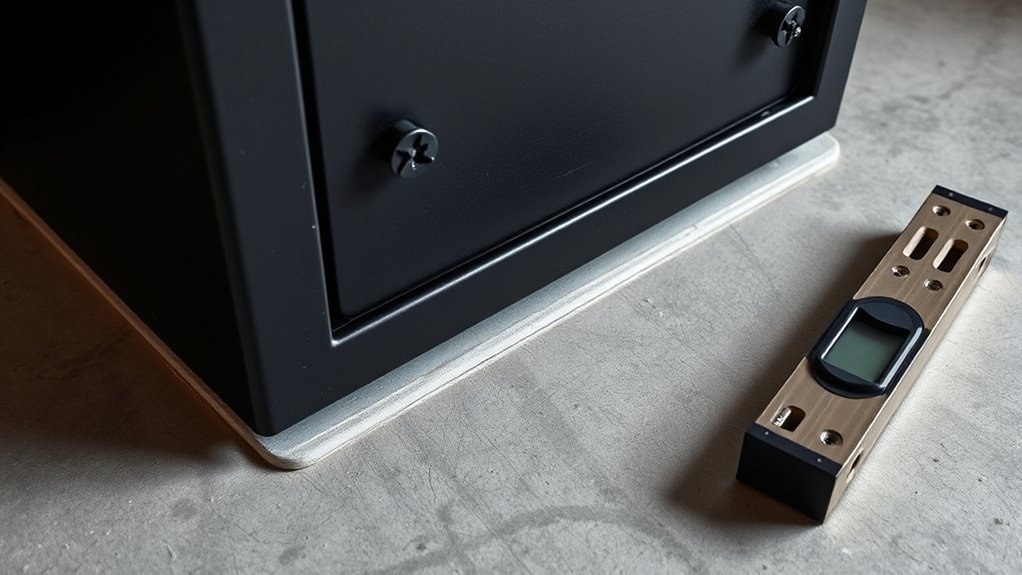
Keep a level nearby to verify that your safe stays straight during installation. Don’t forget screws or mounting hardware included with your safe, especially if it has advanced safety lock features that require specific fasteners.
A measuring tape helps accurately mark drilling spots. And finally, gather safety goggles and gloves to protect yourself during the process.
Preparing these tools and materials beforehand makes the mounting process smoother and ensures your safe is firmly secured for added peace of mind.
Prepare Your Floor: Clean and Level It
Once you’ve gathered your tools and materials, it’s time to prepare your floor. Start with thorough cleaning to remove dust, debris, and grease that could affect stability. Use a damp cloth or broom to sweep the area, making sure the surface is clean for installation.
Next, check if the floor is even. An uneven surface can cause your safe to wobble or sit improperly. Use a level to examine different spots around the floor. For small bumps or dips, apply a self-leveling compound to create a smooth surface.
If the floor is very uneven, you might need to do more extensive leveling or get professional help before moving forward. Proper cleaning and surface preparation give you a solid base, making the safe more secure during mounting.
Taking the time to do this now will prevent issues later. A well-prepared floor ensures your safe stays firmly anchored over time, making the whole process much easier and more effective.
How to Securely Mount Your Gun Safe to the Floor
Alright, first things first—pick a solid spot in your home that’s out of the way but still easy enough for you to get to when needed. You want it somewhere accessible, but not somewhere an intruder can easily stumble upon or mess with.
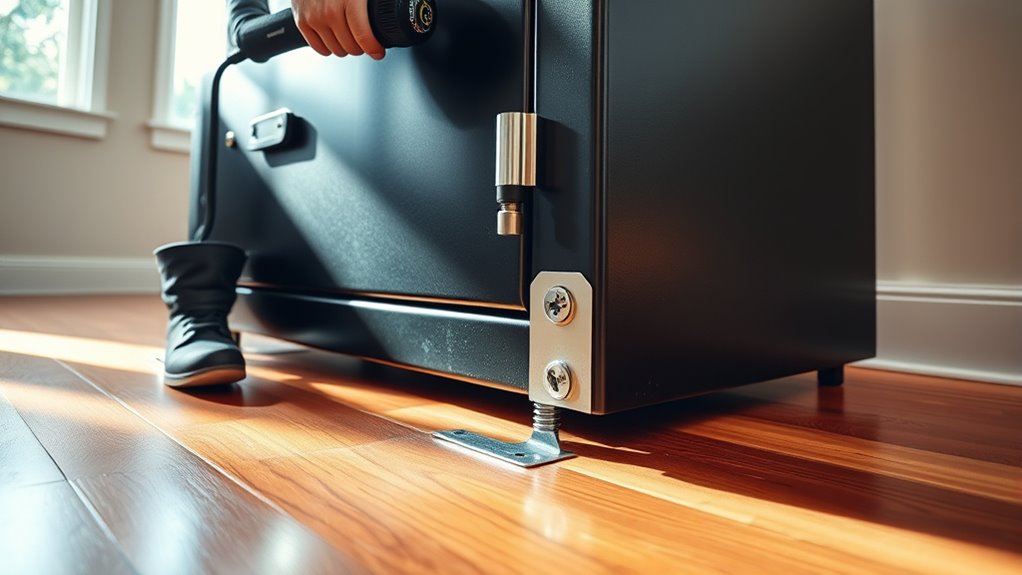
Once you’ve got that spot, it’s time to think about how to actually secure the safe to the floor. Make sure to use the right kind of fasteners for your floor type—whether it’s concrete or wood. Using the proper hardware makes all the difference in preventing theft or the safe from accidentally tipping over. It’s all about choosing the right location and hardware to keep your safe secure and your belongings protected.
Choose Proper Mounting Location
Choosing the right location for your gun safe is crucial to keep it secure and easy to access.
Pick a spot with enough floor space to support the safe’s weight without causing it to tip or wobble.
The area should be flat and free of debris to prevent shifting or tipping over.
If your floor isn’t very sturdy, consider reinforcing it, especially for larger safes.
Stay away from heat sources, moisture, or busy areas where it might get bumped or damaged over time.
An ideal spot balances security with accessibility, and the floor should be able to handle the safe’s weight.
Getting this right from the start makes mounting easier and helps keep your setup safe and durable.
Use Appropriate Fasteners
To securely mount your gun safe to the floor, it’s important to pick the right fasteners. The right ones help keep your unlocking mechanisms secure and maintain fire resistance.
Use heavy-duty anchors or bolts made for concrete or wood floors, depending on your surface. These fasteners provide the strength needed to stop forced removal and keep your safe in place during emergencies.
Choose fasteners that resist corrosion for better durability. Here’s a quick guide to help you decide:
| Fastener Type | Suitable Surface | Fire Resistance |
|---|---|---|
| Expansion Anchors | Concrete | High |
| Lag Bolts | Wood flooring | Moderate |
| Steel Screws | Concrete or tile | High |
| Carriage Bolts | Hardwood floors | Moderate |
Pick wisely to ensure your safe’s locking and fire-resistant features stay protected.
Testing Your Safe’s Security: Is It Stable?
Before you consider your safe secure, it’s essential to test its stability and security. First, assess the safe’s weight—heavier safes are generally more stable but can still shift if not properly anchored.
Ensure your safe’s stability by testing its weight and anchoring securely to prevent shifting or wobbling.
Once installed, gently try to move the safe by pushing or prying at different points. If it wobbles or shifts, it’s a sign that the anchoring might need improvement.
Check the types of anchors used. Proper anchors like bolts or concrete anchors offer better stability than simple screws. Make sure all fasteners are tight and correctly installed into a solid, level floor.
If you notice any movement or instability, tighten the fasteners further or consider re-evaluating your anchoring method. A secure safe should resist lateral force and stay firmly in place during everyday use or accidental impacts.
This gives you peace of mind knowing your valuables are safe and the safe is stable and secure.
Tips for Maintaining and Reinforcing Your Safe’s Floor Mount
Maintaining and reinforcing your safe’s floor mount is key to keeping it secure and stable over time. Regular checks help catch issues early before they cause bigger problems.
Inspect the bolts and anchoring points periodically. Tighten any fittings that seem loose to ensure the mount stays solid.
If you notice cracks or shifts under the safe, consider reinforcing the floor. This can help prevent any unwanted movement or instability.
Using high-quality anchors and expanding bolts can improve stability and reduce risks. These better fasteners last longer and hold the safe tighter.
Applying a sealant around the base is also a good idea. It protects the mount from moisture, which can weaken the connection over time.
Routine maintenance not only keeps your safe secure but also extends its lifespan. Staying on top of these steps makes sure your security remains reliable.
| Tip | Benefits |
|---|---|
| Regular inspections | Finds issues early, stops safe from shifting |
| Floor reinforcement | Adds extra strength, improves stability |
| Use quality fasteners | Keeps fastening secure and durable |
Frequently Asked Questions
What Types of Anchors Are Best for Different Floor Materials?
For secure anchoring tailored to your floor, choose bolt or masonry anchors for concrete, as they’re highly effective for floor compatibility.
If you have wood floors, heavy-duty toggles or lag bolts work best, providing strong support.
For concrete slabs or floors, use sleeve anchors or wedge anchors to guarantee stability.
Always pick anchors suited for your specific floor material to maximize safety and prevent movement, securing your gun safe effectively.
How Can I Prevent Floor Damage During Installation?
Did you know that improper installation can cause lasting floor damage? To prevent this, use a thick rubber or foam pad underneath your tools during installation.
Always choose the correct anchors to spread out the weight evenly. This helps avoid stress points that could crack or dent your floor.
Preventing damage really comes down to being careful. Double-check your tools and work slowly to keep your flooring looking great.
Is Professional Installation Recommended for Secure Mounting?
Yes, professional installation is recommended for secure mounting. Experts ensure your safe is placed in a good location that balances security and easy access.
They also properly anchor it to the floor to prevent movement or theft and check that the locking mechanisms work correctly.
This professional approach helps avoid damage to your floor during installation and keeps your safe securely in place for years to come.
Can My Existing Flooring Support a Heavy Gun Safe?
Your existing flooring might not be as resilient as you hope, especially for a heavy gun safe. Aesthetic considerations often take a backseat to fire resistance and strength.
If your floor isn’t rated to support such weight, you could end up with a safe that wobbles or causes damage. Before mounting, check the load capacity and consider reinforcement.
Because beauty shouldn’t come at the expense of safety or security.
How Often Should I Reassess the Safe’s Mounting Security?
You should reassess your safe’s mounting security at least once a year, especially after events like earthquakes or renovations.
Regular checks help ensure safety precautions are maintained and that no damage compromises its stability. Keep legal considerations in mind, as some areas require periodic inspections.
Inspect for loose bolts, rust, or wear, and tighten or replace them as needed. This keeps your gun safe securely mounted and meets safety standards.
Conclusion
By securely bolting your gun safe to the floor, you’re anchoring your peace of mind. Think of it as a sturdy tree deeply rooted in the earth, holding your valuables steady through any storm.
Regular checks and re-securements keep it unwavering, making sure it stays in place when you need it most.
With each careful step, your safe transforms into an unshakeable sanctuary. Rest assured, your protection is built to last, grounded in strength and stability.
Securing your gun safe to the floor ensures your safety and peace of mind—it’s the foundation of reliable protection.