Opening a Gun Safe in 5 Simple Steps
If you’ve ever been locked out of your gun safe or worried about how to open it quickly in an emergency, you’re not alone. Many people struggle with knowing how to access their safe safely and efficiently.
To open a gun safe in 5 simple steps, first assess your situation and gather tools like a flashlight and screwdriver. Identify your safe’s lock type—mechanical, electronic, or combination—and start with safe, simple methods like double-checking batteries or codes, or gently jiggling the latch.
Use emergency overrides carefully if needed, and only as a last resort.
If everything else fails, calling a professional locksmith is the best option. Keep going to learn more how to do it safely and effectively.
Key Takeaways
- Identify the lock type to figure out the best way to open it, like mechanical, electronic, or combination locks.
- Gather tools you might need, such as a flashlight, screwdriver, or lock pick set, depending on the lock.
- Start with simple, non-invasive tricks first, like resetting codes or gently jiggling the handles.
- If available, carefully use emergency override options, making sure to follow the manufacturer’s instructions.
- If the initial methods don’t work or you’re unsure, it’s best to call a professional locksmith to avoid damage and get safe access.
Assess Your Situation and Gather Necessary Tools
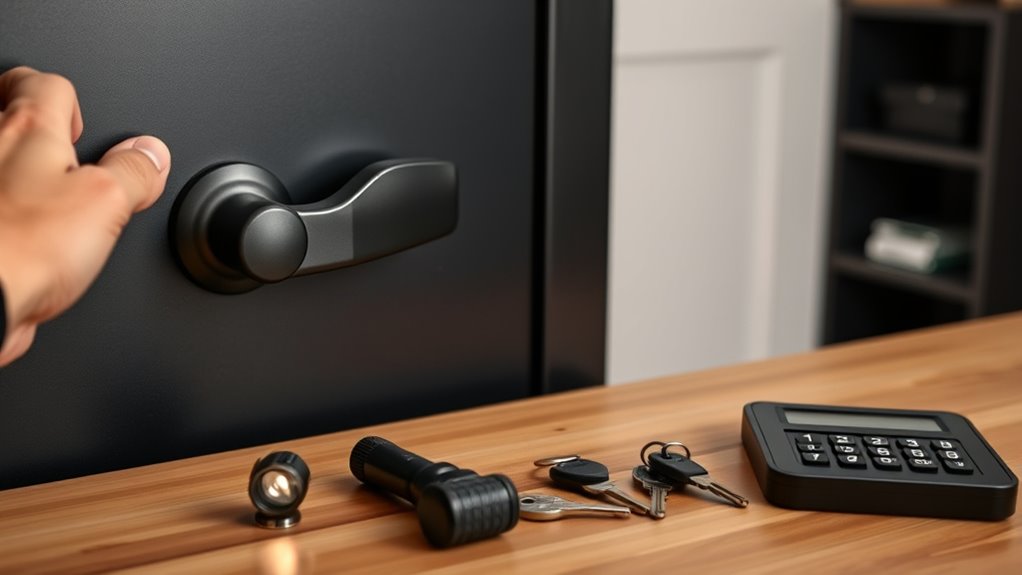
Before you try to open your gun safe, it’s important to assess your situation and gather the right tools. Think about security—are you the authorized owner or locked out? This will influence your approach.
Next, gather essential tools like a flashlight, screwdriver, or lock pick set if needed. Regularly maintaining your tools keeps them effective, so check that they’re clean, working, and suitable for your safe’s lock.
Be mindful of security and try to avoid damaging your safe or exposing its contents unnecessarily. If the lock or mechanism seems fragile, handle it with care.
Proper assessment and preparation help you avoid costly mistakes and make sure you’re ready. Once you’re confident in your tools and plan, you can proceed safely, efficiently, and with minimal risk to your safe’s security.
Figure Out Your Safe’s Lock Type
Knowing your safe’s lock type is an important first step before you try to open it. Different locks, like combination, key, or electronic types, need different approaches.
Figuring out the lock type can help you decide if you can try simple tricks or if you should call a professional. For example, resetting a combination lock might be possible if you have the right code, while picking a lock could work on mechanical types.
| Lock Type | Common Methods | Special Tips |
|---|---|---|
| Mechanical | Lock picking | Use delicate tools and be patient |
| Combination | Reset or recall codes | Look for manual or reset options |
| Electronic | Keypad or code entry | Check batteries and reset codes |
| Biometric | Fingerprint or retina scan | Usually needs authorized access |
| Key Lock | Use key or override | Keep spare keys nearby |
Try Simple and Safe Methods First
Starting with simple and safe methods is the best way to avoid unnecessary damage or frustration. Before trying anything complicated, make sure your hands are clean and dry to reduce the risk of slipping or damaging the lock.
Always prioritize firearm safety by ensuring the safe is empty and there are no rounds nearby. Sometimes, a gentle tap or jiggle can loosen a stuck lock or latch—this is a safe maintenance tip that can work without forcing it open.
If your safe uses electronic or combination locks, double-check your codes or batteries first. Using these straightforward techniques minimizes the risk of damaging the locking mechanism, saving you money and effort.
Use Emergency Overrides Carefully
If safe and simple methods haven’t worked, using the emergency override can be your next step. Emergency procedures are meant for urgent situations, but it’s important to use overrides carefully.
Before you proceed, review your safe’s manual and understand how the override works. This feature is designed as a last resort and bypasses the regular lock mechanism.
Always review your safe’s manual before using the override as it bypasses the regular lock.
When performing an override, go slowly to prevent further damage or accidental lockouts. Follow all safety precautions, like avoiding force or sudden movements, to prevent injury or equipment damage.
Use the override only if you’re confident about what you’re doing and have no other options. Improper use can damage your safe or compromise its security.
If you’re unsure, consult the manual or contact the manufacturer. Handling emergency procedures carefully helps keep your safe secure while you access your firearm quickly and safely in a critical moment.
Call a Professional Locksmith If Needed
Sometimes, trying to open your gun safe yourself can cause delays or even damage. If you’re feeling unsure or if there’s resistance, it’s better to call a professional locksmith.
A locksmith has the skills to open your safe safely and efficiently, without risking damage to the lock or your contents. They’re trained to handle different lock types and emergency situations, saving you time and frustration.
Professionals also follow strict safety precautions, which helps minimize any risks to you or nearby objects. Forcing your way in or using the wrong tools could make your safe harder to open later or cause more damage.
If you’re stuck or worried about damaging the safe, don’t hesitate to get professional help. A locksmith can quickly assess the situation, offer expert advice, and open your safe with minimal disturbance.
Frequently Asked Questions
How Can I Tell if My Safe Is Truly Locked?
You can tell if your safe is truly locked by testing the lock mechanism after entering your code or biometric verification. Make sure the indicator shows it’s locked and try to open it gently.
If it doesn’t open, the lock mechanism is secure. Double-check your biometric verification, like fingerprint, to confirm it recognizes you.
Always verify that the locking system works properly to keep your valuables safe and secure.
Are There Any Common Mistakes When Opening a Safe?
Yes, common mistakes include relying only on the locking mechanism without making sure it’s fully engaged.
You might also try using incorrect access methods, like entering the wrong code or forgetting the combo.
Avoid rushing—this can cause you to force the door open or damage the lock.
Double-check your access steps, make sure the lock is secured properly, and follow the safe’s instructions carefully to prevent errors when opening.
What Safety Precautions Should I Take During This Process?
You should always wear gloves to avoid leaving fingerprints and to handle the firearm safely.
Before opening the safe, take a moment to familiarize yourself with emergency procedures, like what to do if something goes wrong with the safe.
It’s also important to check the legal considerations—make sure you verify ownership and understand storage laws in your area.
Keep your hands away from the safe’s lock mechanism while operating it, and never force it open. Doing so could cause damage or injury.
Staying cautious throughout the process helps ensure your safety from start to finish.
How Long Does It Typically Take to Open a Safe?
It usually takes just a few seconds to a minute to open a safe, depending on what kind it is. If you have a combination lock, dialing in the right code is quick once you know how.
With biometric security, access can be instant once your fingerprint is recognized.
But if you forget the combination or something goes wrong, it might take a bit longer.
Practicing regularly helps ensure you can get in quickly and smoothly whenever you need to.
Can I Open a Safe Without Damaging It?
Yes, you can open a safe without damaging it by using lockpicking tools or safe deconstruction techniques carefully. If you’re experienced, lockpicking allows you to manipulate the lock without causing harm.
Alternatively, safe deconstruction involves dismantling parts step by step, but it’s tricky and might cause damage if you’re not careful. Always make sure you have the right knowledge or professional help.
Avoid forcing the safe, as this can cause irreversible damage. When in doubt, it’s best to consult a professional locksmith to open your safe safely.
Conclusion
Remember, opening a gun safe is like unlocking a treasure chest—you need patience and the right key.
A friend once shared how a small tool, like a gentle tap, finally revealed his safe’s secret after trying the simple methods.
Keep calm, follow these steps, and don’t rush. With care, you’ll unlock your safe, just like opening the door to peace of mind.
Knowing your belongings are secure but accessible when you need them most is the goal.
So take it slow and stay patient—your gun safe will open, giving you that sense of security.