10 Tips to Keep Your Gun Safe and Dry
Anyone who owns a firearm knows the importance of keeping their gun safe and dry, but it’s easy to overlook small details that can lead to rust or damage. You’re not alone—many gun owners struggle with moisture causing corrosion. That’s why it’s so important to have the right tips and tools to protect your firearm.
To keep your gun safe and dry, store it in a low-humidity location like a closet with a dehumidifier or a hidden safe. Use silica gel packs or digital hygrometers to monitor moisture levels and remove scents.
Regularly clean, lubricate, and inspect your firearm to prevent rust. Handle it with dry hands and store it securely in weather-resistant cases.
The more you follow these tips, the better protected your firearm will be from moisture damage and corrosion. Proper storage and maintenance are key to ensuring your gun stays in top condition for years to come.
Key Takeaways
- Store firearms in weather-resistant safes or containers with proper sealing to keep moisture out.
- Use silica gel packs and digital hygrometers to keep track of humidity levels and maintain low moisture.
- Make sure firearms are clean and well-lubricated to prevent rust and corrosion while in storage.
- Avoid storing guns in damp areas like basements or open spaces that aren’t sealed.
- Regularly check and maintain your storage solutions and firearms to ensure everything stays dry and secure.
How Moisture Damages Your Gun and Why It Matters
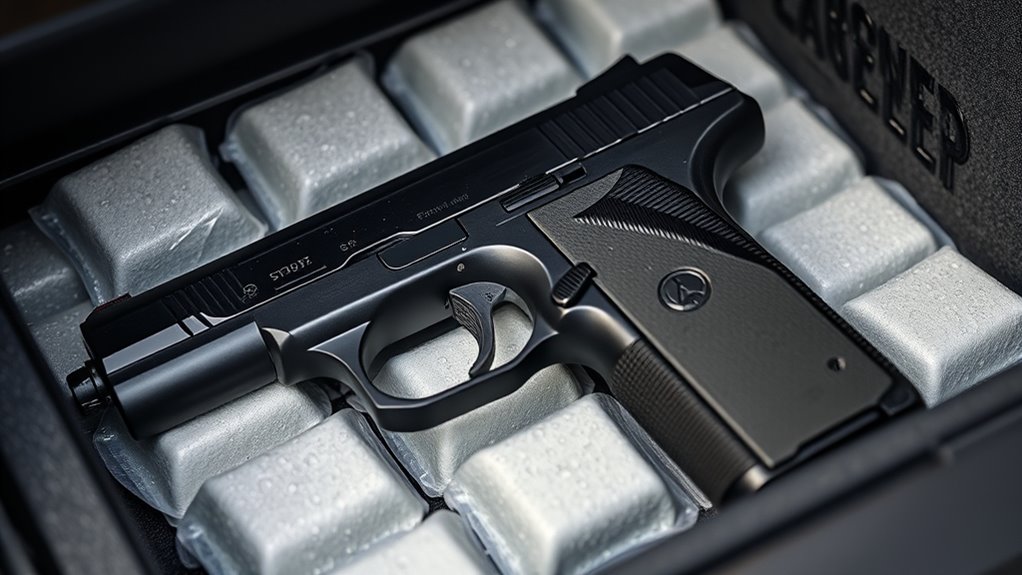
Have you ever wondered what moisture can do to your gun? When humidity or water gets into the environment, it speeds up corrosion and causes rust to build up. Rust prevention is crucial to keep your firearm performing well and lasting longer.
Moisture sneaks into tiny crevices, pits, or joints, which over time causes metal to break down. This corrosion weakens the structure and can affect the gun’s accuracy or safety. Even a short time in a damp place can start the rusting process if you don’t clean and dry your gun right away.
Ignoring moisture risks more than just surface rust—deeper pitting can develop and be much harder to fix. Rust can also cause moving parts to stick or jam, which can be dangerous during use. Staying on top of environmental exposure by keeping your gun dry and well-maintained is key to preventing rust.
Knowing how moisture damages your gun reminds you to take steps to protect it. Proper rust prevention helps keep your firearm reliable and in good shape for many years to come.
Where’s the Best Place to Store Your Gun for Safety and Dryness
The best place to store your gun combines a secure spot with a controlled environment that keeps moisture out. This helps ensure safe access while following firearm laws. Choose a locked gun safe or cabinet in a place away from heat, humidity, or water exposure.
This setup helps prevent unauthorized use and protects your firearm from rust and corrosion. Here’s a quick guide:
| Location | Features |
|---|---|
| Bedroom Closet | Easy to access, low humidity environment |
| Hidden Wall Safe | Discreet, secure, protected from elements |
| Closet with Dehumidifier | Keeps everything dry, easy to reach |
| Secure Basement Storage | Low humidity with fewer temperature swings |
| Fireproof Safe | Maximum protection and fire safety compliance |
Focus on these options to keep your firearm dry and accessible. Remember to prioritize safety and follow all regulations.
Using Desiccants and Humidity Control Devices to Keep Your Gun Dry
To prevent rust and corrosion effectively, using desiccants and humidity control devices in your gun storage is a must. First, pick the right desiccant by thinking about its absorption capacity and whether it can be reused.
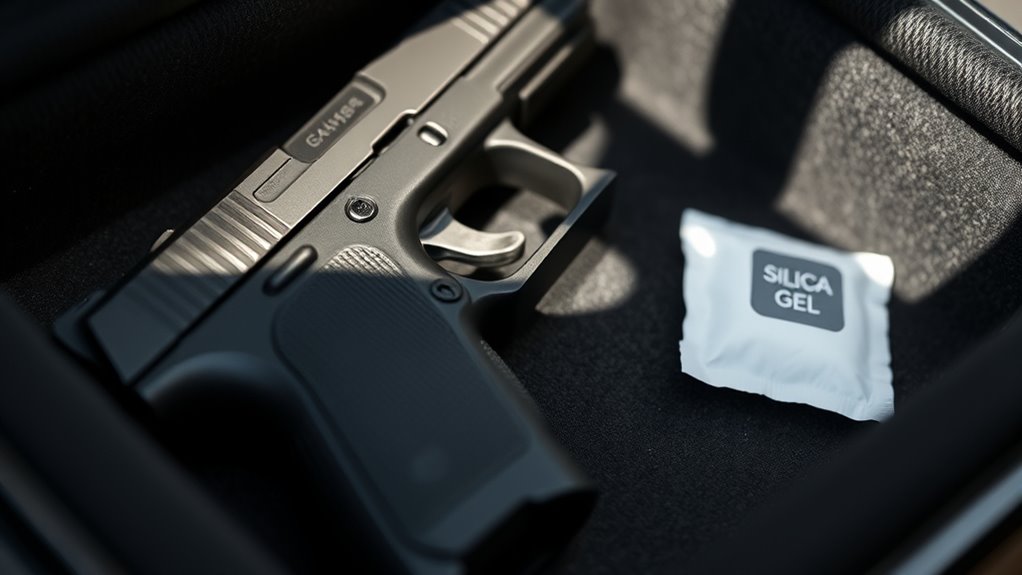
Silica gel packets are a popular choice because they’re effective and easy to replace or recharge. Additionally, using digital hygrometers helps you keep track of moisture levels, making sure your storage stays dry.
Silica gel packets are effective and easy to recharge, while digital hygrometers help monitor moisture levels in firearm storage.
Make a habit of checking these devices regularly to spot any rise in humidity early. Keep your desiccants dry and replace or recharge them as needed to stay effective.
Combining desiccants with humidity monitoring gives you a reliable system to protect your firearm from moisture. The main goal is to keep humidity below 50%—anything higher can promote rust.
Proper Cleaning and Maintenance to Prevent Rust
Regular cleaning and maintenance are essential for preventing rust and keeping your firearm in top shape. Start by inspecting your gun regularly, paying close attention to the barrel and metal surfaces.
Perform thorough barrel cleaning to remove residue and fouling that can trap moisture and cause corrosion. Use a solvent designed for firearms and a clean cloth or brushes for effective cleaning.
After cleaning, it’s important to apply gun lubricant to all moving parts and metal surfaces. Proper lubrication creates a protective barrier against moisture and reduces friction that can lead to rust.
Be sure to focus on areas prone to corrosion, like the barrel and chamber. Regular maintenance not only prevents rust but also keeps your firearm functioning smoothly and reliably.
Keep your gun dry, clean, and well-lubricated. This will help extend its lifespan and maintain safety and performance.
How to Handle Your Firearm Safely and Minimize Moisture Exposure
Proper handling of your firearm is key to keeping it in good condition and preventing moisture-related issues. When you handle your gun, always make sure your hands are dry and clean to avoid transferring moisture or oils that could lead to rust.
Use safe handling techniques to minimize accidental drops or impacts that might damage the firearm or cause moisture to seep in. Avoid touching internal or exposed metal parts unnecessarily, since sweat and oils can speed up corrosion.
When transporting your firearm, keep it in a moisture-resistant case or bag, especially in humid environments. After handling, wipe down the gun with a dry cloth to remove any sweat or moisture.
Store your firearm in a cool, dry place and avoid exposure to damp conditions. Focusing on safe handling and moisture prevention will help your gun stay in great shape, ensuring it remains reliable and rust-free for years to come.
Choosing and Installing a Secure Gun Safe or Cabinet
When you’re picking out a safe, go for one that’s solid and tough enough to stop anyone from tampering with it. Also, make sure it’s big enough so your firearms fit comfortably inside—nothing worse than cramming everything in tight!
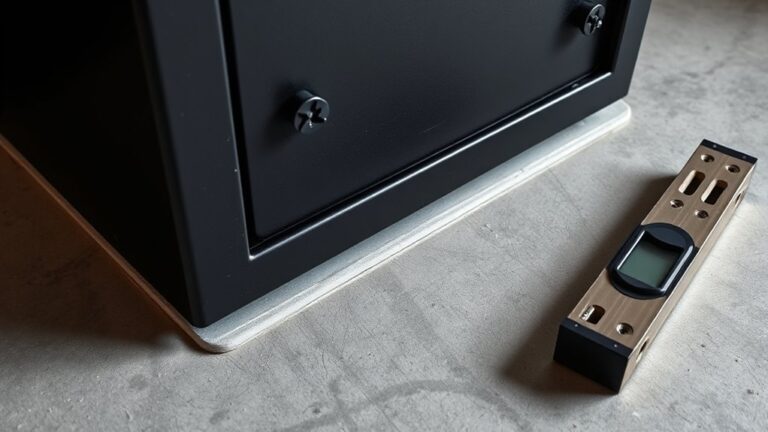
And don’t forget about the installation—this part’s super important. You should anchor the safe securely to the wall or floor to prevent it from getting stolen or tipping over. When you choose the right safe and set it up properly, you’re doing a lot to boost your security and keep your firearms protected.
Selecting the Right Safe
Choosing the right gun safe begins with understanding your specific needs and space limitations.
If you want discreet gun concealment, look for safes designed to double as furniture or storage pieces that blend into your home decor.
For firearm customization, pick a safe with adjustable shelving, padded compartments, or multiple entry points to fit various firearm types and accessories.
Consider security features like solid steel construction, programmable locks, and pry-proof mechanisms to keep your guns safe.
Size really matters—choose a safe big enough to store all your guns and gear comfortably, but not so bulky that it’s hard to move or hide.
Making the right choice ensures your firearms are protected from theft, moisture, and damage. It also gives you peace of mind, knowing your safe fits your lifestyle and storage needs.
Proper Installation Techniques
Installing your gun safe correctly is just as important as selecting the right one. Start by choosing a sturdy, concealed spot that minimizes theft risk and allows for secure anchoring.
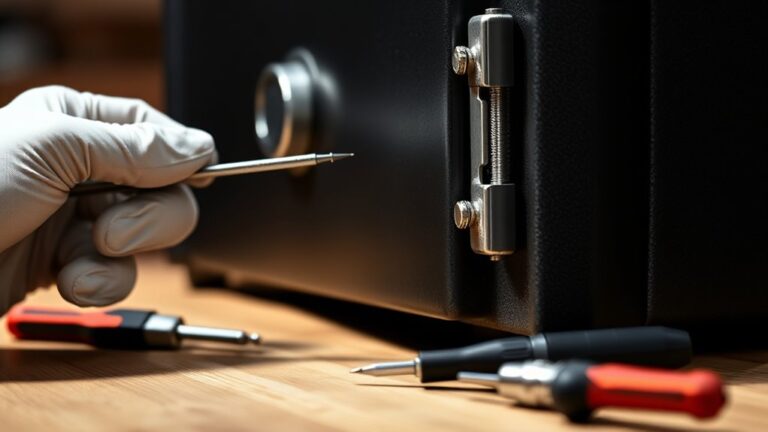
Use heavy-duty bolts to anchor the safe firmly to the floor or wall, preventing a thief from carrying it away. Confirm the safe’s door opens fully without obstructions, and double-check that the trigger safety mechanisms are accessible but secure.
Proper installation also involves organizing your ammunition storage separately from firearms, reducing hazards. Avoid placing your safe in damp or humid areas to prevent rust and corrosion.
Regularly inspect anchors and locks to guarantee ongoing security. By following these techniques, you protect your firearms, ensure safe trigger handling, and keep your guns dry and ready for use.
How Often Should You Inspect and Maintain Your Firearm?
Regularly inspecting and maintaining your firearm is key to making sure it works safely and reliably. How often you do this depends on how much you use it and how you store it. A good rule of thumb is to check it once a month.
Regular firearm inspection ensures safety, reliability, and longevity with monthly checks and proper maintenance routines.
This includes inspecting your firearm accessories to make sure all parts are in top shape. Regular cleaning helps prevent dirt and moisture from building up and causing problems with your shooting.
Consider following this routine:
- Disassemble and thoroughly clean your firearm after each use or every few weeks if it’s not in use.
- Look for any signs of rust or wear, especially on moving parts.
- Lubricate as recommended to keep everything working smoothly and prevent rust.
- Check the condition of magazines and other accessories.
Staying diligent with these steps helps prevent malfunctions and extends your firearm’s lifespan. It also keeps your weapon ready whenever you need it most.
Following a good maintenance schedule boosts your confidence and keeps firearm safety at the forefront of your practice.
Tips for Protecting Your Gun During Travel and Outdoors
Keeping your firearm clean and well-maintained at home is just the beginning; safeguarding it during travel and outdoor activities is just as vital. When you’re on the go, exposure to dirt, moisture, and harsh elements can damage your gun quickly.
Use quality firearm accessories like weather-resistant cases and gun cleaning kits to protect your firearm. Before heading out, give your gun a thorough cleaning to remove dirt and moisture, and make sure all moving parts are well-lubricated.
When traveling, store your firearm in a secure, waterproof case to prevent water damage. Avoid leaving it exposed to rain or humidity, and consider using silica gel packs to absorb excess moisture.
Regularly check your firearm during outdoor trips and clean it as needed, especially after exposure to dirt or water. Properly protecting your gun during travel and outdoor use helps prolong its life and keeps it ready when you need it most.
Debunking Common Myths About Gun Storage and Weather Resistance
A lot of folks think that just storing their guns in certain cases or containers keeps them safe from moisture. But honestly, that’s not always the case. Just because a gun is tucked away in a specific spot doesn’t automatically make it weatherproof.
It’s a common myth that simply placing your firearm somewhere guarantees it won’t be affected by humidity or rain. The truth is, understanding how to properly protect your gun from moisture and weather makes all the difference.
Myths About Moisture Damage
Are the common beliefs about gun storage and weather resistance really accurate? Many fall for humidity myths and moisture misconceptions, thinking that storing your firearm in a humid environment inevitably causes rust. But that’s not always true. Proper precautions, like using desiccants, can regulate moisture levels effectively.
It’s a myth that guns must be kept in airtight containers; some airflow can prevent condensation. Relying solely on desiccants without addressing overall humidity levels isn’t enough. Many believe silicone weapon cases are moisture-proof—yet, they only slow moisture buildup.
In addition, storing guns in cold environments doesn’t mean rust is inevitable if the firearm isn’t exposed to rapid temperature swings. Airtight containers can trap moisture, worsening corrosion. Silicone cases don’t eliminate humidity issues either.
Cold storage isn’t always protective. Desiccants alone aren’t a complete solution. It’s important to understand that proper ventilation and humidity control matter more than just sealing or temperature.
Clarifying Storage Misconceptions
Misconceptions about gun storage can lead to practices that are ineffective or even harmful. Some folks believe a standard gun safe automatically keeps out moisture, but that’s not always true.
Not all safes are weatherproof. Investing in a safe with weather-resistant features gives your firearms better protection against humidity and rain.
Others think storing guns in unsealed containers will keep them dry. But that can trap moisture and cause rust or corrosion.
Remember, a weatherproof gun safe offers extra protection, but proper maintenance is just as important.
Don’t assume all storage methods are equal—pick durable, weather-resistant options and keep up with regular inspections.
Creating a Long-Term Firearm Preservation and Maintenance Plan
A long-term firearm plan ensures reliability, with regular cleaning crucial for preventing rust and maintaining perfect condition.
Taking care of your accessories, like lubricants and storage cases, also helps prolong their lifespan. Staying consistent with routine inspections and cleanings lets you spot issues early on.
Use quality cleaning products and steer clear of harsh chemicals to protect the metal and wood finishes. Proper storage, with controlled humidity, keeps your firearm dry and free from corrosion.
It’s a good idea to make a maintenance checklist so you can track cleaning and inspections. Keeping your tools organized ensures you can get to them quickly when needed.
Always handle your gun with safety in mind. Following these steps will help safeguard your investment and keep your firearm functioning flawlessly when you need it.
Sticking to your preservation plan preserves both your gun’s performance and your safety over many years.
Frequently Asked Questions
What Are the Signs My Gun Is Corroding Due to Moisture?
If your gun is corroding from moisture, you’ll notice rust spots or a dull, flaky surface during gun cleaning. It might also look pitted or rough in certain areas.
You could see corrosion around the barrel or inside the chamber, especially if moisture gets trapped there. Poor storage conditions, like keeping your gun in a humid place, speeds up rust formation.
To prevent this, always clean your gun well after use and make sure it’s stored in a dry, controlled environment. Proper storage and regular cleaning are key to stopping corrosion before it starts.
Can Certain Gun Materials Resist Rust Better Than Others?
Some gun materials, like stainless steel and polymer, wear rust like armor, resisting corrosion better than plain steel. You can help extend their life with regular cleaning and smart storage solutions, like gun safes with dehumidifiers.
These materials act as shields against moisture, but consistent maintenance is key to keeping rust at bay. Just choosing guns made from corrosion-resistant materials and storing them properly can really protect your investment from the silent eater, rust.
How Does Ambient Temperature Affect Gun Moisture Levels?
Ambient temperature greatly influences gun moisture levels because warm air can hold more humidity, which raises the risk of rust. So, keeping an eye on humidity is key, especially when it’s hot outside.
In warmer temperatures, moisture tends to build up more easily, so focus on controlling humidity in your storage area to keep your gun dry. Cooler temperatures usually mean lower humidity, which helps prevent rust.
It’s also a good idea to maintain a consistent temperature to avoid condensation forming on your firearms. Using desiccants or silica gel packs in your gun safe can help keep humidity levels in check and protect your guns.
Are Waterproof Gun Cases Truly Effective Against Moisture?
Think waterproof gun cases are your bulletproof armor? Think again. While they’re designed as moisture barriers, they’re not foolproof.
Unlike a true waterproof armor, they can fail if not sealed properly or if exposed to extreme conditions. To truly protect your firearm, choose cases with reliable seals and quality construction.
What Beginner Mistakes Increase Gun Corrosion Risk?
You often increase gun corrosion risk when you neglect proper gun maintenance, like forgetting to clean and oil your firearm regularly.
Using poor storage solutions, such as leaving your gun in humid areas or unprotected containers, also invites rust.
Avoid these mistakes by practicing consistent gun maintenance and choosing secure, dry storage options.
Regular cleaning and proper storage keep your firearm rust-free and ready for use when needed.
Conclusion
To keep your gun safe and dry, regular maintenance is key. Did you know that moisture is responsible for up to 90% of firearm malfunctions?
By storing your firearm properly, using desiccants, and inspecting it often, you can reduce rust and corrosion. Staying proactive helps ensure your firearm stays in top condition for years to come, whether at home or in the field.
Protect your investment and safety by following these tips. Remember, moisture control is vital for gun safety, so stay diligent—your gun will thank you!