When Is a Gun Safe Tax Deductible?
Are you feeling overwhelmed trying to figure out when a gun safe is tax deductible? You’re not alone—many people struggle with understanding the rules around deducting safety-related purchases on their taxes.
A gun safe is tax deductible when it’s used mainly for business purposes or safety compliance, not personal storage.
If you buy the safe to protect assets, meet legal safety standards, or secure firearms for work-related activities, you may qualify. Personal storage at home generally isn’t deductible.
To better understand how your specific situation fits, you’ll find helpful details if you examine further.
Key Takeaways
- A gun safe is tax deductible if you mainly buy it for business security or safety compliance.
- The deduction is higher if you’re using the safe to protect business assets, inventory, or employees.
- Personal firearm storage costs usually don’t qualify unless they’re linked to specific safety or legal needs.
- Keep good records, like receipts and usage logs, to prove your deduction if you’re audited.
- Asking a tax pro can help ensure you classify and claim your gun safe correctly under IRS rules.
Are Gun Safe Purchases Tax Deductible? What You Need to Know
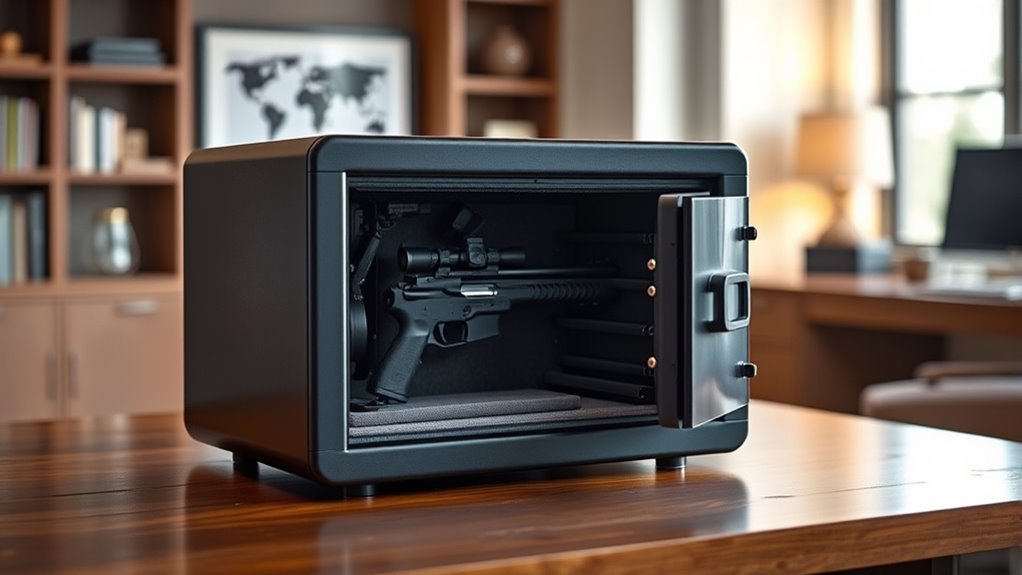
Many people wonder if buying a gun safe can be claimed as a tax deduction, but usually, it’s not directly deductible. A gun safe helps promote gun safety by keeping firearms secure and out of reach of unauthorized individuals.
When it comes to taxes, the purchase generally isn’t considered a business expense unless you’re a licensed firearms dealer or work in a related field. Federal firearms laws emphasize responsible storage, which gun safes support.
Even so, buying a safe doesn’t usually qualify for a deduction unless specific conditions are met. If you’re trying to connect your purchase with gun safety or legal compliance, focus on how it helps you follow laws or improve security.
For most people, this expense is personal and doesn’t offer immediate tax benefits. Always talk to a tax professional to understand your particular situation better.
Understanding IRS Rules for Business Expenses and Asset Deduction
Understanding IRS rules for business expenses and asset deductions can help you determine if a gun safe—or any other purchase—is tax deductible.
The IRS allows you to deduct expenses that improve safety standards, especially related to fire prevention or security needs.
To qualify, the expense must be directly linked to your business and necessary for protecting valuable assets or maintaining safe working conditions.
Expenses must be directly linked to your business and necessary for asset protection or safety.
A gun safe bought for security purposes might be a deductible business asset if it helps meet safety standards and fire prevention rules related to your industry.
Be sure to keep detailed records and receipts to back up your claim, highlighting how the purchase boosts safety or fire prevention efforts.
Remember, personal use or unrelated purchases generally aren’t deductible.
When thinking about deductions, evaluate whether the expense directly improves your business’s security, safety, or compliance with safety standards. This helps ensure you meet IRS guidelines.
When Can a Gun Safe Be Considered a Business Asset for Tax Purposes?
A gun safe can be considered a business asset when it’s mainly bought for security reasons directly related to your business.
If your business needs secure storage for firearms used professionally, like at a shooting range, firearms dealer, or security service, then the safe counts as a necessary investment.
Having a safe helps protect your inventory, staff, and clients, and it aligns with gun safety protocols.
To be deductible as a business asset, the safe must be used only for business-related firearm storage and not for personal use.
Keep proper records like receipts and detailed usage logs to support your case.
If your firearm storage is a core part of your business, the safe isn’t just an expense. It can be a valid business asset that you can depreciate or deduct.
Does the Purpose of Your Gun Safe Affect Its Tax Deductibility?
The purpose behind buying your gun safe really matters when it comes to whether you can claim it as a tax deduction. If you’re buying it mainly for safety reasons, like protecting kids or preventing theft, it’s more likely to qualify.
Proper firearm maintenance helps too, especially if the safe is used solely for storing guns related to your business or safety needs. But if the safe is mainly for personal storage and isn’t connected to your work or safety obligations, it’s less likely to be deductible.
The IRS looks at what you intend to do with the safe, so making it clear that it’s for business or safety purposes can impact its eligibility. Be sure to keep records showing your reason for purchasing it, especially if safety or firearm maintenance is your main goal.
Can You Deduct a Gun Safe if You Store Firearms Personally?
If you’re storing firearms personally, deducting the cost of a gun safe gets more complicated. The IRS typically considers personal firearm storage a personal expense, not a business or tax-deductible one.
However, if you use your gun safe for home security or firearm safety that’s directly related to your job or a qualified activity, there’s a small chance you might be able to deduct it.
| Situation | Deductible? | Notes |
|---|---|---|
| Storing guns for personal use | Usually no | considered a personal expense |
| Using safe for business | Possibly, if related to work | consult a tax pro |
| Home defense/security | Generally no | not deductible unless part of a business |
| Firearm safety training expenses | Sometimes, if required | but the safe alone is unlikely deductible |
In most cases, personal firearm storage isn’t deductible unless it’s directly tied to a qualified activity or business use.
What Documentation Is Required to Claim a Gun Safe Deduction?
To claim a gun safe deduction, you’ll want to have some key documents in hand. First off, make sure you have a copy of the receipt or proof of purchase for the safe. That just helps show the cost and confirms when you bought it.
If you’re claiming it for business purposes or as a deduction, it’s also good to have records that show you actually own the safe. This could be any form of ownership documentation or records showing how the safe is used, especially if it’s for storing work-related firearms.
Having all these documents ready will make the process much smoother and help ensure your deduction is well-supported.
Proof of Purchase
When claiming a gun safe deduction, you need to provide proof of purchase to support your claim. This documentation confirms the expense and helps show that the safe is used for firearm safety in line with firearm rules.
Your receipt or invoice should clearly show the purchase date, the vendor’s name, and the amount paid. Keep the original or a digital copy for your records, as tax authorities might ask for it later.
Having these documents ready helps back up your deduction and avoid issues during an audit. Remember, the IRS needs proper proof to verify that your purchase was legitimate and related to gun safety, complying with firearm regulations.
Proper proof of purchase strengthens your claim and makes the deduction process smoother.
Ownership Documentation
Ownership documentation is essential for claiming a gun safe deduction because it provides proof that you legitimately own the safe and are using it for firearm safety purposes. To meet this requirement, keep records like purchase receipts, registration papers, or any official documentation showing your ownership.
These documents demonstrate your commitment to gun safe security and adherence to firearm safety protocols. Confirm the paperwork clearly lists the safe’s details, purchase date, and your name. Proper documentation helps substantiate your claim if questioned by tax authorities.
It also proves you’re taking responsible steps to secure firearms. Having these records ready supports the legitimacy of your deduction and aligns with responsible firearm handling practices. Clear ownership documentation is a key part of the deduction process.
Business Use Records
Proper business use records are essential for claiming a gun safe deduction because they show that the safe is used mainly or only for your business.
To support your claim, keep detailed documentation of gun safe installation and firearm security measures. This includes receipts, photos, and installation dates showing where the safe is placed and its purpose.
Also, maintain records of the firearms stored and how they relate to your business activities. If your gun safe is used for firearm security or to protect business assets, these records help prove its business use.
Regularly update and organize these documents. Doing so makes it easier to demonstrate your deductible expenses if you’re audited and ensures your deduction follows IRS rules.
Which Professions or Businesses Qualify for Deducting Gun Safes?
Certain professions or businesses can qualify for deducting gun safes if they show that securing firearms is essential to what they do.
Certain trades can deduct gun safes if secure firearm storage is essential to their operations.
If safety rules require strict firearm security or if your work involves handling valuable or dangerous weapons, a gun safe might be considered a necessary expense.
Examples include:
- Law enforcement agencies storing confiscated weapons
- Gun stores and firearm dealerships following safety regulations
- Security companies maintaining firearms for client protection
- Shooting ranges needing secure storage for rental guns
Visualize a heavy, fire-resistant safe, bolted to the floor, protecting sensitive firearms from theft or accidents.
These businesses often face strict safety rules that emphasize secure storage standards.
If you meet these criteria, your firearm storage can be considered a legitimate business expense.
This means you can deduct the cost of gun safes as part of your operational costs.
Just make sure to keep proper documentation to back up your deduction claim.
How to Differentiate Between Personal and Business Use of Your Gun Safe
When claiming deductions for your gun safe, it’s important to know how to tell apart personal use from business use.
If you mainly use the safe for storing firearms related to your work—like if you’re a security guard or firearm instructor—this probably counts as business use.
But if it’s mostly used at home for your own gun safety, that’s considered personal use.
Keep track of how often you open the safe for work compared to personal reasons.
Make sure to note why you’re using it whenever it’s for your job.
The main thing is whether the firearm storage directly supports your work or business.
If the safe is used mostly or only for your business, you can justify a deduction.
Having clear records and separating personal from business use makes it easier to prove the purpose if the IRS asks.
Common Mistakes to Avoid When Deducting a Gun Safe on Taxes
A common mistake is claiming a deduction without solid documentation to prove the safe’s primary use for business purposes. Without proper proof, your claim can be rejected or trigger audits. When considering firearm security and gun safe installation, keep detailed records of how the safe is used for your business.
Picture these common pitfalls:
- Forgetting to keep receipts or invoices for the gun safe purchase
- Misrepresenting personal use as business use, which blurs the lines of deductibility
- Failing to document the safe’s installation process and location
- Overlooking the importance of showing the safe is essential for firearm security in your business
Making sure you can support your claim strengthens your case and keeps you compliant with IRS rules. Accurate documentation of your gun safe installation and its purpose is key to avoiding costly mistakes when deducting a firearm security expense.
Should You Consult a Tax Professional About Deducting Your Gun Safe?
Tax laws can be pretty complicated, and figuring out whether your gun safe qualifies for a deduction can be pretty tricky. It’s easy to get lost in the details and wonder if you’re missing out on some benefits. That’s where chatting with a tax professional can really help. They know the ins and outs and can guide you through the process so you don’t make any mistakes.
Tax Laws Complexity
Given how complicated tax laws can be, figuring out if your gun safe qualifies for a deduction isn’t always clear. Tax codes can be confusing, especially when you’re dealing with gun safety and firearm regulations.
You’ll want to consider if your gun safe is specifically used for firearm safety and security. Also, think about whether the deduction fits with your business or home office expenses.
There are detailed rules around deducting items related to firearm regulations, and tax laws can change from year to year, which affects what’s possible.
Because of all these complexities, it’s easy to misinterpret what qualifies. Navigating this on your own might lead to mistakes or missed deductions.
Talking to a tax professional can help clarify if your gun safe’s purpose lines up with the law and make sure you’re not missing anything important.
Expert Guidance Benefits
Managing the rules around deducting a gun safe can quickly become confusing, especially with constantly changing tax laws. Consulting a tax professional offers valuable guidance and helps you navigate complex issues like safe installation and firearm regulations.
They can clarify whether your safe qualifies as a deductible asset and guarantee you’re complying with local laws. A professional also keeps you aware of recent tax law updates that might affect your deduction.
Without expert advice, you risk overlooking important details or making mistakes that could trigger audits or penalties. By seeking guidance, you’ll gain confidence in your deduction strategy, save time, and avoid costly errors.
Ultimately, a tax professional helps ensure you’re making the most of your eligible deductions while staying compliant with all relevant regulations.
Frequently Asked Questions
Are There Specific Receipt Requirements for Claiming a Gun Safe Deduction?
Yes, you need a detailed receipt showing the purchase of your gun safe to claim the deduction.
Make sure the receipt includes the item’s description, date, and cost. To meet firearm safety and storage regulations, keep records that prove your safe was purchased specifically for firearm safety.
Proper documentation ensures you’re following storage regulations and supports your deduction claim if audited. Always keep these receipts with your tax records.
Can a Gun Safe Be Deducted if Used for Both Personal and Business Purposes?
Certainly, if you’re using a gun safe for both personal and business purposes, you may be able to claim a deduction.
Assigning a fair portion for crime prevention and home security, which benefits your business, might qualify that part of the safe’s cost.
Keep detailed records, especially receipts, and make sure your use aligns with IRS guidelines for mixed-use items.
This way, you can balance safety and tax benefits effectively.
What Are the Limits on Deducting the Cost of a Gun Safe?
You can deduct the cost of a gun safe if it’s used mainly for your business.
However, there are limits to this deduction. It usually depends on the safe’s value and how you use it. Safety rules and insurance coverage play important roles too.
Remember, the IRS caps deductions based on your overall business expenses. Making sure your gun safe meets safety standards helps support your claim.
Always check with a tax professional to understand the specific limits that apply to you.
How Does the Age or Condition of the Gun Safe Impact Deductibility?
Did you know that around 30% of firearm owners purchase gun safes mainly for safety compliance? Your gun safe’s age and condition do matter when it comes to deductibility because older or heavily used safes can qualify for depreciation, which can impact your tax deductions.
Safety regulations also play a role here, often requiring newer safes to meet compliance standards. This might make a more recent safe a necessary business expense.
Keep in mind, the IRS considers gun safe depreciation, so tracking its age and condition can help you optimize your deductions.
Are There State-Specific Rules Affecting Gun Safe Tax Deductions?
State-specific rules can affect gun safe tax deductions, especially if they’re tied to firearm safety regulations or insurance coverage needs. Some states might offer incentives for installing secure safes that promote firearm safety, while others may not have such provisions.
To get the most benefits, check your state’s tax laws and make sure your safe meets local safety and insurance standards. This way, you can prove it’s essential for securely storing firearms.
Conclusion
In conclusion, if you’re using a gun safe primarily for business purposes, you might be able to deduct it on your taxes. Did you know that over 70% of small business owners have successfully claimed equipment deductions, including safes?
Just make sure your use aligns with IRS rules and keep detailed records. To avoid mistakes, consider consulting a tax professional. It’s a small step that can save you big headaches come tax season.