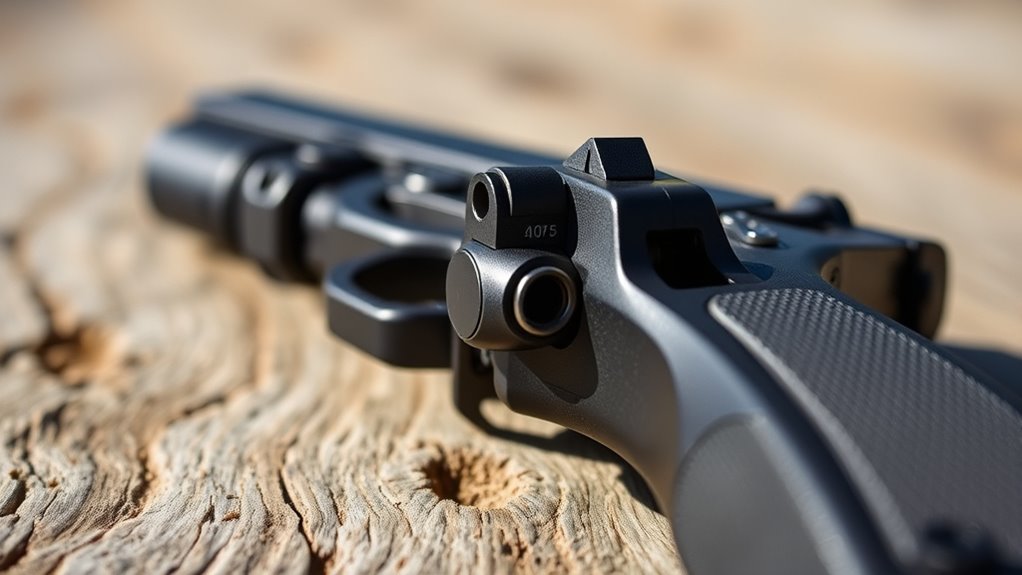
5 Steps to Aim With Suppressor Height Sights
Many shooters find aiming with suppressor height sights challenging, especially when precision matters most. You’re not alone—this is a common hurdle. But with the right technique, you can master these sights and boost your accuracy.
To aim effectively with suppressor height sights, start by ensuring your sights are properly aligned, focusing on the front post centered in the rear notch. Maintain a stable grip and position your eyes directly behind the sights for clear sight acquisition.
Focus sharply on the front sight, controlling your breathing with a slow exhale and a brief hold at the natural pause.
Check and clean your sights regularly and adjust your stance if needed.
Keep these steps consistent, and you’ll see your accuracy improve. More tips follow to refine your technique further.
Key Takeaways
- Make sure the front sight is centered within the rear notch, keeping the alignment consistent.
- Focus sharply on the front sight, while keeping your eyes relaxed and natural for clear visibility.
- Stabilize your grip and stance to minimize movement and keep your sight picture steady.
- Line up your dominant eye directly behind the sights for an unobstructed, clear view.
- Regularly check and clean your sights to keep them visible and functioning properly.
What Are Suppressor Height Sights and Why They Matter
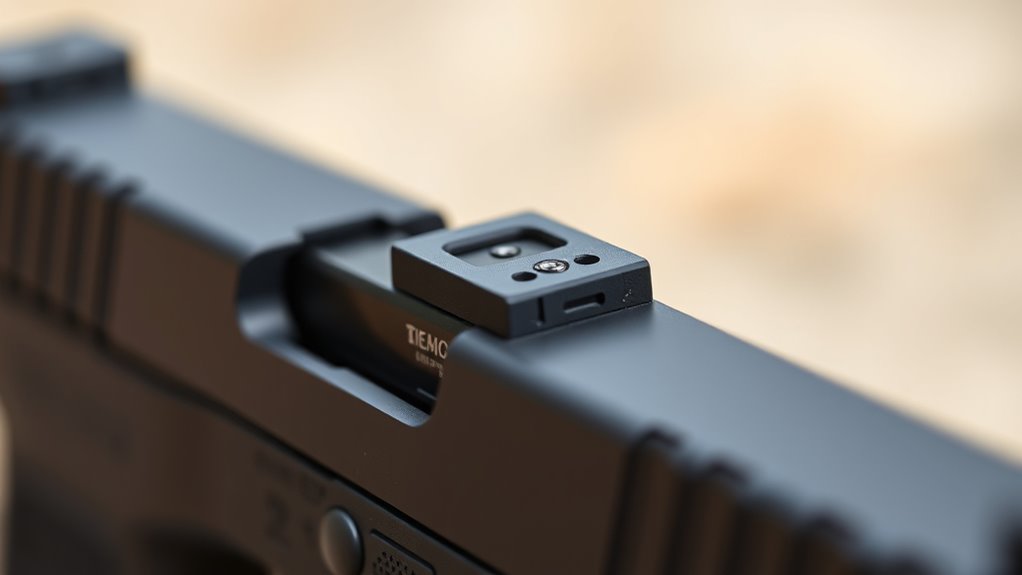
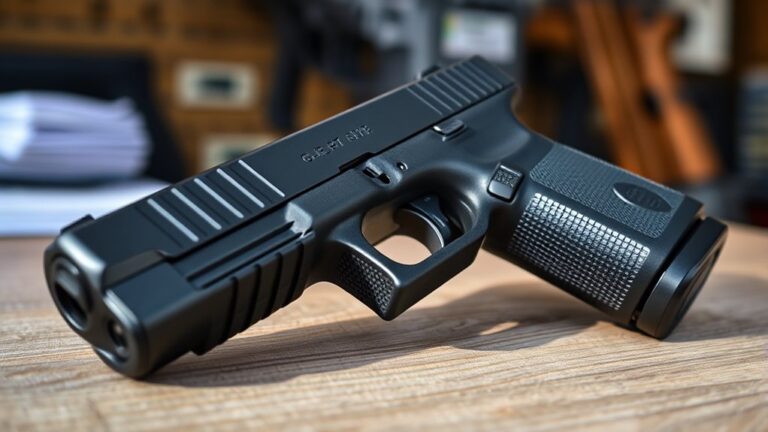
Suppressor height sights are made to sit higher than standard sights, so they don’t get in the way of mounted suppressors. Their extra height makes sure your sights stay clear of the suppressor, keeping your line of sight unobstructed during shooting.
Suppressor height sights sit higher to keep your line of sight clear of mounted suppressors.
When choosing these sights, it’s important to check if they’re compatible with your firearm and suppressor. Not all sights fit every gun or suppressor model, so verifying compatibility helps avoid issues.
While they give you more clearance, suppressor height sights can affect how quickly you can bring your sights back on target. Since they are higher, it might take a moment longer to reacquire your sights, especially during rapid fire.
Understanding this helps you adapt your shooting style accordingly. Overall, these sights are key because they balance suppressor clearance with sight functionality—making them an important part of your gear when using suppressors.
Getting Your Sights Aligned Perfectly
Achieving perfect sights alignment is key for accurate shooting. It all starts with making sure your sights are properly centered and level with each other.
Sighting calibration helps confirm your sights are correctly aligned with your firearm’s bore. This is crucial for consistent accuracy.
Begin by placing your pistol on a stable surface or shooting rest. Focus on sight acquisition techniques: keep your eyes relaxed and position your shooting eye directly behind the sights so you have a clear view of both the front and rear sights.
Use a target at a close distance and center the front sight in the rear sight notch. Make small, deliberate adjustments until the front post is perfectly aligned in the center of the rear sight.
Practicing sight acquisition regularly will help you build muscle memory. This makes it easier to quickly and accurately maintain perfect sight alignment each time you shoot.
Adjusting Your Grip and Eye Position for Accuracy
To improve your shot accuracy, pay close attention to how you grip your pistol and position your eyes. Proper grip techniques help you control the gun and shoot consistently, so hold your hand firmly but comfortably, with a natural wrist extension. Your grip should be tight enough to control the gun but not cause tension.
Focus on your eye dominance to align your sights properly. If you’re right-eye dominant, keep your right eye centered on the sights, and do the same if you’re left-eye dominant. Position your head so your eyes are level with the sights, avoiding tilt or fidgeting for the perfect sight picture.
Consistent eye and grip positioning create a stable shooting platform, helping you pick up a clear sight picture quickly. Remember, your grip and eye focus are the foundation of accurate shooting. Fine-tuning them improves your control and keeps your shots on target.
Mastering Your Sight Picture and Breathing
| Step | Focus Point | Breathing Technique |
|---|---|---|
| Sight alignment | Focus sharply on the front sight | Breathe normally, then exhale slowly |
| Sight picture | Align sights with the target | Hold your breath briefly at the natural pause |
| Sight sharpening | Keep your eyes steady and consistent | Maintain this position when you take the shot |
| Aiming mechanics | Use a steady, controlled grip | Avoid moving unnecessarily during the shot |
This process helps improve your aim and gives you better control and quicker target acquisition. Practicing these steps regularly will sharpen your skills and boost your confidence as a shooter.
Troubleshooting Common Aiming Problems
Even experienced shooters encounter aiming issues, but spotting and fixing common problems can really improve accuracy. One frequent issue is inconsistent sight alignment, often caused by worn or improperly positioned suppressor sights. Modern sights have come a long way in durability, but wear can still lead to parallax or fuzzy sights that affect your aim.
Inconsistent sight alignment from worn suppressor sights can impact shooting accuracy—regular maintenance helps keep your aim steady.
To troubleshoot, start by checking for visibility issues like dirt or debris on your sights. Cleaning them usually clears up the problem. Also, look for loose or damaged sights—these might need tightening or replacement.
Another common cause is an inconsistent sight picture, which can come from improper grip or stance. Focusing on stable fundamentals helps keep your aiming steady.
Knowing about suppressor sight durability and staying up to date with the latest sight advancements helps you solve issues faster. Regular maintenance and a proper sight setup ensure your sights stay reliable, so you can focus on aiming precisely instead of worrying about equipment problems.
Frequently Asked Questions
Can Suppressor Height Sights Be Used With All Types of Pistols?
Suppressor height sights aren’t compatible with all pistols because of different suppressor height requirements.
You should check if your pistol model lets you adjust sight elevation and if the sights match your gun’s dimensions.
If the sights aren’t adjustable or don’t fit your pistol’s size, they won’t sit properly.
Always double-check compatibility before installing to make sure everything lines up right and you can aim effectively.
What Are the Common Mistakes When Aiming With Suppressor Height Sights?
When aiming with suppressor height sights, it’s easy to mistake poor sight alignment for accurate shooting.
Common mistakes include not focusing on the front sight, which can really hurt your precision.
Also, not keeping a consistent eye position can lead to misaligned sights and missed targets.
Rushing the shot or not making sure the sights are centered can also reduce your accuracy.
Practicing slow, deliberate aiming helps improve sight alignment and overall shooting precision.
How Often Should You Realign or Check Your Suppressor Height Sights?
You should check your suppressor height sights regularly to keep your sight alignment on point and ensure your sight picture stays accurate.
A good rule of thumb is to do a check before each shooting session or after firing about 200-300 rounds.
Doing these frequent checks helps catch any shifts or misalignments early on, so your accuracy remains consistent.
Regular inspections make sure your sights stay lined up, so your sight picture stays precise and you can hit your target reliably.
Are There Specific Cleaning Tips for Maintaining Suppressor Height Sights?
For sight maintenance, you should regularly clean your suppressor height sights using a soft brush and mild solvent to remove debris and dirt. Avoid harsh abrasives that could damage the sight.
When needed, perform sight adjustments carefully to guarantee proper alignment. This routine keeps your sights clear, maintains accuracy, and prolongs their lifespan.
Doing so ensures consistent performance every time you shoot. Regular cleaning and precise sight adjustment are key to reliable use.
How Does Lighting Impact Aiming With Suppressor Height Sights?
Lighting plays a vital role when aiming with suppressor height sights. You might think they’re harder to see in low light, but advancements in night vision and ambient lighting make it easier to track your sights clearly.
Good lighting boosts visibility, which helps you align your sights accurately. Even in dim conditions, using night vision gear or enough ambient light ensures you keep precise control.
This means you can still shoot accurately in low light situations, improving your overall shooting performance.
Conclusion
Like a skilled archer drawing back their bow at dawn, your steady aim with suppressor height sights calls for patience and precision. Trust in what you’ve learned—aligning your sights, mastering your grip, and controlling your breath.
With consistent practice, you’ll notice tighter groups forming. It’s almost as if the universe is guiding your shots with a silent whisper. Every shot you take gets you closer to mastering your aim with suppressor height sights.
Remember, every effort helps you become the marksman you’ve always envisioned. Whether on the range or in a moment of quiet focus, these steps bring you closer to shooting with confidence and accuracy.