How to Reset Gun Safe Code in Seven Steps
Many people struggle with remembering or changing their gun safe code, especially when trying to ensure their belongings stay secure. If you’re finding it tricky to reset your safe’s code, you’re not alone.
Sometimes, figuring out whether your safe is digital or mechanical adds to the confusion.
To reset your gun safe code, first identify whether it’s digital or mechanical, then gather tools like batteries or a reset key.
Locate the reset button or access panel behind the keypad or inside the door.
Use the manual or manufacturer instructions to reset to factory settings or set a new code.
Test the new code thoroughly and troubleshoot if needed.
For more detailed guidance, continue exploring how to guarantee your safe remains secure and functional.
Key Takeaways
- Check if your safe has a digital or mechanical lock. You can do this by looking at the manual or the instructions from the manufacturer.
- Gather any tools you’ll need, find the reset points, and make sure your workspace is clean and well-lit so you can work comfortably.
- Look inside the safe or check labels for factory default codes or reset instructions. Sometimes this info is tucked away in these areas.
- Follow the manufacturer’s steps to reset the code. Usually, you’ll need to enter the current code first, then set a new one.
- Test the new code to make sure it works properly. If you run into problems, don’t hesitate to call a professional locksmith for help.
Why Resetting Your Gun Safe Code Is Important
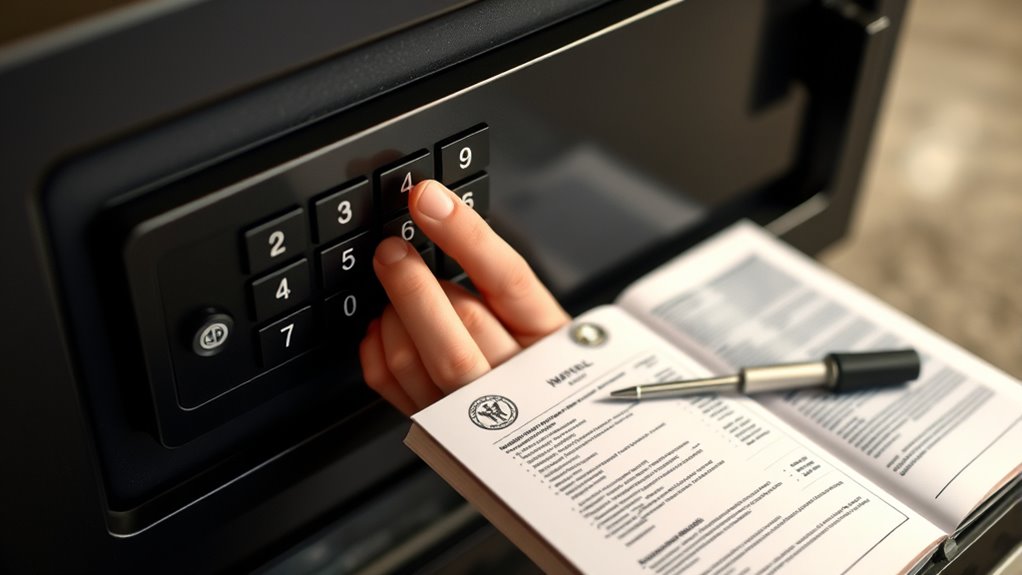
Resetting your gun safe code is crucial for keeping your firearms secure and preventing unauthorized access. If you think someone might know your code or if you’ve shared it accidentally, changing it is a smart move.
Changing your gun safe code regularly keeps your firearms secure and unauthorized access at bay.
This simple step helps ensure that only trusted folks can get into your safe and supports safe gun handling. Regularly updating your code keeps your storage secure and gives you peace of mind, knowing your security measures are current.
If there’s been a change in who needs access, resetting the code stops previous users from getting in. It’s an easy way to stay proactive about safety.
Ultimately, keeping your gun safe code fresh is about protecting your home and loved ones. It reminds you to stay vigilant and responsible with your firearms.
How to Determine If You Have a Digital or Mechanical Lock
Take a look at your safe and see what kind of lock it has. If you notice a keypad or a digital screen, that means it’s a digital lock. It’s pretty straightforward—you’ll usually punch in a code to open it.
On the other hand, if your safe has a combination dial or a keyhole, then it’s a mechanical lock. These are the ones you turn or turn and pull a latch open. Knowing whether you’re dealing with a digital or mechanical lock can really help because it tells you how the lock works and how to reset the code correctly if you need to.
Lock Type Identification
To figure out if your gun safe has a digital or mechanical lock, start by examining the lock itself. If it has a keypad or a small screen, it’s probably a digital lock, which may also include biometric security options.
These types of locks usually need programming or code entry and might have indicator lights. Mechanical locks, on the other hand, typically involve a dial or key access with no electronics involved.
Check for electronic parts or a keypad first—that’s a sure sign of a digital lock. Remember, regular lock maintenance can help you spot features like biometric security.
If you’re unsure, it’s best to consult your safe’s manual or the manufacturer to confirm the lock type before you try to reset or repair anything.
Lock Mechanism Differences
Identifying the type of lock on your gun safe means looking at how it operates. Digital locks use electronic parts for user authentication, like keypads, fingerprint scanners, or biometric systems.
Mechanical locks rely on physical keys or a dial combination and don’t have any electronic features. To tell the difference, see if you need a power source or a keypad to unlock it.
Digital locks let you customize the lock easily, such as setting or changing access codes. Mechanical locks require manual changes or making copies of the key.
Here’s a quick comparison:
| Feature | Digital Lock | Mechanical Lock |
|---|---|---|
| User authentication | Electronic keypad, biometric sensors | Physical key, rotary dial |
| Lock customization | Change or reset codes easily | Key replacement or dial adjustment |
| Power requirement | Batteries or external power | No energy needed |
| Ease of use | Quick, one-touch access | Slower, manual operation |
| Security level | Advanced with electronic encryption | Basic physical access control |
This will help you identify your lock type and guide you through reset procedures.
Gather the Tools You Need Before Starting
Before you start resetting your safe’s code, it’s a good idea to gather all the tools you’ll need—things like screwdrivers, batteries, or any other essentials. Having everything ready beforehand means you won’t have to stop in the middle of the process to search for tools or parts.
Make sure your workspace is clean, well-lit, and free of clutter. A tidy area helps keep things safe and makes the whole process run more smoothly. Being prepared with the right tools and a nice workspace can save you time and frustration, making the reset quick and hassle-free.
Necessary Tools Checklist
Having the right tools on hand makes resetting your gun safe code much easier and faster. You’ll want a flashlight to see inside the safe, especially in low light conditions.
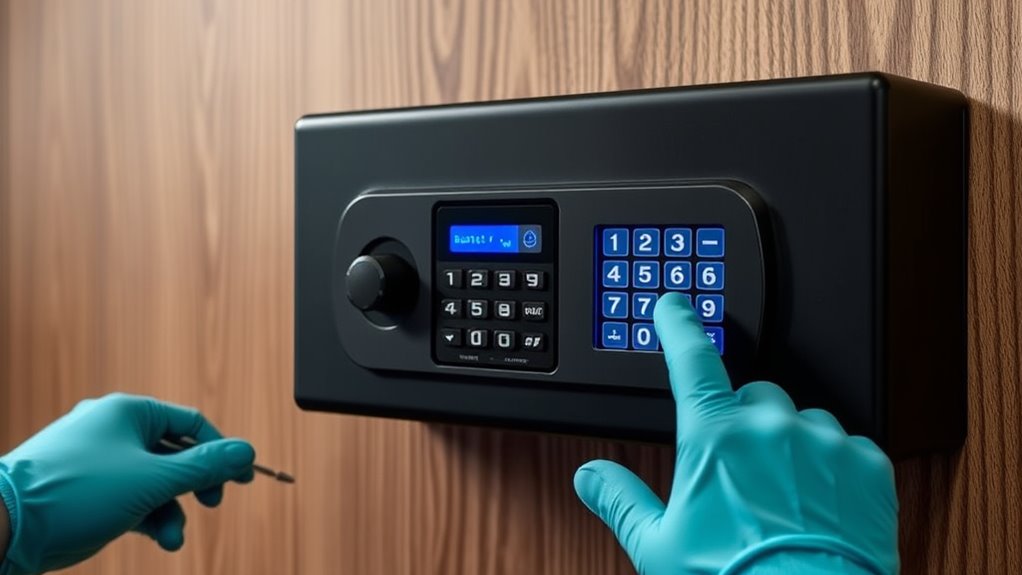
A small screwdriver might be needed if you have to access internal parts, and gloves can help keep things clean.
Make sure you have the correct reset key or override tool specific to your safe model. Remember to review safety regulations and legal considerations before handling lock mechanisms or making changes.
It’s important to avoid damaging the lock system or voiding warranties.
Being prepared with these tools ensures you can complete the reset efficiently and safely, reducing the risk of mishandling or accidental damage.
Prepare Safe Environment
To guarantee a smooth and safe reset process, gather all the necessary tools and set up a clean, organized workspace before you start. Creating a clutter-free environment helps everything go more smoothly.
Make sure the area is safe by removing unnecessary objects so you avoid accidents. Find a well-lit spot where you can clearly see all the controls.
Prioritize working in a quiet space to stay focused. Set up soft materials nearby to absorb noise and keep things discreet. These steps make the process safer, quicker, and less stressful.
Locating the Reset Button or Access Panel
Where exactly is the reset button or access panel located on your gun safe? Many safes hide this feature behind a panel or inside the keypad area, often marked for easy identification. Look for a small, recessed button or a discreet access point near the keypad, especially on electronic models with biometric security systems.
Some safes have a dedicated reset button on the inside of the door or behind the keypad. If your safe has fire safety protocols built in, check the user manual or manufacturer’s website, as they often specify reset locations.
Keep in mind, for safes with biometric security, the reset process might involve specific access points that aren’t immediately obvious. Locating this reset control is essential before proceeding with code changes or troubleshooting.
Always handle the reset feature carefully to avoid accidentally compromising your safe’s security features or fire safety protocols.
Accessing Factory Settings or Default Codes
To get into the factory settings or find the default codes, the first thing you want to do is look for the reset button or access panel on your safe. Sometimes, there’s a label nearby that lists the default code or gives reset instructions — these can often be inside the user manual or even on the safe itself.
Having those details handy makes things a lot easier when you’re trying to restore your safe to its original settings. Just take your time, and you’ll be set up in no time!
Locate Reset Button
Have you checked the safe’s interior panels or back panel for a reset button? Many safes with biometric security or firearm safety features hide a small reset switch somewhere inside.
Finding this button is important if you need to restore factory settings or default codes. Here’s what to do next:
Gently remove panels and feel for a concealed or recessed reset button. Use a paperclip or small tool to press it carefully, making sure you don’t damage the mechanism.
Once you press the button, confirm the reset by checking the safe’s manual, especially if it has programmable security features. Locating this reset button is key to restoring your safe to its original state.
This step helps ensure your firearm safety setup is reliable and resets biometric security for peace of mind.
Find Default Code Label
When you’re ready to access the factory settings or default codes, check your safe’s documentation first. Many safes have labels that show the factory-set combination or reset instructions.
These labels are often found inside the door panel, on the back or bottom of the safe, or inside the user manual. Look carefully for a sticker or note titled “Default Code” or “Factory Settings.”
If you can’t find these labels, check inside the safe’s interior panels or removable parts. Default labels are important for knowing the original code, especially if you’ve lost yours.
Be cautious because not all safes display these labels openly. If you’re unsure, double-check the documentation or contact the manufacturer for help.
Access User Manual
Once you’ve found the user manual for your safe, the next step is to look for instructions on accessing the factory settings or default codes. Knowing how to get to these options can help you perform upgrades or reset your code during maintenance.
Carefully review the section about factory reset procedures. Focus on detailed steps to enter default codes or reset mode. This way, you’ll know exactly what to do when needed.
Make sure to also check for any safety warnings. These are important to prevent lockouts or other issues. Understanding how to restore settings helps keep your safe secure and functioning properly.
Accessing the manual ensures you follow the manufacturer’s instructions precisely. This reduces risks during maintenance or resetting your code.
Step-by-Step: How to Reset Your Gun Safe Code
Resetting your gun safe code might seem daunting, but it’s actually pretty simple if you follow a few steps. First, make sure you’re in a safe, well-lit spot and have your manual nearby.
Reset your gun safe code easily by staying in a safe, well-lit area with your manual nearby.
Before you start, take safety precautions. Ensure no one else can access the safe during the process. If your safe has a mechanical override key, grab it now.
Usually, you’ll need to enter your current code, then press a reset button or switch. Once the reset is activated, input your new code. Choose a code that’s unique and easy for you to remember.
Avoid reusing old codes that might be guessed easily. Double-check your new code before finalizing the reset. These steps help keep your firearm secure and prevent you from getting locked out.
Following each step carefully reduces mistakes and keeps everything safe.
Testing Your New Code to Ensure It Works
After you’ve reset your safe code, it’s important to test it right away to make sure everything works correctly. This step makes sure your keypad security functions properly, and your biometric locks respond as they should.
Follow these steps:
- Enter your new code confidently on the keypad, and check if the lock disengages smoothly.
- Use any biometric sensor to verify it recognizes your fingerprint or other input without any issues.
- Try multiple entries to confirm there are no delays or malfunctions with either method.
Testing immediately helps you catch issues before you rely on your safe. It’s essential to verify your code and biometric locks work seamlessly, so you can have peace of mind.
If anything doesn’t work right, you’ll know immediately to reprogram or troubleshoot. Your safety depends on secure keypad access and working biometric locks—so don’t skip this step.
Troubleshooting Common Reset Issues
Even with careful testing, you might run into issues when resetting your safe code. Sometimes, security updates or recent changes can interfere with the reset process, causing the keypad to malfunction or the new code not to register.
If your safe isn’t responding as expected, double-check that you’ve followed the correct procedure. This includes any specific reset buttons or sequences listed by the manufacturer. It’s also a good idea to verify your batteries are fresh since low power can cause reset failures.
If you’re unable to reset the code, consider using emergency access options like override keys or backup entry methods to get in. Before trying more resets, check your user manual for troubleshooting tips or contact the manufacturer’s support team for expert guidance.
Tips for Keeping Your Gun Safe Code Secure
Keeping your gun safe code secure is essential to prevent unauthorized access and ensure your safety. To improve security, focus on creating a complex code that’s hard for others to guess. Here are three security tips to help:
- Use a unique, complex code—avoid birthdays or simple sequences that are easy to figure out.
- Change your code regularly—don’t stick with the same combination for too long.
- Avoid sharing your code—keep it private and don’t write it down where others can find it.
Implementing these tips boosts your code’s security, making it harder for intruders to gain access.
Remember, the goal is to make your safe’s code unpredictable and keep it away from unauthorized users.
Regular updates and keeping your code confidential are your best defenses for a secure firearm and peace of mind.
When to Call a Locksmith for Help
Sometimes, trying to reset or open a locked gun safe on your own isn’t enough, especially if the lock is stubborn or unresponsive. If you’ve already tried the basic reset steps without success, it’s time to call a locksmith.
Emergency procedures need quick, professional action to prevent security breaches or safety issues. Ignoring signs of lock failure or repeated problems can put your security at risk, so don’t hesitate to get expert help.
A locksmith specializes in safe lockouts and can access your safe without causing damage, saving you time and stress. If you’re unsure whether your safe’s lock has been compromised or if the mechanism isn’t working correctly, calling a professional is the safest choice.
Trusting a locksmith ensures your firearm remains secure and your safety isn’t compromised. Trying to fix complex lock problems yourself might lead to more damage or security vulnerabilities.
Frequently Asked Questions
Can I Reset My Gun Safe Code Without a Manual?
Yes, you can reset your gun safe code without a manual by troubleshooting keypad issues or battery problems. First, try replacing the batteries to make sure everything is powered correctly.
If the keypad still isn’t responding, disconnect and reconnect the power supply or reset the keypad if that’s an option. Many safes also have a default or master code—check your manufacturer’s website to see if this info is available.
This can help you get back in without needing the manual.
What Should I Do if My Reset Code Doesn’T Work?
If your reset code doesn’t work, start by checking if your safe has biometric locks or keypad compatibility. Sometimes, these features can override the reset code and prevent it from working.
For example, imagine you’ve bought a new safe, but the code still doesn’t open after resetting. In this case, it’s a good idea to consult the manufacturer’s instructions or contact customer support.
Also, keep in mind that batteries or lock mechanisms can malfunction. Replacing the batteries or reprogramming the code might just resolve the issue.
Are There Any Risks in Resetting My Gun Safe Code?
Resetting your gun safe code can introduce some risks, like security vulnerabilities if not done properly. If someone tampers with the reset process, they might gain access or disable tamper prevention features.
To minimize these risks, carefully follow the manufacturer’s instructions. Only trusted individuals should perform the reset, and you might want to update security features afterward.
Taking these steps helps keep your safe’s integrity intact and ensures your valuables stay protected.
How Often Should I Change My Gun Safe Code?
You should change your gun safe code regularly to keep it secure. Aim to update it every few months or after any suspicious activity.
By doing this, you reduce the chances of unauthorized people gaining access. Keep security cameras and access logs nearby so you can track any attempts to breach your safe.
Changing the code often helps ensure only trusted individuals can get in, making your firearms and valuables safer.
Is It Possible to Reset a Forgotten Mechanical Lock Code?
Yes, you can reset a forgotten mechanical lock code, but it’s like opening a secret garden. Mechanical locks aren’t as simple as digital ones—they often differ by design, with various code variations.
You’ll need a special reset process, which might involve master keys or specific procedures outlined in your safe’s manual.
If the code’s lost forever, contacting the manufacturer or a locksmith can help you regain access, like finding the key to a hidden treasure.
Conclusion
Just like Houdini’s secrets, a safe’s code remains hidden until you know how to open it.
By following these steps, you regain control and ensure your valued possessions stay protected.
Remember, if the puzzle proves too complex, don’t hesitate to call a locksmith. Sometimes, even master magicians need a hand.
Keep your code secure and your peace of mind intact.
Mastering your safe is easy when you follow these simple steps to reset your gun safe code.