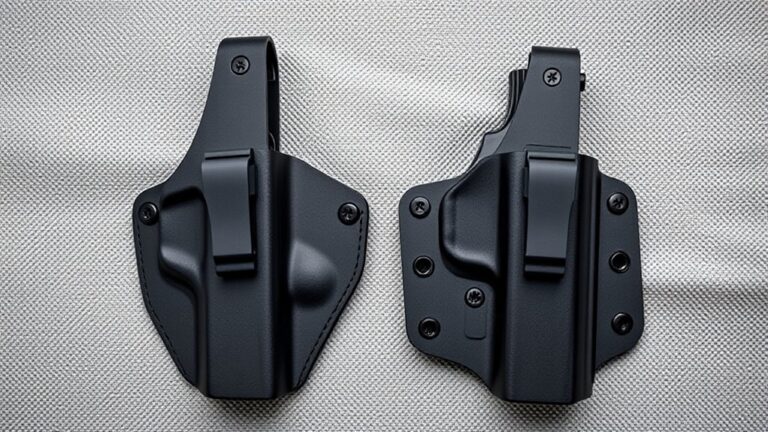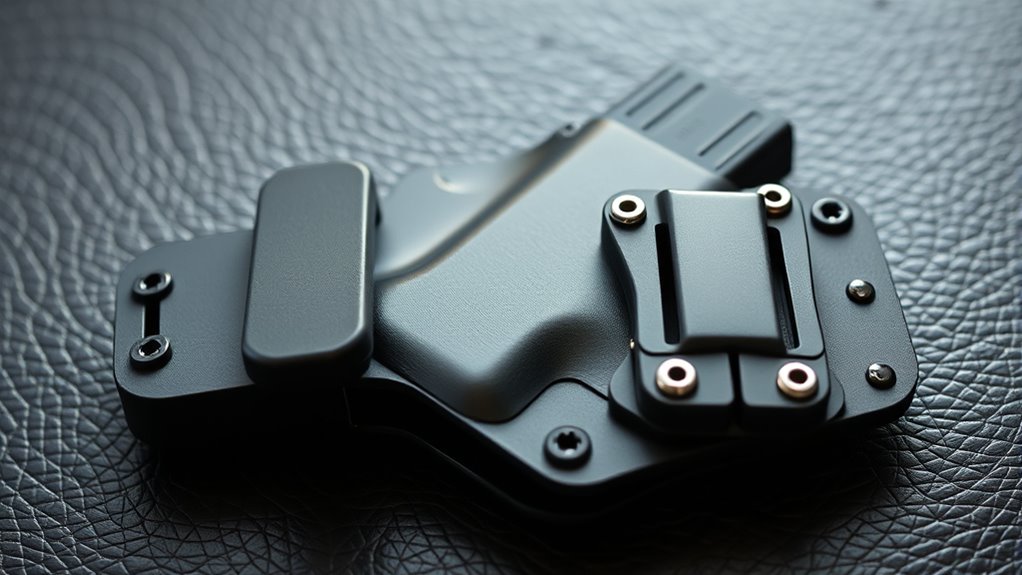
Single Click vs Double Clip IWB Holster: Which Is Better
Finding the perfect IWB holster can be a real challenge—especially when so many options exist. Many people struggle to balance comfort, security, and ease of access, and you’re not alone in that. Choosing the right clip style—single or double—can make a big difference in your daily carry experience.
Choosing between a single clip and double clip IWB holster depends on your needs for stability, comfort, and support. Single clips are lightweight, quick to draw, and discreet, making them ideal for everyday concealment.
Double clips provide more security, distribute tension evenly, and resist shifting during active use, though they can be bulkier. To find the best fit for your lifestyle, you’ll want to reflect on your activity level and preferences—there’s more to uncover if you keep exploring.
Key Takeaways
- Double clip holsters give you more stability and support when you’re moving around actively compared to single clip designs.
- Single clip holsters are lighter, making them easier to draw from quickly, and they’re usually more discreet for everyday concealed carry.
- Because double clips distribute the tension evenly, they tend to reduce wear and last longer over time.
- Single clip holsters often feel more comfortable and are easier to adjust for quick and easy access.
- Ultimately, your choice depends on how active you are, whether you prioritize stability, ease of access, or concealment.
Why Consider Single vs Double Clip IWB Holsters?
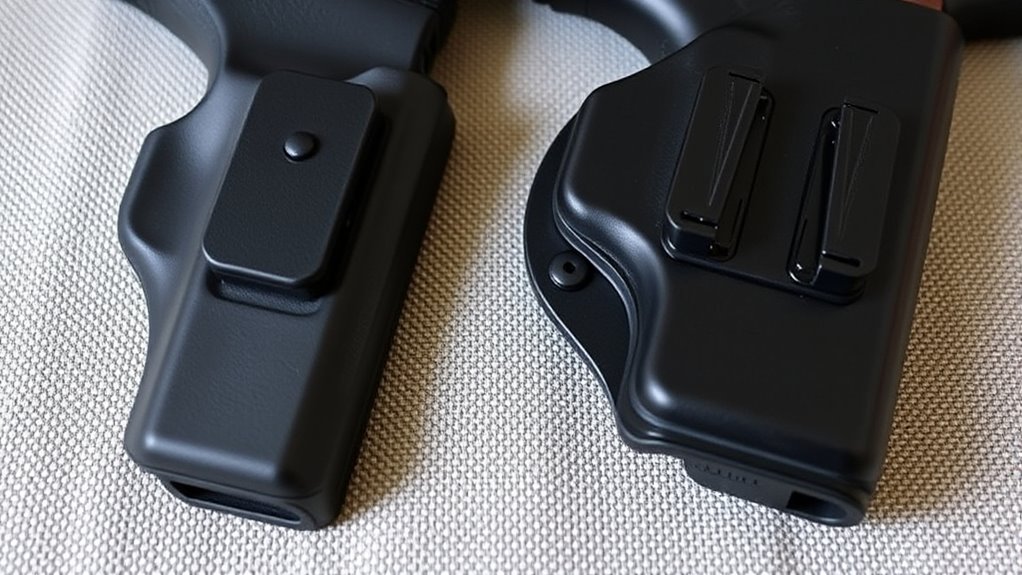
When choosing an inside-the-waistband (IWB) holster, understanding the difference between single and double clip designs is key because it affects stability and comfort. The holster material also matters, whether it’s leather, nylon, or Kydex, since each offers unique benefits in durability and concealment.
Think about how the material feels against your skin and how it holds its shape over time. Color options are important too—some prefer neutral shades like black or tan for discretion, while others like vibrant colors to match their style.
Double clip holsters usually provide extra stability, reducing movement during daily activities. Single clip designs tend to be lighter and might be more comfortable for extended wear.
What Are the Design Differences Between Single and Double Clip Holsters?
Single clip holsters usually have just one attachment point, securing the holster to your belt or waistband. This makes for a sleek, simple design that’s lightweight and easy to hide.
Double clip holsters use two attachment points for extra stability and security. This can be especially helpful if you’re moving around a lot or active.
The main difference in their design is how they handle weight and support. Single clip models tend to be narrower for convenience, while double clip holsters give more balanced support.
Here’s a quick comparison:
| Feature | Single Clip | Double Clip |
|---|---|---|
| Color Options | Limited, basic shades | More variety, customizable |
| Material Choices | Leather, Kydex, nylon | Leather, Kydex, nylon |
| Stability & Support | Moderate | Better support and stability |
Choosing one depends on what feels most comfortable and your preferred draw style.
Which Clip Style Offers Better Stability and Support?
When you’re looking at clip styles, it’s important to think about how the tension and grip of the clip affect stability. Usually, a tighter grip means less movement during activity, so your firearm stays more secure. It’s also really important that the clip holds well—if it isn’t secure, your firearm could shift unexpectedly, which is definitely something you want to avoid.
Plus, don’t forget about durability. You want a clip that can handle regular use over time without wearing out or breaking. That kind of long-lasting support makes a big difference in maintaining stability for the long run.
Clip Tension and Grip
The tension and grip provided by the clip really affect how stable and supported your holster feels during everyday carry. A clip with just the right tension will keep your holster securely in place and prevent it from moving around.
If the clip’s tension is too loose, your holster might shift or come out of place when you move. On the other hand, too much tension makes attaching or removing the holster more difficult and could cause damage over time.
Grip strength, which is how firmly the clip holds onto your belt or waistband, also matters. A stronger grip improves stability, especially if you’re active throughout the day.
Double clips tend to give better grip strength and distribute tension more evenly. That makes them more reliable when it comes to keeping everything secure.
Ultimately, finding the right balance in clip tension helps ensure your holster stays secure without being a struggle to handle.
Ease of Retention
When it comes to stability and support, the clip style directly affects how securely your holster stays in place during daily activities. Single clips usually give a snug fit, preventing movement and improving retention during quick draws or vigorous activity.
Double clips distribute force more evenly, providing extra stability especially during active movements. Your choice of holster accessories can also impact ease of retention—some setups include adjustable features for a personalized fit.
If you prefer different carry options, double clips might be better since they can accommodate positions like appendix or small of the back carry. Overall, double clips tend to offer better stability in dynamic situations, while single clips may be enough for casual, low-movement carry.
Think about your activity level and carry style to find the best setup for retention.
Wear and Durability
Double clips usually last longer and resist wear better because they spread tension evenly and are often made from stronger, more durable materials. This makes them ideal for heavy use or rough conditions.
The material of the holster also matters. Leather ages well but can wear out over time, while Kydex resists scratches and keeps its shape better. Clip placement influences support, with double clips providing balanced stability across different body types and clothing layers.
| Clip Style | Wear & Support | Material Impact |
|---|---|---|
| Single Clip | Might wear faster, less support | Lighter, more flexible |
| Double Clip | Better wear resistance, stability | Heavier, more rigid |
| Placement | Usually centered for even support | Adjusts balance |
| Durability | Lasts longer, stays sturdy | Made from durable materials |
Which Holster Is More Comfortable for Daily Carry?
When you’re picking out a holster for everyday carry, the most important things to think about are how comfortable it is and how well it fits. You want something that feels good against your body so you barely even notice it’s there throughout the day. If a holster is uncomfortable or bulky, it can quickly become a nuisance, right?
Plus, ease of draw is a big deal, too. You want quick and smooth access to your firearm without feeling like you’re wrestling with your holster. The style of holster you choose should feel natural against your body and allow you to draw effortlessly whenever you need to. Finding that perfect balance between comfort and quick access is key to making daily carry a more relaxed experience.
Fit and Comfort
Choosing the right holster for daily carry really depends on how well it fits and how comfortable it feels throughout the day. When deciding between a single or double clip IWB holster, think about how it fits around your body—making sure it stays secure without pinching or causing discomfort.
Material choices play a big role in comfort. Softer leathers or lightweight kydex usually feel better for extended wear. Color options can also help match your wardrobe, so your holster stays discreet and less noticeable.
A well-fitting holster minimizes movement and reduces fatigue. Look for a design that contours to your body, has adjustable retention, and uses breathable materials. The right fit and comfort are what make forgetting you’re even carrying your firearm possible.
Ease of Draw
| Holster Type | Draw Experience |
|---|---|
| Double Clip | More secure, steady, and customizable. It’s great if you want something that stays in place. |
| Single Click | Faster to draw and easier if you have a proper fit. Perfect when quick access matters. |
How Do Clips Impact Concealment and Ease of Access?
Clips play a crucial role in how well your IWB holster conceals your firearm and how easily you can access it when needed. Proper clip positioning can significantly improve concealment and streamline your draw.
Proper clip positioning enhances concealment and allows easier, faster access to your firearm.
Adjusting the clip placement helps minimize printing and keeps the firearm close to your body, making it less noticeable. Using effective concealment techniques, like choosing the right pants or belt tension, also boosts overall concealment.
Double clips generally provide more stability, preventing shifting and making access smoother. Single clips might allow for quicker reactions but with less stability. The right clip choice depends on your body, clothing, and how you carry.
Here’s how clips impact concealment and access:
- Precise clip positioning reduces printing.
- Balanced tension keeps the holster secure.
- Multiple clips prevent shifting during movement.
- Proper placement improves quick access.
- Adjustments can refine concealment techniques overall.
What Are the Pros and Cons of Single Clip Holsters?
Single clip holsters are popular because they make drawing your weapon quick and simple. You’ll find they’re pretty straightforward to use, which is a big plus for everyday carry. However, one thing to keep in mind is that they might not hold your gun as securely as double clip models do. So, if you’re moving around a lot or doing something active, they might feel a bit less stable.
On the plus side, single clip holsters tend to be pretty versatile and comfortable. They often fit a range of body types and clothing styles, making them a convenient choice for daily wear. That said, some people might find they shift or wobble a little during active movement, which could be a concern depending on your needs.
When choosing a holster, it’s all about figuring out what works best for your concealment and how you carry day-to-day. Think about whether quick access or stability is more important for you, and let that guide your choice.
Ease of Deployment
When it comes to deploying your holster quickly and smoothly, the single clip design offers notable advantages and some drawbacks. You’ll find it easier to draw and reholster, making quick access more convenient.
Its minimalist design tends to fit well with current fashion trends. It offers a sleek look that’s lightweight and less bulky. Material options like Kydex or leather further influence deployment ease.
Some materials allow faster drawing motions, which is a plus. However, some users might experience less control during quick draw situations because the single clip can sometimes shift.
Moreover, the simplicity of a single clip means fewer attachment points. This might lead to less stability during active scenarios.
Secure Retention Levels
While a single clip holster is quick and easy to access, its retention security can be hit or miss. The quick draw is a big plus, but it might not hide your firearm well if not positioned right.
The clip might not grip your belt snugly, so it could slip during movement. To see what I mean, take a look at this:
| Aspect | Pros | Cons |
|---|---|---|
| Holster concealment | Easy to hide with minimal printing | Less secure and can shift during activity |
| Clip compatibility | Fits many belt styles smoothly | Might loosen over time |
| Retention security | Simple design allows quick draw | Less hold, risking accidental release |
Versatility and Comfort
Because of their straightforward design, single clip holsters often offer great versatility and comfort for daily carry. They tend to conform well to your body, improving ergonomics and weight distribution, which reduces fatigue over time.
Furthermore, they are typically lightweight, making all-day wear more comfortable. You can often find customization options, like adjustable clips or different materials, to better suit your preferences.
- Easy to re-holster and draw, boosting quick access
- Less bulky, ideal for discreet carry
- Compatibility with various clothing styles
- Simple setup and adjustment process
- Improves comfort by evenly distributing weight
Advantages and Disadvantages of Double Clip Holsters
Double clip holsters give you a secure way to attach your firearm, keeping it firmly in place while you move. They’re popular because they add extra stability and help prevent shifting or tilting, especially when jogging or being active.
That said, they can be a bit bulkier and may need more belt space, which can affect how comfortable they feel. The material of the holster also matters, influencing both flexibility and how long it lasts.
Plus, with different color options, you can customize your look or match your wardrobe, making it more personal.
| Pros | Cons |
|---|---|
| Improved stability during movement | Bulkier design can limit concealment |
| Secure attachment with two clips | Might need a wider belt for comfort |
| Customizable with different colors | Material impacts comfort and durability |
Which Holster Style Is More Durable and Secure?
If durability and security are your top priorities, it’s important to see how each holster style performs when things get tough. Double clip holsters usually offer better stability, which helps them stay secure during active movements, especially if they’re made from strong materials like reinforced Kydex or leather. Their sturdy design limits shifting and reduces wear over time.
Single clip holsters might not stay as secure during intense activity, but you can boost their stability with clip customization options. Features like adjustable or multi-position clips can help create a tighter, more secure fit. This makes them more reliable depending on your activity level.
Double clips distribute weight more evenly, which can reduce strain on the holster and help with durability. The material used is also key—high-quality options resist wear and last longer. You can reinforce single clip setups with extra clips or straps for added security.
Ultimately, choosing the best option depends on how active you are and whether you want to reinforce your holster for added stability.
How to Choose the Best IWB Holster for Your Carry Style
Choosing the right IWB holster really depends on your carry style and daily routine. Think about the material—leather offers comfort and a secure fit, while Kydex is durable and provides a smooth draw.
Selecting the ideal IWB holster depends on your carry style and daily routine.
If you’re sitting a lot or want more discretion, a soft material might be better. And your activity level matters too; active folks will want a snug fit with sturdy materials to prevent shifting.
Color options also play a role. Neutral shades like black or brown blend easily with everyday clothes, while custom colors let you personalize your setup. Pick a hue that minimizes draw attention based on your wardrobe and environment.
At the end of the day, the best holster fits your lifestyle, offering comfort, easy access, and security during daily carry. Take time to evaluate materials and colors so you find an IWB holster that matches your habits and preferences effortlessly.
Tips for Testing and Picking Your Ideal Holster
Before settling on a holster, it’s important to test how it performs in real-world situations. Wear it during your daily activities to get a sense of its comfort and security.
Check how easily you can draw and re-holster your firearm. Make sure the process is smooth and doesn’t require awkward movements. Pay attention to how it looks—your holster should match your style and preferences.
Branding can also matter. Some brands focus on durability over appearance, which might influence your choice. Make sure the holster stays secure during movement and doesn’t shift or loosen.
Try wearing the holster with different clothing layers to see how well it conceals your firearm. A good holster should hold up discreetly under various outfits. Finally, test the clip type—single or double—by simulating your typical carry situations.
Doing all this helps you find a holster that fits your needs, preferences, and lifestyle. When you choose wisely, you’ll enjoy comfort, security, and confidence all day long.
Frequently Asked Questions
Are Single or Double Clips Easier to Conceal Effectively?
Single clips usually make concealment easier because they reduce bulk and are less bulky under clothing, helping you master effective concealment techniques.
Double clips can offer better stability, but they might add more printing or bulk, making concealment trickier.
Your choice depends on whether your clip works with your carry setup and how discreet you want it to be.
Trying out both options is a good way to see which holster suits you best for effective concealment.
Which Clip Style Is Quicker to Reholster?
You’ll find that a single clip generally offers a smoother, quicker reholstering experience, especially with versatile holster compatibility.
It often allows for fewer adjustments, so your setup stays consistent.
With clip customization, you can fine-tune tension and placement, making reholstering even calmer and more reliable.
Double clips might offer extra security, but they usually take a bit longer to reholster due to additional engagement points.
Do Double Clips Add Significantly More Weight to the Holster?
Double clips do add some extra weight to your holster, but it’s usually minimal and shouldn’t significantly impact the overall weight.
The added clip strength mainly offers better security and stability, especially if you’re carrying a heavier firearm.
You might notice a slight difference in weight, but it generally won’t affect all-day comfort.
When choosing between single or double clips, think about what matters more to you: security or comfort.
How Do Clip Materials Affect Holster Longevity?
Think of clip materials as the backbone of your holster’s longevity. When they’re made from high-durability materials, they resist wear and tear beautifully.
Corrosion-resistant metals like reinforced steel or polymer stay sleek and strong, even after exposure to sweat or moisture. This helps your holster stay reliable over time, avoiding premature aging.
Choosing clips made from these tough materials guarantees your gear lasts through daily use. It keeps your setup secure and consistent, no matter what.
Can Clip Placement Impact Drawing Speed?
Yes, clip placement can impact your drawing speed. Properly positioned clips improve holster stability, making draws smoother and more consistent.
If clips are placed too high or too low, they can make it harder to access your weapon quickly. This also reduces concealment, leading to unwanted printing.
For the fastest draw, place your clips so they hold the holster snugly against your body. Find a balance between quick access and good concealment.
Conclusion
Choosing between single and double clip IWB holsters is like finding the perfect fit in a pair of shoes—comfort and support make all the difference. Consider your daily carry needs and how each style feels on you.
Think about which option offers the stability and concealment you want. Trying out both can help you see what feels right in everyday situations.
By testing and weighing your options, you’ll find a holster that becomes a trusted partner—balancing safety, comfort, and quick access. When it comes to choosing the best IWB holster, find the one that suits your carry style and gives you confidence.