5 Steps to Remove Your Glock Rear Sight
Many Glock owners find removing the rear sight to be a bit daunting. You’re not alone in feeling unsure about the safety steps or the right tools to use. But don’t worry—getting your Glock sight off safely and without damage is definitely doable with the right guidance.
To remove your Glock rear sight, start by gathering your tools, like a sight pusher or punches, and prepare a clean, well-lit workspace.
Next, verify the firearm is unloaded and safe, with the slide locked back.
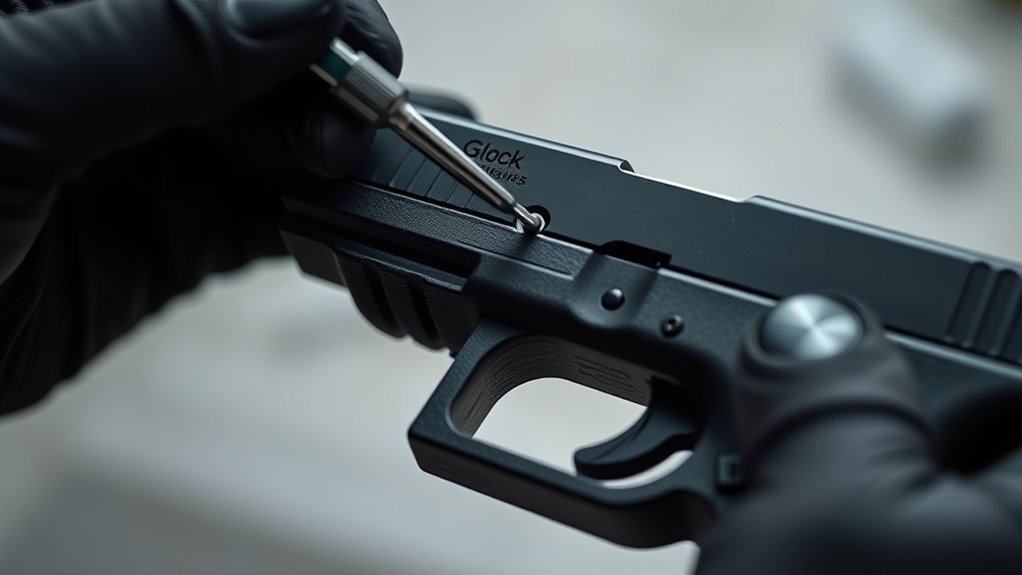
Carefully use the appropriate punch to gently tap out the sight, applying lubricant if needed.
If you encounter resistance, stop and troubleshoot.
For more detailed steps and tips, follow along to make certain a safe, damage-free removal process.
Key Takeaways
- Make sure your firearm is unloaded, with the slide locked back and the chamber confirmed empty. Safety first!
- Use a proper sight removal tool or a plastic punch. This helps avoid damaging the slide during the process.
- Apply gentle, steady pressure to remove the rear sight. If it’s stuck, a bit of penetrating oil can help loosen it up.
- Before trying again, check for any obstructions or debris and lubricate the area if needed.
- Once the sight is out, carefully inspect the slide and sight for scratches. Take your time handling the components.
Gather the Right Tools and Prepare Your Workspace
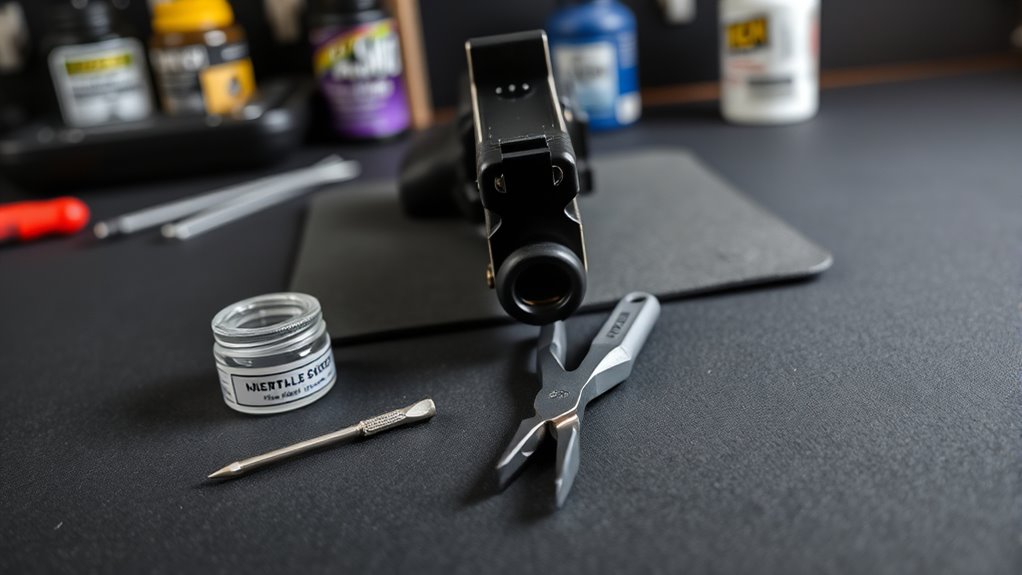
Before you start removing your Glock rear sight, make sure you gather the right tools and set up a clean, well-lit workspace. A tidy area helps you focus and keeps things safe.
Choose tools designed for sight removal, like a sight pusher or punches set. This helps prevent accidental damage to your firearm.
Using the right tools also reduces slipping or applying too much force, which can be dangerous.
Set up a sturdy bench or table to keep your gun steady during the process. Good lighting is key so you can see every detail clearly.
Lay out all your tools ahead of time, including gloves or safety glasses if you need them.
These steps make the removal easier and safer. Working in a safe environment protects you and keeps your Glock in good shape.
Verify Your Glock Is Unloaded and Safe to Work On
Always double-check that your Glock is safe to work on by making sure it’s completely unloaded. This is a key safety step and essential for firearm handling.
To be sure, follow these steps: remove the magazine, lock the slide back, and visually inspect the chamber for any rounds. Doing this helps prevent accidents.
Picture this in your mind:
| Magazine Removed | Slide Locked Back | Chamber Empty |
|---|---|---|
| No ammunition | No movement | No rounds visible |
| Check visually | Check physically | Confirm safety |
| Clear chamber | No rounds felt | Arms away from the firearm |
How to Remove the Glock Rear Sight Safely and Effectively
Removing the rear sight from your Glock requires careful effort to avoid damaging your firearm. Use the appropriate sight removal tool or a plastic punch to gently tap the sight out from its dovetail slot.
Keep steady pressure to prevent knocking the sight out unevenly, which can affect sight alignment once reinstalled. If the sight is tight, apply a little penetrating oil around the base and wait a few minutes before proceeding.
During removal, avoid applying excessive force that might damage the slide or disturb the slide’s surface. Handling the sight gently ensures that you won’t compromise the slide’s integrity.
Once removed, check the sight adjustment marks to verify proper sight alignment when installing a new sight or realigning the existing one. Taking your time and proceeding carefully guarantees a safe, effective removal, setting you up for precise shot accuracy and ideal firearm function.
Troubleshooting Common Challenges When Removing Glock Rear Sights
Sometimes, despite following the proper removal steps, you might run into challenges when trying to take off your Glock’s rear sight. Common issues include stubborn sights due to tight manufacturing tolerances or misaligned sight alignment, which can make removal tricky. You might feel resistance or notice it’s hard to lift the sight without forcing it.
To troubleshoot, first confirm you’re using the correct punch size. An improper fit can cause slipping or even damage. Also, check for corrosion or debris that might be making removal difficult; applying a little light lubricant can help.
Make sure you’re applying even, steady pressure. This helps prevent misaligning or damaging the sight or the slide. If the sight resists, stop and reassess your tools and technique. Forcing it can lead to damage, especially with tight tolerances.
Take your time and address these common issues carefully. Doing so will help ensure a smooth, damage-free removal process without any unnecessary trouble.
Final Tips to Avoid Damage and Finish the Removal Safely
To finish removing your Glock rear sight safely and without damage, it’s important to be patient and handle everything carefully. Working slowly helps prevent scratches or other damage to the slide.
Keep your tools clean and properly sized, like a good punch or screwdriver. This helps avoid slipping and keeps your finish looking great. Don’t use too much force; if it won’t move, double-check your tools and approach instead of forcing it, which could cause costly damage.
Use clean, properly sized tools and gentle force to protect your finish and prevent damage during removal.
Use a cloth or soft pad underneath the slide when tapping or prying. This extra protection helps prevent scratches. After you remove the sight, carefully inspect both the sight and the slide for any signs of scratches or deformation.
Regularly maintain your tools to make sure they stay sharp and effective. This reduces the chance of slips or mishandling. Following these tips will help you complete the job without causing damage, keeping your Glock in top condition and ready for what comes next.
Frequently Asked Questions
Can I Remove the Rear Sight Without Specialized Tools?
Yes, you can remove the rear sight without specialized tools, but safety should always come first. Make sure your firearm is unloaded and you’re working in a safe environment before starting.
Use a flat-head screwdriver or a punch to gently tap out the sight, applying steady, even pressure. Be careful not to damage the slide or affect the firearm’s overall integrity.
Take your time and be gentle during the process to avoid causing any harm. Proper safety and patience are key to successfully removing the rear sight on your own.
How Often Should I Replace or Upgrade My Glock Rear Sight?
You should upgrade your Glock rear sight only if it’s as outdated as your ammunition choices or if cleaning frequency has turned it into a rusty relic.
Typically, sights last thousands of rounds, but upgrades happen more when you’re chasing perfection rather than necessity.
Keep an eye on performance, choose your ammunition wisely, and clean your firearm regularly.
Replace or upgrade your sight when it no longer aligns or shines like your shooting skills depend on it.
Is It Necessary to Apply Lubricant During Removal?
It’s not necessary to apply lubricant during sight removal, but it can make the process smoother and help prevent damage.
When you’re doing sight maintenance, putting a small amount of lubricant around the sight base can make removal easier and protect the parts.
Just remember to clean and re-lubricate afterward to keep everything working at its best.
Proper sight maintenance is key to keeping your Glock reliable and functioning correctly.
What Are Signs Indicating My Rear Sight Needs Replacement?
You’ll want to consider replacing your rear sight if you notice issues with sight alignment or if your vision isn’t as clear as it used to be.
If the sight is chipped, cracked, or loose, those are clear signs it’s time for a new one.
Also, if your shots are always off target even when you aim properly, it could be due to poor sight alignment.
Fixing these issues helps keep your aim accurate and ensures safe shooting.
Can I Install a New Sight Immediately After Removal?
Yes, you can install a new sight right after removal, but make sure to check the sight alignment carefully. Proper alignment ensures accuracy and safety.
Take your time during installation to get the precise positioning, especially if you’re trying out different customization options. Double-check that the new sight is securely fitted before firing.
This way, you keep your Glock performing at its best, and it stays reliable and easy to shoot.
Conclusion
Remember, removing your Glock’s rear sight is straightforward if you follow each step carefully. With the right tools and a bit of patience, you’ll avoid damage and make the process smooth.
Sometimes, the smallest effort leads to the best results—like uncovering a new skill or even finding a moment of calm in a busy day. Keep a steady hand and stay confident.
You might just surprise yourself with what you can accomplish. Removing your Glock’s rear sight doesn’t have to be intimidating if you approach it carefully and methodically.