How to Safely Shoot Old Guns
If you’re into shooting old guns, you know it can be exciting but also a bit nerve-wracking. Many people struggle with ensuring their vintage firearms are safe to shoot. The last thing you want is to compromise safety while enjoying your hobby.
To safely shoot old guns, start by thoroughly inspecting the firearm for cracks, rust, corrosion, or signs of damage that could compromise safety. Make sure it’s clean, properly lubricated, and that all parts move smoothly. Confirm the firearm’s markings match the recommended ammunition, and never force cartridges into an unfamiliar chamber.
Always wear safety gear and handle the gun with care. Following these steps helps prevent accidents—if you want to learn detailed safety measures, keep exploring.
Key Takeaways
- Carefully inspect the firearm for cracks, corrosion, and internal weaknesses before firing.
- Use only recommended, properly stored ammunition compatible with the vintage gun.
- Have a professional gunsmith check the barrel and structure to ensure safety.
- Start with lighter loads and gradually increase them, watching for signs of stress or damage.
- Always wear appropriate safety gear and follow safe handling and shooting procedures.
What Makes Old Guns Different From Modern Firearms?
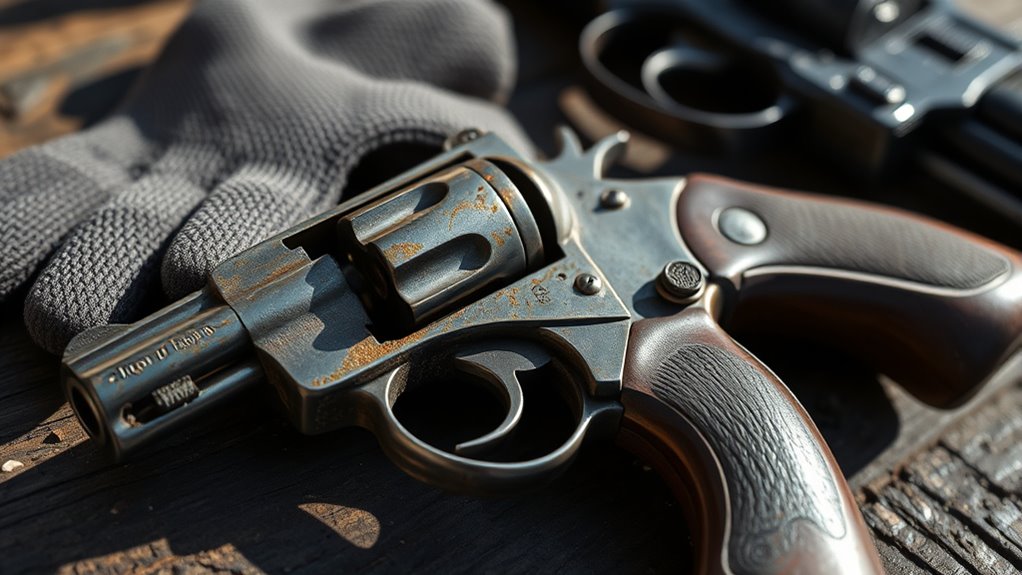
Old guns differ from modern firearms mainly in their design, materials, and how they were made. Knowing the history behind them helps you see why these differences matter.
Many old firearms show detailed craftsmanship with wood and brass parts that reflect the technology of their era. Most were handmade or made with early machinery, making each piece one of a kind.
Old firearms feature handcrafted wood and brass, reflecting the craftsmanship and limited machinery of their time.
These features add to their value as collectibles. Enthusiasts look for guns with historical importance and unique traits. Unlike modern guns, which use advanced metals and precise engineering, vintage firearms may show signs of wear or aging.
This wear can affect how they work but also adds to their charm and authenticity. Recognizing these differences helps you appreciate their legacy and special qualities. Whether you’re collecting or just interested, understanding what makes old guns different deepens your respect for their place in firearm history.
How to Assess If Your Vintage Gun Is Safe to Shoot
Before you fire up your vintage gun, it’s really important to take a good look at it to make sure it’s safe. Start by inspecting the barrel for any cracks, bulges, or signs of corrosion—they can all be signs that the gun might not be safe to shoot. If you notice anything unusual, it’s best to get a professional to check it out before you try firing it.
Also, double-check that the ammunition you’re planning to use is the right type for your firearm. Using the wrong kind can cause accidents or even damage the gun. When in doubt, it’s always a good idea to have a gunsmith take a look to ensure everything’s in order. Always prioritize safety when it comes to vintage firearms!
Check For Structural Damage
To determine if your vintage gun is safe to shoot, start by thoroughly inspecting it for any signs of structural damage. Look for cracks, corrosion, or distorted metal, especially around the receiver and frame.
These issues can weaken the firearm’s integrity, making it unsafe to fire. While doing these safety checks, remember the gun’s historical significance and collectible value. Anything that might compromise these aspects isn’t worth risking damage to the piece.
Pay attention to corrosion or pitting, as these can indicate internal weaknesses not visible externally. If you find any signs of damage or wear, it’s best to consult a professional gunsmith.
Protecting both your safety and the gun’s historical integrity should always come first.
Inspect Barrel Integrity
Evaluating the integrity of your vintage gun’s barrel is essential for safe shooting. Old barrels can develop corrosion, cracks, or bulges, which pose serious safety risks.
During inspection, look for rust, pitting, or signs of restoration issues that could compromise the barrel’s structure. Use a flashlight to check the bore carefully, and consider a bore scope for detailed views, especially if the firearm has historical significance.
Even minor imperfections can lead to dangerous failures when firing. Be cautious if you notice any irregularities; these issues can be hard to fix without professional help. Remember, keeping the barrel in good shape helps maintain safety and your gun’s historical value.
Preserving the barrel’s integrity reduces the risk of accidents during use and ensures your firearm stays safe to shoot.
Verify Ammo Compatibility
After inspecting the barrel for damage, the next step is making sure your vintage firearm is compatible with the ammo you plan to use. Check the markings on the firearm and compare them with the ammunition specs.
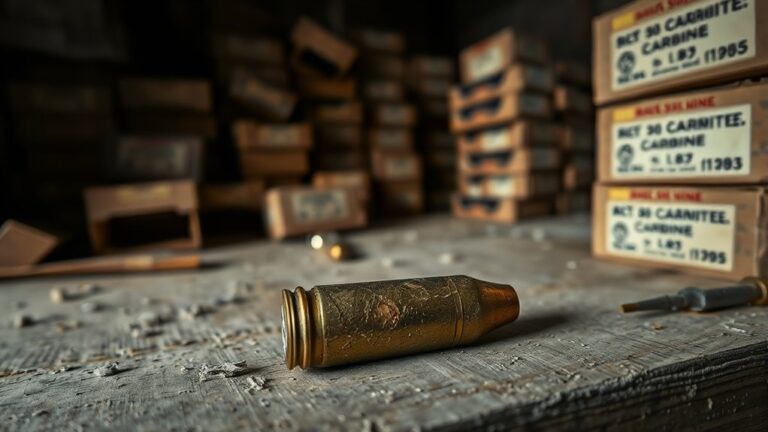
Avoid using old or damaged ammo stored improperly, as it might be unsafe. Proper ammo storage is key, especially for antique firearms, to prevent deterioration that could cause malfunctions.
If you’re unsure, consider getting safety training or consulting professionals to verify ammo compatibility. Never force a round into your gun—if it doesn’t fit or feels tight, don’t shoot.
Confirming compatibility helps reduce the risk of a catastrophic failure. When in doubt, it’s safest to seek guidance from experienced collectors or gunsmiths.
How to Recognize Wear and Damage in Old Guns
Old guns often show signs of wear or damage that can compromise safety if you’re not familiar with what to look for. Check for cracks, rust, or pitting on the barrel and frame, as these can weaken the firearm.
Look closely at the locking lugs and screws for signs of stress or stripping. Pay attention to excessive play or looseness, which may indicate worn parts.
Proper lubrication techniques help prevent rust and ensure smooth operation, but too much or old grease can hide damage. Examine the bore for fouling or corrosion, which can affect accuracy and safety.
Recognize the firearm’s historical significance—well-maintained old guns are more likely to be safe and authentic. Always handle firearms carefully and consider consulting a professional for a thorough inspection.
Knowing how to spot these signs helps you determine whether an old gun is safe to shoot or if it needs restoration.
Can Old Guns Handle Modern Ammunition? How to Check
Many vintage guns weren’t originally designed for the higher pressures of modern ammunition, so it’s important to check whether they can safely handle it before firing. Modern cartridges often produce more force, which can risk damaging or damaging antique firearms.
To see if your old gun can handle modern ammo, compare its specifications with the load specs of vintage ammunition. That way, you’ll know if it’s safe or if you should stick to what’s recommended.
| Old Gun Model | Recommended Ammunition Type | Notes | Safety Tip |
|---|---|---|---|
| Model A | Black powder, low-pressure | Check chamber size | Use reduced load loads |
| Model B | Vintage cartridges only | Verify chamber dimensions | Consult a gunsmith for assessment |
| Model C | Specifically tested modern ammo | Confirm manufacturer specs | Start with minimal loads |
| Model D | Original ammunition, not modern | Inspect bore and action | Consider professional evaluation |
Always double-check if your antique firearm is compatible before firing. If you’re unsure, it’s best to ask a gunsmith or firearm expert to be safe.
How to Clean and Maintain Old Guns Safely Before Shooting
Cleaning and maintaining old guns before shooting is crucial for safety and proper functioning. It helps remove rust, dirt, and old residue that can cause jams or unsafe pressure levels.
Before you start cleaning, always follow safety precautions. Wear safety glasses and gloves, and make sure the gun is unloaded. Use the right tools like brushes, patches, and cleaning solvents made for firearms.
Carefully disassemble the firearm if needed, and gently clean all parts. Pay close attention to the barrel and chamber. During cleaning, check for rust or damage; if you spot any, it’s best to get professional advice before shooting.
Lubricate moving parts with quality gun oil to prevent wear and ensure smooth operation. After cleaning, store your gun in a dry, secure place to keep it in good condition. Regular cleaning and checks help keep your old gun safe and extend its life.
Always prioritize safety and proper maintenance. Doing so will help prevent accidents and keep your firearm in top shape for years to come.
Step-by-Step: How to Safely Shoot Your Vintage Gun
Before you shoot, double-check that your firearm is properly cleaned and assembled. Handling a vintage gun means respecting its history and collector value.
Start by inspecting the barrel, chamber, and moving parts for debris or corrosion. Make sure all components fit correctly and work smoothly.
Always wear eye and ear protection to stay safe. Load the firearm carefully, following either manufacturer instructions or historical guidelines.
Keep your stance steady and aim carefully at your target, being mindful of recoil. Remember, older guns might have different pressure tolerances, so try lower loads first.
Shooting old guns responsibly helps preserve their integrity and keeps their value for future generations. Take your time, double-check each step, and prioritize safety.
Respecting the firearm’s history will enhance your shooting experience and protect your priceless collectible.
How to Spot Signs Your Old Gun Might Be Unsafe
Even if your old gun looks fine on the surface, it’s important to spot warning signs that it might be unsafe to shoot. A gun with historical significance or collector value can seem perfect, but hidden issues could be risks.
Look out for cracks or splits in the metal or stock. These weaken the gun’s structure and could cause failure when firing. Rust or corrosion that’s penetrated deep is another sign of trouble, as it can compromise strength and safety.
Check the barrels carefully for wear or damage, including bulges or visible deformation. Worn or replaced parts that don’t match the original craftsmanship may lead to malfunctions or unsafe operation.
These signs might indicate internal damage or weaknesses, even if the gun appears well-preserved on the outside. Keeping an eye out for these issues helps protect both the gun’s value and your safety.
Always consult a qualified gunsmith or expert before firing if you have any doubts. Putting safety first prevents accidents and helps preserve your investment.
What Safety Gear and Accessories Should You Use?
When you’re shooting old guns, it’s really important to put safety first. That means always wearing proper eye and ear protection to keep yourself safe from any debris or loud noises. It might seem simple, but those little precautions can make a big difference.
Also, using the right shooting accessories, like gloves, can help you grip better and protect your hands. Hearing protection is just as important because old guns can be pretty loud, and you don’t want to risk hearing damage.
Before you start shooting, make sure you’re fully equipped with these essentials. Staying safe should always come first, and having the right gear makes everything easier and more comfortable.
Eye and Ear Protection
Protecting your eyes and ears is essential whenever you’re shooting, especially with older guns that might produce more noise or sparks. Proper safety gear helps prevent injuries and makes your shooting experience better.
Always wear ear protection to guard against loud bangs, and use safety glasses to shield your eyes from debris. When choosing eye and ear protection, think about comfort, fit, and durability for repeated use.
Remember, a safe shooting stance helps minimize risk and keeps your control. Secure ammunition storage also keeps firearms and ammo safe and ready.
To make your safety rock solid:
- Use high-quality ear muffs or plugs for noise reduction
- Wear impact-resistant safety glasses or goggles
- Maintain your shooting stance for better control
- Store ammunition safely away from heat and moisture
Proper Shooting Accessories
Choosing the right safety gear and accessories is key to making sure your shooting sessions are safe and fun.
Always handle and store your ammo carefully to ensure proper safety. Regularly check it for signs of deterioration to avoid any mishaps.
When shooting with old guns, having the right cleaning supplies is crucial. Use a cleaning kit that fits your firearm’s make and model.
Clean your gun thoroughly before and after shooting to prevent misfires and damage.
Using a gun rest or shooting bag can help steady your aim, which reduces the risk of accidents.
Wearing sturdy gloves protects your hands during gun cleaning and handling.
Proper accessories help keep your firearm in good shape, making shooting safer and extending its lifespan.
What Are Common Issues and How to Address Them
Old guns often develop issues over time that can affect safe shooting, so it’s important to spot these problems early. Common issues include weakened metal parts, corrosion, outdated or damaged ammunition chambers, and fragile finishes.
Regularly inspect old firearms for metal weakness, corrosion, and finish damage to ensure safe shooting.
Knowing what to look for helps you keep your firearm safe and preserve its historical value. Here are some common problems and how to fix them:
Corrosion or rust can often be cleaned gently with oil and a soft brush. If the rust is severe, consider having it professionally restored.
Weak or cracked barrels should be inspected by a gunsmith. Don’t fire the gun until a professional confirms it’s safe to do so.
Worn or damaged firing mechanisms need replacement or repair using parts that are period-appropriate. This ensures both safety and authenticity.
Old lubricants and residues should be thoroughly cleaned out. Then, apply suitable, modern lubricants to keep everything operating smoothly.
How to Store and Handle Old Guns After Shooting
After confirming your firearm is safe to shoot, proper storage and handling become key to keeping it in good shape and safe to use. Start with a thorough cleaning after each shooting session, removing residue, rust, and dirt to help prevent deterioration.
When handling your old gun, always point it in a safe direction and use proper techniques to avoid accidental damage or injury. For ammo storage, keep cartridges in a cool, dry place, ideally in airtight containers to prevent rust and moisture.
Store your firearm unloaded in a secure, locked cabinet or safe, out of children’s reach. Using desiccants or silica gel packs can help control humidity and prevent rust from forming.
Make it a habit to regularly check your gun for any signs of wear or damage. Clean it immediately if you notice anything unusual. Proper storage and handling are essential for preserving your firearm’s functionality and ensuring safety every time you shoot.
Frequently Asked Questions
Can I Retro-Fit Old Guns With Modern Safety Features?
You can retrofit old guns with modern safety features, but it’s important to do so carefully and with expert advice.
Focus on collector tips to preserve the firearm’s value while making it safer to shoot.
It’s best to consult a professional gunsmith who’s experienced with historical firearms. They can evaluate the best modifications, like adding improved firing pin blocks or updating firing mechanisms.
Always check that any upgrades follow local laws and don’t compromise the gun’s authenticity. This way, you can enjoy safer shooting responsibly.
What Are the Legal Considerations for Shooting Vintage Firearms?
You need to check local laws and federal regulations before shooting vintage firearms to make sure you’re following the rules.
Respect historical accuracy by avoiding modifications that change the original features of your guns.
As a collector’s tip, keep records of your firearms’ provenance. It’s also a good idea to consult with experts for legal advice.
Always use the right ammunition and safety gear to protect your gun’s condition and keep yourself safe. Remember to stay within legal boundaries at all times.
How Often Should I Have My Old Gun Inspected by a Professional?
You should have your old gun inspected by a professional annually, like tending a fragile garden before weeds take over. Regular gun cleaning helps spot potential issues early, making sure everything stays safe. Proper storage keeps your firearm from deteriorating or causing accidents.
Frequent inspections, along with thorough cleaning and secure storage, are key to preserving your vintage firearm’s condition and safety for years to come.
Are There Specific Types of Ammunition Better for Old Guns?
For old guns, it’s best to use ammunition specifically compatible with their design to prevent damage and guarantee safe shooting. Check the manufacturer’s guidelines or consult a professional to verify ammunition compatibility, especially for antique gun preservation.
Using the right ammo minimizes risks like chamber damage or barrel stress. Always prioritize quality, and avoid high-pressure loads that could compromise the firearm’s integrity. Proper ammunition choice helps you enjoy shooting safely while preserving your antique gun.
How Do I Safely Transport My Vintage Firearm?
To safely transport your vintage firearm, follow collector’s guidelines and prioritize safety. Carefully unload the gun and keep the ammunition separate.
Use a padded case or a secure container to prevent damage during transportation. If your firearm is for historical restoration, consider consulting experts beforehand.
Handle it with care, avoid sudden impacts, and keep the firearm stable. This helps ensure it stays in excellent condition.
Always follow local laws and regulations when transporting your antique firearm.
Conclusion
Always treat your old guns with the respect they deserve, like cherished family heirlooms etched with history. By carefully evaluating, maintaining, and following safety protocols, you turn a potentially ticking time bomb into a treasure chest of memories.
Remember, safety is the key that releases countless more adventures with your vintage firearms. Handle them wisely, and you’ll keep the spirit of the past alive while ensuring everyone’s safety. Because respect for history begins with respect for safety, especially when shooting old guns.