How to Open a Locked Gun Safe in Three Easy Steps
Getting locked out of your gun safe can be really stressful, and you’re not alone in this. Many people struggle with forgotten codes or dead batteries when they need quick access. It’s a frustrating situation, but there are ways to handle it safely and effectively.
If you’re locked out of your gun safe, first identify the cause, like a dead battery or forgotten code. Use backup options like your spare key or reset procedures if available.
If those fail, employ proper tools or call a locksmith to avoid damage. It’s essential to handle each step carefully for safe entry.
Want to learn more about securing your safe and preventing future lockouts? Keep exploring for expert tips.
Key Takeaways
- Check the safe’s power source to make sure batteries or electronic parts are working properly.
- Use the backup key or override code if you have one, just follow the manufacturer’s instructions.
- If needed, carefully use professional locksmith tools like lock picks or bypass kits.
- Look for signs of tampering or malfunction before trying to open or fix it.
- If manual methods don’t work or if you’re worried about security, contact a licensed locksmith.
What Are the Most Common Reasons You’re Locked Out of Your Gun Safe?
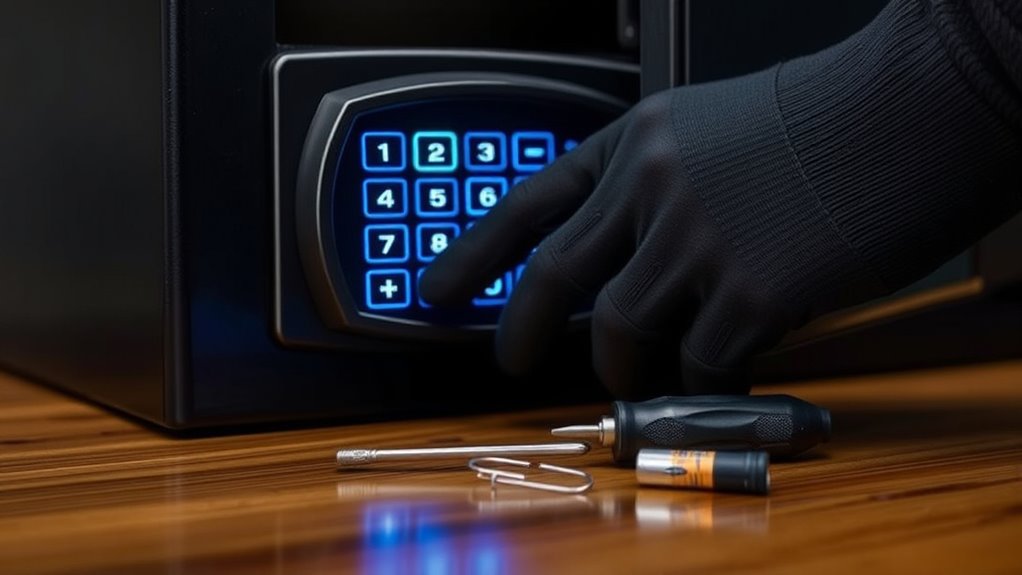
One of the most common reasons you might find yourself locked out of your gun safe is simple user error. For example, you might forget your passcode or misinput it repeatedly on the digital keypad.
Sometimes, a dead battery can cause the keypad to become unresponsive, leaving you locked out. Another frequent mistake involves forgetfulness—losing track of the combination or leaving it written somewhere insecure.
In some cases, people try lockpick techniques out of frustration, hoping to bypass the lock without the key or code. This can damage the lock and make access even harder.
If you rely on a digital keypad, make sure the battery is fresh and the code is entered correctly. Avoid rushing or guessing.
Recognizing these common mistakes helps prevent lockouts and ensures smoother, faster access when you need it most.
How to Quickly Access Your Safe Using the Original Key or Combination
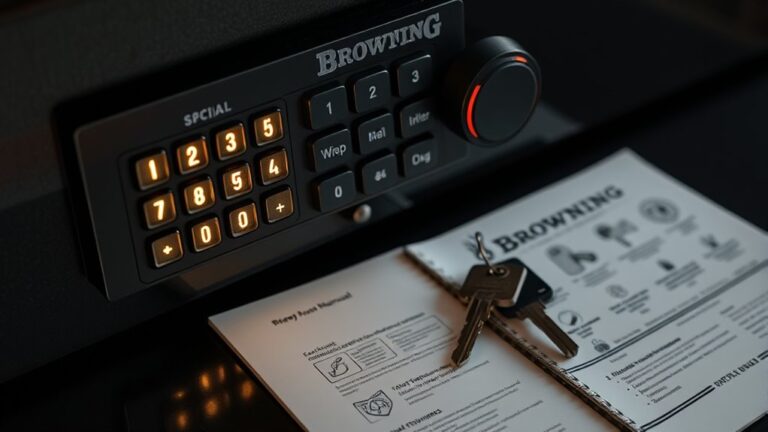
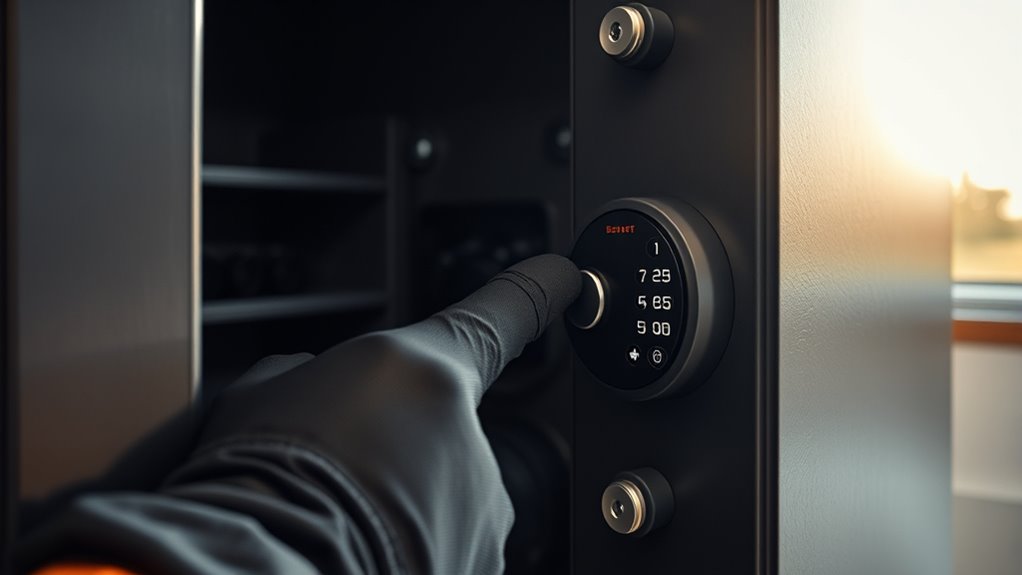
When you’re locked out of your gun safe, the fastest way to get in is by using your original key or combination without wasting time. First, make sure your batteries are fresh because dead batteries can stop electronic locks from opening.
If you have an electronic keypad, try entering your stored code. If that doesn’t work, use your backup key — just keep it in a secure but accessible spot.
| Step | Tip |
|---|---|
| Use the original key | Make sure the key isn’t duplicated or worn down. |
| Enter the backup combination | Confirm you remember the correct code. |
| Check battery status | Replace batteries regularly to avoid lockouts. |
Having a key duplication set aside ensures quick access, especially if your primary key gets lost. Regularly updating your battery replacement schedule keeps your lock working smoothly and prevents unnecessary delays during emergencies.
What Tools Can Help If You Forgot the Combination or Lost the Key?
If you’ve lost your key or forgotten the combination, don’t panic—there are tools and methods that can help you regain access quickly. Locksmith tools are essential in safe locksmithing and can assist in opening your gun safe without damaging it.
For example, lock picks and tension wrenches are common tools used by professionals to manipulate tumblers inside the lock. There are also specialized bypass tools, like lockout kits, which can sometimes open safes with minimal disturbance.
It’s important to remember that safe locksmithing requires skill and experience. Attempting to open your safe with the wrong tools can cause damage or trigger security features.
If you’re unsure or uncomfortable, it’s best to call a professional locksmith experienced in safe locksmithing. They have the right tools and expertise to help you get in quickly and safely.
Using the right tools and professional help can save time and money, restoring your access with minimal fuss.
How to Bypass or Reset the Lock on Your Gun Safe
Sometimes, bypassing or resetting your gun safe’s lock is the quickest way to get in without risking damage. First, find your safe in a secure spot that’s easy to access but also discreet.
Next, see if your safe has a backup override key. It’s usually hidden somewhere safe, like a lockbox or a concealed compartment.
If those options aren’t available, try resetting the electronic lock. Follow the manufacturer’s instructions, which often include using a master reset code or pressing a factory reset button.
Remember that where your safe is located can affect how easy it is to bypass. Closer safes are often easier to open or manipulate.
If your safe is fireproof, be careful not to use force. You don’t want to damage its fire-resistant features.
Use patience and caution when resetting. Make sure you don’t accidentally damage the lock or compromise the fireproof structure.
Safely Opening Your Safe With Minimal Damage When Other Methods Fail
When all else fails, take a step back and carefully identify what type of lock you’re dealing with. Knowing your lock type can really make a difference in how you approach opening the safe without causing damage.
Next, make sure you’re using the right tools for the job—tools that fit well and allow for precise movements. Being careful and precise helps protect the safe’s structure and locking mechanism, so you don’t accidentally damage anything important.
Assess Lock Type Safely
Before trying to open your locked gun safe, it’s important to identify the lock type because that influences how you approach opening it safely. Common types are electronic, mechanical, or hybrid locks. Recognizing signs of issues like a dead battery, which can disable electronic locks, or mechanical problems that might jam a traditional lock is key.
To do this quickly and effectively:
First, check if the electronic lock has power or indicator lights. Then, test the keypad or dial to see if it responds. Also, look for visible damage or signs of tampering.
Knowing the lock type helps you avoid causing damage and guides your next move. If it’s electronic and unresponsive, replacing the batteries might fix the problem. Mechanical issues could need gentle manipulation or professional help.
Properly assessing the lock reduces risks and saves you time in the process.
Use Proper Tools Carefully
Have you thought about how using the right tools carefully can help you access your safe with minimal damage? Even when other methods don’t work, proper tool selection is key to getting in safely.
Using specialized tools like lock picks or a tension wrench needs precision to prevent injury or more damage to the lock. Here’s a quick guide on choosing the right tools:
| Tool Type | Purpose |
|---|---|
| Tension Wrench | Apply rotational force |
| Lock Pick Set | Manipulate lock components |
| Bump Key | Release using force finesse |
| Drill | Forcing open as a last resort |
| Rubber Mallet | Gently loosen or reposition parts |
Pick your tools carefully, understand how to use them, and work methodically to reduce any risk of harm.
Minimize Safe Damage
Using proper tools with care not only prevents injury but also helps minimize damage to your safe. When other methods fail, focus on safe customization and lock techniques to reduce harm. Here are three ways to keep damage minimal:
- Use gentle force: Apply steady, moderate pressure to avoid bending or cracking the safe’s body.
- Opt for non-invasive methods: Prefer lock manipulation or pick tools over drilling to preserve the lock mechanism and interior components.
- Professional help: Consider hiring an experienced locksmith for delicate operations. They can open your safe safely with minimal damage by customizing the approach for your lock. This careful method keeps your safe functional and your valuables protected.
What to Do If These Steps Don’t Work : Next Options
If the initial methods fail to open your locked gun safe, it’s important to consider alternative options carefully. You can try emergency techniques or DIY solutions to access your belongings. These options can be useful if you’re in a hurry but should be approached with caution to avoid damage.
| Technique | Description |
|---|---|
| Use a Bump Key | Gently bump the lock open with a specially crafted key. |
| Try a Paper Clip | Manipulate the lock’s mechanism with a paperclip tool. |
| Apply Lubricant | Use WD-40 to loosen jammed parts or hinges. |
| Use a Wrench | If the safe has external bolts, try loosening them. |
| Contact a Locksmith | When all else fails, professional help is safest. |
While these DIY solutions can work, always weigh their risks. Emergency techniques might work temporarily, but professional help ensures safety and proper access.
When Should You Call a Professional Locksmith for Your Gun Safe?
If your gun safe’s lock isn’t working right or just won’t open no matter how many times you try, it’s probably time to call in a professional. Don’t keep messing with it if it’s giving you trouble—you might end up making things worse.
Also, if you notice any signs of tampering or if you’re worried about security, reaching out to a locksmith makes a lot of sense. It’s better to get an expert involved than to risk damaging your safe or putting your valuables at risk. When these issues come up, calling in a pro is the smart move.
Signs of Lock Malfunction
How can you tell when your gun safe’s lock is malfunctioning? If you notice certain signs, it’s a good idea to call a professional locksmith.
First, the lock won’t respond when you enter your code or turn the key. This could mean there are internal issues that need attention.
Second, if the safe’s lock feels loose or wobbly, it might be due to poor installation or worn-out lock parts.
Third, listen for grinding or clicking sounds when you try to operate the lock. These noises often indicate damage or a failure in the lock mechanism.
These problems can compromise your security, so it’s best not to try fixing them yourself.
A locksmith can diagnose the issue properly and restore your lock’s functionality and security without causing further damage.
Don’t risk compromising your safe’s integrity—getting professional help is the best move.
Increased Security Concerns
When security concerns about your gun safe start to rise, it’s often a sign that professional intervention is needed. If you notice that the safe’s looks are compromised or the lock isn’t working properly, it’s time to call a locksmith.
A damaged finish or visible tampering can weaken your safe’s effectiveness, making it more vulnerable. Likewise, if your lock isn’t responding reliably or the keypad shows signs of malfunction, a professional can evaluate and repair the system.
Trying to fix complex lock technology yourself might cause further damage and reduce security. A locksmith will assess your safe’s integrity, improve lock security, and ensure it remains a reliable safeguard for your firearms.
Don’t delay when safety is at stake.
How to Prevent Lockouts and Maintain Your Gun Safe Properly
Maintaining your gun safe the right way is key to avoiding lockouts and ensuring quick access when you need it. Properly installing your safe makes it more secure and less likely to be tampered with or accidentally moved.
Regularly check that the hinges and locks operate smoothly to prevent any malfunctions. Using strong authentication methods like unique codes or biometric access can help reduce unauthorized use or forgotten combinations.
To keep everything in top shape, focus on these three simple steps:
- Secure Installation: Always anchor or bolt your safe to the floor or wall to prevent theft or accidental shifting.
- Update Authentication Methods: Change your access codes regularly and consider using multi-factor verification if available.
- Routine Maintenance: Lubricate the locking mechanism, test your access method often, and fix any signs of wear immediately.
Following these tips will help keep your safe reliable and prevent lockouts, making sure your firearm stays accessible and secure when it matters most.
Tips for Securing Your Safe and Avoiding Future Problems
To make sure your safe stays secure and ready whenever you need it, it’s a good idea to do regular maintenance checks. Just like anything else, locks can wear out over time, so double-check that everything’s working smoothly.
Picking a strong, reliable lock is also really important. It helps prevent anyone unauthorized from getting in and keeps your firearms properly protected.
Regular Maintenance Checks
- Chemical cleaning: Use a recommended cleaner to remove dirt and residue from electronic parts. This helps prevent corrosion and keeps everything running smoothly.
- Battery maintenance: Check and replace batteries annually. Making sure the keypad or electronic lock works reliably is key to security.
- Visual inspection: Examine hinges, bolts, and locking mechanisms for wear or damage. Fixing issues early can save you trouble later.
Strong, Secure Lock Options
Choosing a strong, secure lock is a vital step in safeguarding your gun safe against unauthorized access. Modern gun safe technology offers various locking mechanisms, each with different security levels.
A thorough locking mechanisms analysis helps you identify options such as electronic keypads, biometric locks, and traditional key locks. Electronic locks provide quick access but require power and can be vulnerable to technical failures.
Biometric systems, which use fingerprint recognition, offer advanced security and convenience. Whichever you choose, make sure it’s resistant to tampering and forced entry.
Prioritizing strong, reliable lock options minimizes the risk of future problems and improves your overall safe security. Investing in quality locking mechanisms is essential for protecting your firearms and maintaining peace of mind.
Key Safety and Security Consider During the Opening Process
When opening a locked gun safe, it’s important to prioritize key safety and security to prevent accidents or unauthorized access. First, always check for signs of tampering before trying to open it. This helps you spot if someone has tried to force it open.
Prioritize safety and security when opening a locked gun safe by checking for signs of tampering first.
Second, familiarize yourself with emergency procedures just in case something goes wrong. Know who to contact or where to seek help quickly. Third, never leave the key unsecured during the process.
Keep the key in a safe place afterward to avoid theft or unauthorized access. Be careful when handling keys or attempting to bypass the lock, as there are potential risks involved.
Following these steps helps ensure your safety and keeps your firearm protected. Staying alert and prepared during the opening process minimizes mistakes and maintains the security of your safe’s contents.
Frequently Asked Questions
What Are the Legal Implications of Opening a Locked Gun Safe Without Authorization?
Opening a locked gun safe without authorization can have serious legal consequences. That includes charges like theft or breaking and entering.
You might violate laws related to theft prevention and property rights, which can lead to fines or criminal charges.
It’s really important to understand these legal considerations before you try to access a safe without permission. Doing so could damage your credibility and result in severe penalties if you’re caught.
Can DIY Methods Damage the Safe or Void the Warranty?
DIY methods can indeed damage your gun safe or void the warranty if you try opening it yourself. Many safes are built with sensitive parts that can be easily broken or misaligned without the right tools and expertise.
Using improper techniques or harsh tools can lead to costly repairs and may cause you to lose your warranty coverage. It’s always best to talk to a professional locksmith or the manufacturer to make sure you get safe, damage-free access inside your safe.
Are There Specific Tools Recommended for Different Types of Gun Safes?
For different types of gun safes, you’ll need specific tools like lock picking sets for mechanical locks or a key for traditional safes.
If your safe offers biometric access, make sure the sensor is clean and functioning properly. Avoid invasive methods that might damage the lock.
Using the proper tools keeps the safe intact, maintains your warranty, and ensures security.
Always follow manufacturer guidelines or consult a professional if you’re unsure.
How Long Does It Typically Take to Open a Safe Using Professional Methods?
They say, “Speed is the essence of war,” but when opening a safe with professional techniques, timing can vary.
Using alternative opening methods, experienced experts might access most safes in 5 to 15 minutes.
However, safety precautions are really important—handle tools carefully and wear proper safety gear.
Your patience and skill can help cut down the time, but rushing could cause damage or injuries.
Always get professional help if you’re unsure, and remember, safety comes first.
What Are the Signs Indicating a Safe’s Lock or Mechanism Is Failing?
If you notice that your safe’s lock or mechanism is failing, look for signs like difficulty turning the dial, unusual noises during lock or unlock, or inconsistent opening.
Regular safe maintenance can prevent these issues. Lock troubleshooting involves inspecting for worn or damaged parts.
If problems persist, it’s best to consult a professional locksmith. This helps you avoid further damage or security risks.
Acting early keeps your safe reliable and secure.
Conclusion
Now that you know how to open your locked gun safe in just a few steps, you’re ready to handle unexpected lockouts like a pro.
Think of it as navigating a maze—you just need the right tools and a little patience. Remember, safety always comes first. If you’re unsure or the lock is really stubborn, don’t hesitate to call in the experts.
Keep your safe secure and your mind at ease. After all, prevention is the best lock of all.