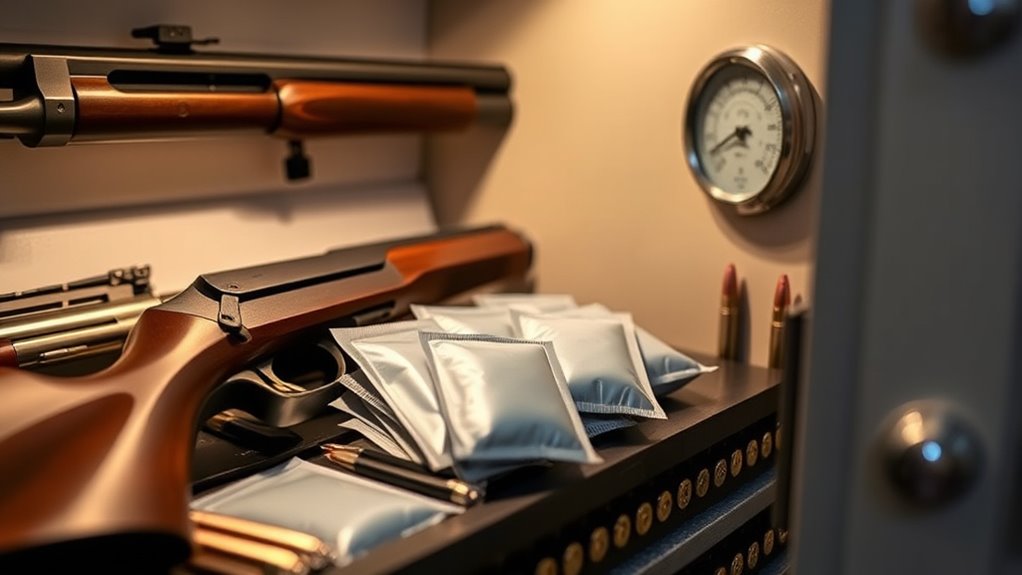
How to Maintain the Right Humidity in Your Gun Safe
Many gun owners know how tricky it can be to keep your firearms in pristine condition. You’re not alone if controlling humidity in your gun safe feels overwhelming—many struggle with rust, mold, or wood damage.
To maintain the right humidity in your gun safe, monitor levels regularly with a reliable hygrometer, ideally placed in the center at eye level.
Keep humidity between 40% and 60% to prevent rust, mold, and wood damage.
Use desiccants or electronic control devices to help regulate moisture, and guarantee proper ventilation.
Regular inspections and adjustments will keep your firearms protected long-term.
If you’d like to uncover detailed tips and strategies, keep exploring the topic further.
Key Takeaways
- Regularly check the humidity levels with a reliable hygrometer placed at eye level inside your safe. This makes it easier to see the readings clearly.
- Keep the humidity between 40% and 60%. Use desiccants, humidifiers, or dehumidifiers if needed to maintain these levels.
- Make sure your safe is well-ventilated and avoid putting it in high-humidity spots like basements or attics.
- Calibrate your hygrometers from time to time for accurate readings, and adjust the humidity sources accordingly.
- Regularly inspect your firearms and the interior of the safe for signs of rust, mold, or damage to the wood, and take quick action if you notice any issues.
Why Humidity Levels Matter for Your Gun Safe
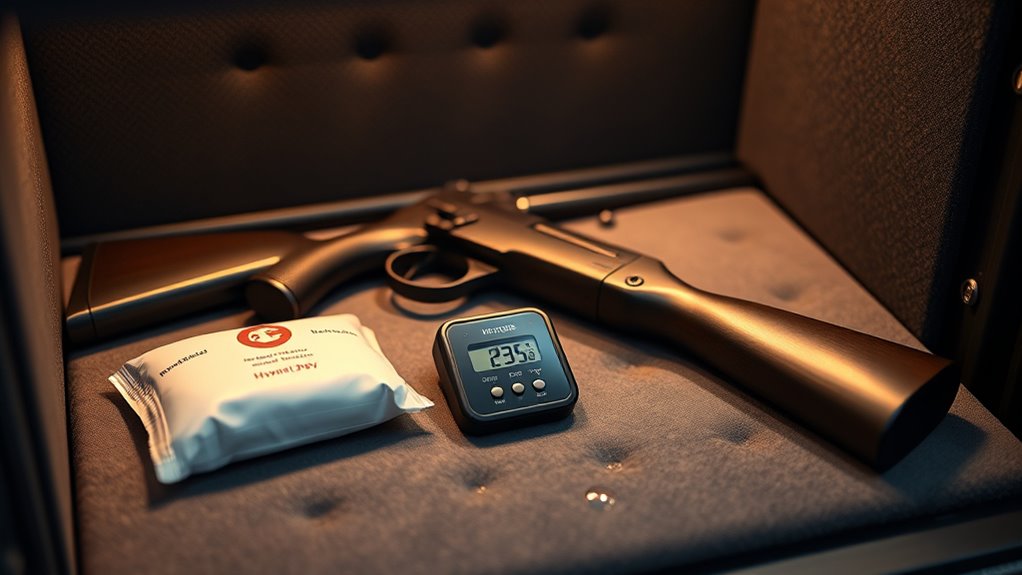
Maintaining proper humidity levels inside your gun safe is crucial because excess moisture can cause rust and corrosion on your firearms. Fluctuations in humidity can make metal parts expand and contract, which increases the risk of damage over time.
If humidity levels are too high, moisture can build up and promote rust. On the other hand, if it’s too low, wood stocks and other materials may crack or warp. Proper ventilation plays a key role in keeping humidity stable.
Without good airflow, moisture can get trapped, creating an environment that encourages corrosion and mold growth. Regularly monitoring and controlling humidity helps prevent these problems and keeps your guns in great condition.
Good ventilation also helps maintain a consistent environment by reducing excess moisture and allowing fresh air to circulate. Being aware of humidity changes and ensuring your safe has proper airflow is vital to protecting your firearms from damage caused by improper humidity levels.
How to Accurately Measure Humidity in Your Safe
To get an accurate read on the humidity inside your gun safe, you’ll want to pick the right hygrometer. You can go with a digital one or an analog model—it just depends on what you prefer. Either way, choosing the right device is the first step.
Next, where you place your hygrometer really matters. Keep it away from vents or any direct contact with metal surfaces to avoid skewed readings. Finding the right spot inside your safe helps ensure you get a true picture of the humidity levels.
And don’t forget about calibration! Regularly checking and adjusting your hygrometer keeps it accurate over time. So, make it a habit to monitor and calibrate it periodically—you’ll thank yourself when your safe stays perfectly humidity-controlled.
Types of Hygrometers
Choosing the right hygrometer is key to accurately monitoring humidity inside your gun safe. There are three main types: mechanical, digital, and sling psychrometers.
Mechanical hygrometers are simple and don’t need power, but they might require calibration over time. Digital models give quick readings and often include features like temperature display, making them handy for gun safes with limited air circulation.
Sling psychrometers use a wet-bulb and dry-bulb thermometer for high accuracy but are a bit less convenient to use. Here’s a quick comparison:
| Type | Accuracy | Ease of Use |
|---|---|---|
| Mechanical Hygrometers | Moderate | Very simple |
| Digital Hygrometers | High | Very easy |
| Sling Psychrometers | Very high | More complex |
Pick the one that matches how precise you want your humidity monitoring to be.
Proper Placement Methods
Proper placement of your hygrometer is key to getting accurate humidity readings inside your gun safe. Things like temperature changes can affect the readings, so the right position really matters.
Follow these tips to ensure you’re getting trustworthy data:
- Keep the hygrometer away from the door, where drafts and sudden temperature changes happen.
- Place it on a middle shelf, avoiding contact with walls or metal surfaces to keep readings accurate.
- Position it at eye level so you can easily check humidity levels regularly.
Regular Calibration Practices
Ever wondered how to guarantee your humidity readings are truly accurate? Regular calibration of your hygrometers is key for effective climate control and keeping your gun safe secure.
Over time, humidity sensors can drift, causing false readings that could put your stored firearms at risk. To verify accuracy, check your hygrometer against a known humidity source like a moist sponge or silica gel, periodically.
Adjust the device as needed to match the reference. Keep in mind, environmental factors or temperature fluctuations can influence readings, so calibration should be done often.
Accurate measurements help you fine-tune moisture control devices and prevent rust or corrosion. Consistently calibrating your humidity gauges is the best way to maintain a stable environment and keep your security measures working properly.
What’s the Ideal Humidity Range to Protect Your Guns?
Maintaining the right humidity level is key to preventing rust, corrosion, and damage to your firearms. The ideal range for gun safe humidity is between 40% and 60%. Staying within this range keeps your guns protected without too much moisture that could cause corrosion.
Keeping humidity between 40% and 60% prevents rust and protects your firearms from damage.
Proper ventilation in your gun safe is essential. It helps circulate air and keeps the humidity level steady. Adding ventilation systems or vents can prevent moisture buildup and maintain optimal conditions. Using humidity-resistant coatings on metal parts also adds an extra layer of protection.
Here are a few tips to help you keep things in check:
- Use a reliable hygrometer to monitor humidity levels regularly.
- Add ventilation systems or vents to prevent moisture from collecting.
- Apply humidity-resistant coatings on your firearms and the safe’s interior surfaces.
Staying within this humidity range helps preserve your firearms’ finish and mechanical parts. It also reduces the amount of maintenance needed. Keep an eye on those levels and follow these tips to create a safe, rust-free environment for your guns.
Signs Your Gun Safe Has Too Much or Too Little Humidity
If your gun safe isn’t showing the right signs of humidity imbalance, you might notice specific indicators that point to too much or too little moisture inside.
Excess humidity can cause rust spots on your firearm surfaces, damaging the gun’s appearance and reducing its value. You might also see foggy or streaked glass on the safe, which can be an early sign of too much moisture.
On the other hand, too little humidity leads to dry, cracked wood or interior lining, making storage accessories less effective. If your firearms feel sticky or develop corrosion patches, that’s a clear warning of high humidity.
Conversely, if the interior feels overly dry or the guns feel brittle, you’re likely dealing with low moisture levels. Recognizing these signs helps you maintain proper humidity and keeps your collection in good condition.
Choosing the Best Humidity Control Products for Your Guns
When you’re picking out humidity control products, it’s a good idea to get familiar with the different types out there and see how they fit with your safe. Think about the size and material of your safe—making sure the products you choose are a good match is so important.
You’ll also want to consider how much each option costs compared to how well it works. Finding the right product isn’t just about saving a few bucks—it’s about making sure your guns stay protected without any extra hassle or expense.
Types of Humidity Control
Choosing the right humidity control products is essential for protecting your guns from rust and corrosion. Understanding humidity history helps you see how different solutions have evolved.
Here are three popular options:
- SilicaGel Packs – These are affordable, widely used, and effectively absorb moisture. They just need occasional recharging.
- Automatic Desiccant Systems – These systems automate moisture regulation, keeping levels consistent, especially when the environment fluctuates.
- Electronics-Based Humidity Controls – These are advanced systems that connect to sensors, maintaining precise humidity levels. They’re perfect for valuable firearms.
picking the right product depends on your gun collection size and environment. Customized humidifiers tailored to your safe’s needs provide reliable, long-term protection against humidity fluctuations while considering your collection’s humidity history.
Compatibility With Safes
Selecting humidity control products that fit your safe’s design and size ensures you get the best protection for your firearms. Compatibility issues can happen if you pick units that are too big, small, or don’t match your safe’s materials.
It’s important to verify that the device works well with your safe’s construction and interior. For example, materials like wood or metal can influence how humidity levels are maintained or how a humidifier interacts with your safe.
Here’s a quick reference to guide you:
| Safe Material | Humidity Control Type | Compatibility Tips |
|---|---|---|
| Wood | Desiccants | Ensure proper sealing |
| Metal | Electronic | Avoid units prone to corrosion |
| Composite | Gel Packs | Check for moisture transfer |
Matching the right product with your safe’s materials helps prevent compatibility issues and maximizes protection.
Cost and Effectiveness
Finding the right humidity control products is about balancing cost and effectiveness to protect your firearms without overspending. To do this, consider these key points:
- Cost comparison: Check prices for options like desiccant packs, electronic humidity controllers, and silica gel. Cheaper products might need frequent replacement, which can add up over time.
- Effectiveness analysis: Read reviews and look at specs to see how well each option keeps humidity steady. Electronic controls usually are more precise but cost more upfront.
- Longevity and maintenance: Think about how easy it is to keep each product running. Desiccants need regular recharging or replacing, while electronic systems often adjust automatically, saving you time and effort.
Balancing these factors helps you choose a humidity control solution that’s both affordable and effective for your gun safe.
Desiccants vs. Humidifiers: Which Works Better?
When it comes to controlling humidity in your gun safe, you need to compare desiccants and humidifiers. Desiccants, especially chemical ones, do a great job at absorbing moisture, pulling excess humidity from the air to protect your firearms.
They’re easy to use, low-maintenance, and don’t need any power. However, their ability to absorb moisture is limited, so you’ll need to replace or recharge them regularly, especially if your environment is very humid.
On the other hand, humidifiers actively add moisture to dry air, helping maintain a more steady environment. They’re better suited for extremely dry climates or if your safe is particularly moisture-sensitive.
While humidifiers require electricity and can be a bit more complicated to set up, they give you consistent control over humidity levels. Ultimately, if you mainly want to prevent excess moisture, desiccants are simple and effective.
But if you need ongoing, precise humidity control, a humidifier could work better for your needs.
Keeping Humidity Stable Over Time
How can you guarantee that the humidity inside your gun safe remains stable over time? The key is consistency. Sudden changes can lead to rust or mold, which can harm your valuables. To keep things steady, try these strategies:
Ensuring consistent humidity prevents rust and mold, protecting your valuables over time.
- Use a reliable hygrometer to check humidity levels daily, like you’d check your indoor gardening setup or digital photography gear.
- Incorporate a digital humidifier or dehumidifier linked to a smart sensor. It adjusts automatically and keeps humidity steady without requiring much fuss.
- Place your safe in a stable environment. Avoid attics or basements with temperature swings that could cause fluctuations and damage your collection.
Tips to Prevent Rust and Mold in Your Gun Safe
Want to keep your gun safe rust- and mold-free? Using desiccants properly is a great start—they help absorb moisture and keep the air inside dry. It’s also important to keep an eye on the humidity levels; too much moisture can lead to problems over time.
Don’t forget to regularly inspect and clean your safe. Catching any signs of rust or mold early can save you a lot of trouble later on. And, of course, controlling the ambient humidity around the safe creates the perfect environment for your guns, helping them stay in top shape.
With these simple steps, you can protect your firearm collection and enjoy it for years to come.
Use Desiccants Effectively
Desiccants are a simple yet effective way to keep moisture levels in your gun safe under control. To get the best results, follow these tips:
Check and replace desiccants regularly because saturated ones can’t absorb more moisture.
For silica gel, do a desiccant regeneration by warming it in an oven. This refreshes its absorption capacity and helps prevent rust and mold.
When activating silica gel, make sure to follow proper techniques to keep it working at its best.
Using desiccants the right way keeps them working continuously, protecting your firearms from rust and mold.
Control Ambient Humidity Levels
Maintaining ideal humidity levels inside your gun safe is key to preventing rust and mold on your firearms. Controlling the ambient humidity improves indoor air quality and reduces temperature fluctuations that can cause moisture buildup.
Keep your safe in a stable environment away from high-humidity areas like basements or garages. Make sure the room has good ventilation to help reduce excess moisture in the air.
Use a hygrometer to check humidity levels regularly. During seasons with big temperature swings, consider installing a dehumidifier nearby or inside the safe to buffer rapid changes.
Consistent ambient conditions stop condensation, which leads to corrosion and mold growth. Managing these factors helps create an environment that keeps your firearms in top shape over time.
Regularly Inspect and Clean
Regular inspections and cleaning are essential to prevent rust and mold from taking hold in your gun safe. This helps keep your safe looking good and makes sure your storage space stays just right.
To keep your safe in top shape:
- Check regularly for signs of corrosion or mold and fix any issues right away.
- Gently wipe surfaces with a soft cloth to remove dust and moisture — avoid harsh cleaners that could harm the interior or exterior.
- Pay attention to areas where moisture might collect, like vents and seams, and keep them clear to ensure good airflow and proper humidity.
Scheduling monthly inspections is a great way to keep rust and mold away while helping your gun safe stay organized and looking its best. Regular maintenance not only protects your firearms but also helps your safe last longer.
Troubleshooting Common Humidity Problems in Gun Safes
Despite your best efforts, humidity problems can still pop up in your gun safe, leading to rust or corrosion that damages your precious firearms. This can also hurt your gun safe’s looks and make your firearm organization tips less effective.
To troubleshoot, start by checking if your dehumidification system is working properly—whether it’s silica gel packs or an electronic dehumidifier. If they’re saturated or not functioning, replace or repair them.
Next, make sure the safe is well-sealed. Gaps or leaks can let moisture creep in. You can also add rust preventatives or extra desiccants for added protection.
Adjust your environment by controlling the temperature and humidity levels around the safe. Keeping the interior clean and dry is important too—avoid clutter that can trap moisture.
Finally, regularly monitor humidity levels with a hygrometer so you can catch any issues early. Addressing these common problems promptly will help keep your firearms in top condition without sacrificing your gun safe’s appearance or organization.
Long-Term Tips for Protecting and Preserving Your Firearms
To effectively protect and preserve your firearms long-term, consistent maintenance is key. Regularly check and clean your guns to prevent rust and keep them in top condition for any customization.
Maintaining proper humidity levels is also important. It not only protects your guns but also keeps the interior of your safe looking good by preventing dust and rust buildup that can harm its appearance.
Here are three tips to guarantee long-term protection:
- Schedule routine inspections for signs of rust or corrosion and fix issues right away.
- Use quality dehumidifiers or moisture absorbers to keep humidity levels just right.
- Organize your guns thoughtfully to avoid scratches and dents, considering your customization needs.
Consistent care will keep your firearms functional and visually appealing, helping your investment last for years to come.
Frequently Asked Questions
How Often Should I Check the Humidity Levels in My Gun Safe?
You should check your gun safe’s humidity levels at least once a month with accurate humidity sensors. Regular checks help you catch fluctuations early.
Use preventative measures like dehumidifiers or silica gel packs if needed. Keep an eye on humidity sensors to make sure they’re working correctly.
Consistent monitoring and preventative measures maintain ideal humidity, preventing corrosion and damage to your firearms.
Can External Weather Affect the Humidity Inside My Gun Safe?
External weather can dramatically impact your gun safe’s humidity, like a hurricane carving through a calm sea. Humidity sources from climate shifts, temperature swings, and seasonal changes can infiltrate or evaporate inside, causing fluctuations.
When air’s moisture levels change outside, your safe’s internal environment responds, risking rust or corrosion. So, it’s essential to monitor these climate impacts closely and use dehumidifiers or seals to protect your firearms.
Is It Safe to Leave Humidity Control Devices Unattended?
Leaving humidity control devices unattended is generally safe if you regularly check your humidity sensors and perform dehumidifier maintenance. Most devices have alerts or indicators to signal when they need attention.
You should monitor their operation periodically to guarantee your gun safe stays at the right humidity level. Proper maintenance helps prevent mold and corrosion.
This way, you can have peace of mind that your firearms are protected, even when you’re not constantly checking.
How Do I Prevent Corrosion if My Safe Leaks Moisture?
If your safe leaks moisture, you can prevent corrosion by regularly checking and replacing desiccant packs to absorb excess humidity.
Also, guarantee your safe is properly sealed using effective safe sealing techniques, such as airtight gaskets.
Maintain desiccant efficiency through consistent desiccant maintenance, which helps keep moisture levels low.
These steps protect your firearms from corrosion, even if minor leaks occur.
Can Humidity Affect the Value of My Collectible Firearms?
Imagine your firearm as a vintage record; humidity can really impact its value. If moisture causes corrosion or rust, it worsens the firearm’s condition and can lower its appraisal value.
To keep your collectibles in top shape, use proper preservation techniques. Controlling humidity levels in your safe is a good idea.
Keeping firearms dry and clean helps maintain their condition. That way, your investment stays valuable and ready for future appraisals.
Conclusion
Maintaining the right humidity in your gun safe is key to keeping your firearms in top shape. Accurate measurement, choosing the right control products, and staying alert against rust and mold are all part of good maintenance.
By keeping an eye on humidity levels, you can prevent costly damage to your collection. Regular upkeep is the best way to ensure your guns stay in great condition for years to come.
Remember, a stitch in time saves nine. Keep humidity in check, and your firearms will remain reliable and ready whenever you need them. Stay proactive, and your guns will thank you for it.