Where to Put a Dehumidifier in Your Gun Safe in 5 Steps
Are you tired of worrying about moisture ruining your valuable firearms? You’re not alone—many gun owners struggle with keeping their safe dry and rust-free. The key is proper moisture control, and a good dehumidifier can make all the difference.
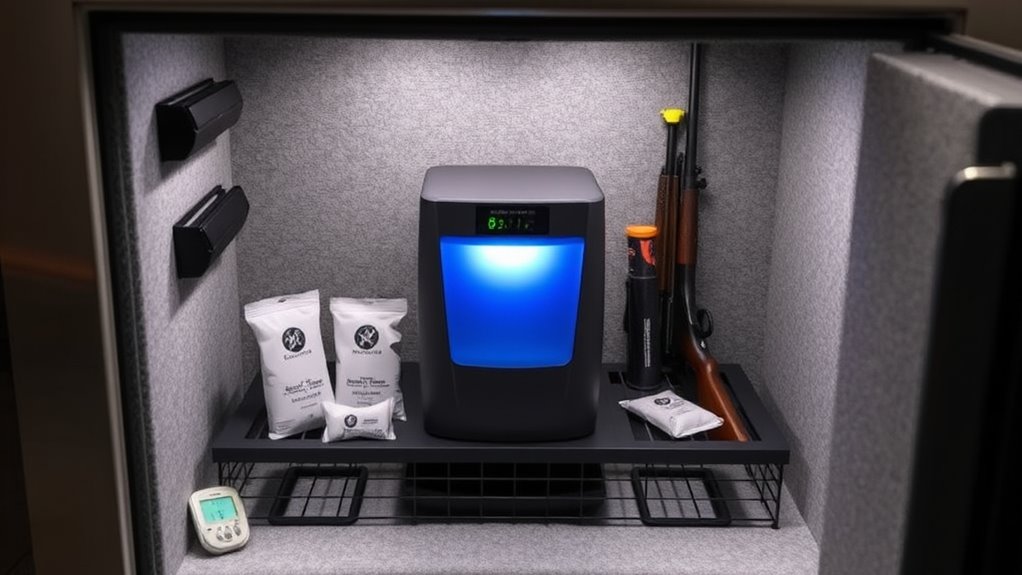
To place a dehumidifier in your gun safe, first select a spot near a power outlet away from firearms and valuables. Position it where air can circulate freely, ideally near vents or the center of the safe.
Make sure it’s accessible for adjustments and maintenance. Keep vents clear to allow proper airflow.
Regularly check humidity levels with a hygrometer to stay dry and rust-free. Stick with us to find out more tips for perfect moisture control.
Key Takeaways
- Choose a central, accessible spot away from firearms and valuables so humidity is balanced throughout.
- Position the dehumidifier near vents or around the safe’s center to help distribute moisture evenly.
- Make sure it’s close to a power outlet, so plugging in and maintenance are easy.
- Stay away from tight corners or cluttered areas that might block airflow and reduce moisture removal.
- Keep an eye on humidity levels regularly and move or adjust the device as needed for the best results.
Why Proper Placement of Your Dehumidifier Matters
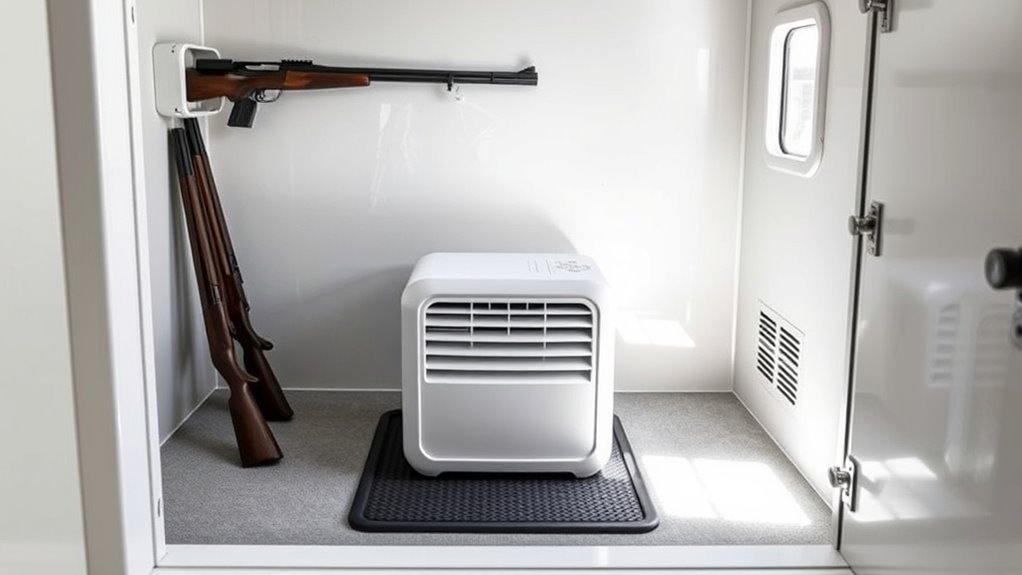
Proper placement of your dehumidifier is essential because it guarantees even moisture control throughout your gun safe. If you position it incorrectly, some areas may stay damp, risking rust and corrosion, while others stay overly dry.
Aesthetic placement is also key—you want the dehumidifier to blend seamlessly without cluttering your safe’s appearance. Look for a spot that’s central but out of the way so it distributes moisture evenly.
Different dehumidifier models have varying designs and sizes, so consider one that fits your safe’s layout and your aesthetic preferences. Smaller, wall-mounted units work well for compact spaces, while larger models might need a more strategic spot.
Proper placement assures the device operates efficiently, preventing moisture buildup and preserving your firearm collection. Remember, selecting an aesthetically pleasing and functional spot improves both the safe’s appearance and its climate control performance.
Key Factors to Decide the Best Spot in Your Safe
Choosing the right spot for your dehumidifier depends on several key factors that influence its effectiveness. First, think about the dehumidifier capacity; a larger one might be needed for bigger safes or areas with high humidity. Smaller units work better for compact or climate-controlled safes.
Next, check your safe’s climate zone. If you’re in a humid area, you’ll probably want a more powerful dehumidifier. In drier regions, a less robust unit might do the trick.
Place the dehumidifier where air can move around easily. Avoid corners or tight spots that can trap moisture or block airflow. Also, consider how easily you can access it for maintenance and how close it is to a power outlet.
Simple Steps to Place Your Dehumidifier Correctly
Once you’ve found the perfect spot based on size, airflow, and accessibility, placing your dehumidifier becomes simple. The type you choose—whether small, desiccant, or electric—depends on your gun safe’s size and humidity needs. Proper placement helps maximize moisture removal and keeps mold or rust at bay.
When positioning your dehumidifier, keep it away from firearms and valuables to prevent direct contact. It’s also good to place it near vents or in the center of the safe for even humidity distribution.
Make sure it’s easy to reach for maintenance and replacements, especially with different dehumidifier types. Proper placement is key to controlling humidity and protecting your guns and gear over time.
How to Test and Keep Moisture Levels Under Control
To effectively monitor moisture levels in your gun safe, check the humidity regularly and make adjustments as needed. Use a hygrometer to gauge the air moisture, aiming for a range of 30-50%.
If the humidity gets too high, it can cause mold and rust. Keep track of the readings and tweak your dehumidifier or vents accordingly. Good air circulation is essential—make sure vents are clear and avoid overcrowding your safe, which traps humidity.
| Action | Tip |
|---|---|
| Test Humidity Levels | Use a digital hygrometer regularly |
| Adjust Dehumidifier | Turn it up or down depending on the readings |
| Improve Air Circulation | Open vents or reposition items to promote airflow |
| Monitor for Mold & Rust | Check for condensation or mold growth regularly |
Consistent testing and adjustments help keep moisture level in check, protecting your firearms from mold and rust.
Troubleshooting and Maintaining Your Gun Safe’s Dryness
Maintaining your gun safe’s dryness needs ongoing attention to catch issues early. Regular inspection helps keep your guns secure and prevents rust or corrosion.
Regular checks keep your gun safe dry, secure, and rust-free.
If you notice more moisture, check your dehumidifier’s operation and move it if needed. Choose dehumidifier brands known for reliability and features that handle humidity changes well.
Also, replace or recharge desiccants periodically to keep things dry.
Here are some tips:
- Use a hygrometer to monitor humidity and spot moisture early.
- Clean and maintain your dehumidifier often to avoid mold or dust buildup.
- Place your dehumidifier where airflow isn’t blocked so it works efficiently.
Consistent troubleshooting and upkeep protect your firearms and keep your gun safe dry and stable.
Frequently Asked Questions
Can I Place the Dehumidifier Near My Firearms?
Yes, you can place the dehumidifier near your firearms, but it’s important to think about safe gun safe placement. Try to position the dehumidifier toward the back or in the corner of the safe, away from your guns.
Keep it away from direct contact with your firearms to prevent moisture buildup or potential damage. Proper placement helps control humidity evenly and prevents rust without risking damage.
Make sure the dehumidifier is stable and won’t tip over or shift. This keeps your firearms in a safe environment and ensures everything stays secure.
How Often Should I Replace the Dehumidifier?
Think of your dehumidifier as a faithful guardian, always on watch for rising humidity levels.
You should replace it based on the type—sometimes every few months, other times annually—since different dehumidifier types, like silica gel or electric units, vary in lifespan.
Keep an eye on the humidity levels; if they spike or the device seems less effective, it’s time for a change to protect your firearms effectively.
Should the Dehumidifier Be Plugged in or Wireless?
You should use a plug-in dehumidifier for your gun safe to guarantee energy efficiency and easy maintenance.
Plug-in units are more reliable and straightforward to operate, making it simple to monitor and replace moisture-absorbing cards or refill water reservoirs.
Wireless dehumidifiers might seem convenient but often don’t deliver consistent performance and can require more upkeep.
For the best protection, go with a plug-in model and make sure to follow routine maintenance tips regularly.
Is It Safe to Keep the Dehumidifier Running Continuously?
Yes, it’s generally safe to keep your dehumidifier running continuously, as long as you keep an eye on humidity levels to avoid over-drying.
Running it consistently helps maintain the right humidity, which is crucial for preventing mold and protecting your firearms.
Just make sure your dehumidifier is properly sized for your gun safe and check it regularly to make sure it’s working right.
This way, you can keep humidity steady and protect your guns from mold and corrosion.
Can Using Multiple Dehumidifiers Improve Moisture Control?
Using multiple dehumidifiers can help improve humidity control and moisture prevention in your gun safe, especially if you store a lot of firearms or live in a damp climate. This setup keeps the environment consistently dry and cuts down on rust and corrosion risks.
Just be careful not to over-dry the space, as that can harm sensitive items. Regularly check humidity levels and adjust or turn off some units if it gets too dry. This way, you maintain the perfect balance for your firearms.
Conclusion
Now that you know where and how to place your dehumidifier, your gun safe will stay as dry as the Sahara.
By following these simple steps, you prevent rust and corrosion from sneaking in like silent assassins.
Regular testing and maintenance might seem minor, but they’re your safe’s first line of defense.
With this easy setup, you’re unbeatable at preserving your firearms—creating a moisture-free safe your collection deserves.