How to Find Places in PA Where You Cannot Carry a Concealed Weapon
If you carry a concealed weapon in Pennsylvania, you probably want to stay on the right side of the law. But figuring out exactly where you can and can’t carry can be confusing and overwhelming. You’re not alone—many people struggle with knowing the rules and spotting restricted areas.
To find places in PA where you can’t carry a concealed weapon, start by checking posted signs at private properties like businesses and clubs, as owners can prohibit firearms.
For public spaces, look for restrictions at government buildings, schools, hospitals, and large events, often marked with official signage.
Local ordinances and private property rules vary, so confirming these before carrying is essential.
If you continue exploring, you’ll learn how to stay compliant and avoid violations in any zone.
Key Takeaways
- Check for posted “No Weapons” signs, notices, or fencing at private properties and businesses indicating restrictions.
- Review local and state laws for areas where carrying is prohibited, like schools, courthouses, and healthcare facilities.
- Look for signage at big events, stadiums, and public gatherings that ban concealed carry.
- Ask property owners or managers about specific carrying restrictions before you enter private or regulated places.
- Stay updated on changes to ammunition laws, zoning regulations, and private policies that could limit where you can carry.
Understanding Pennsylvania’s Concealed Carry Laws and Restrictions
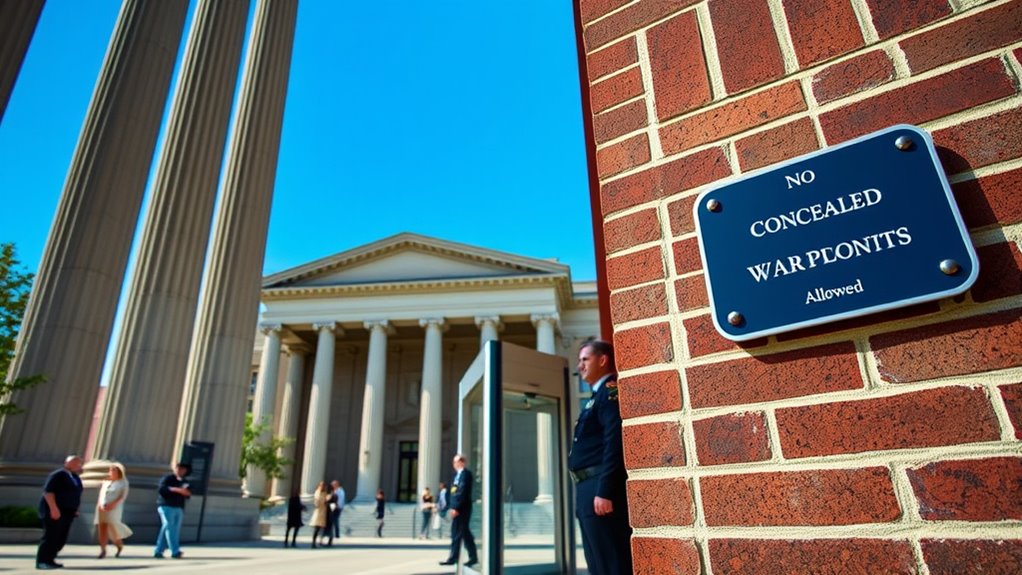
Pennsylvania’s concealed carry laws are designed to regulate where and how you can carry a concealed weapon, making sure both your safety and others’ are protected.
To understand these rules, it helps to know the history behind them. State laws have shifted from little regulation to a clear legal framework.
Federal regulations also play a role, especially around licensing and transportation of firearms.
Pennsylvania requires a license to carry a concealed weapon, which you get through the Pennsylvania State Police.
You must obtain a license through the Pennsylvania State Police to carry a concealed weapon legally.
The laws specify who qualifies—like being at least 21 and having no felony convictions.
It’s also important to stay informed about federal rules, such as restrictions on carrying in federal buildings or airports.
Knowing these factors helps you carry your weapon legally while keeping public places safe.
Understanding both history and federal rules lets you navigate Pennsylvania’s laws confidently and responsibly.
Knowing Where Concealed Carry Is Prohibited in PA
It’s really important to know where you can’t carry a concealed weapon so you don’t accidentally end up breaking the law. Usually, private property owners and certain non-governmental buildings have their own rules about carrying weapons, even if the state law says it’s okay elsewhere. So, always be mindful of any signs or notices when you’re on private property.
Also, keep in mind that special events might have their own restrictions. They often have clear rules that prohibit weapons, and you’ll want to watch out for signage and event-specific guidelines to stay in the right.
Basically, staying aware of these restrictions helps you avoid any trouble and ensures you’re carrying responsibly.
Private Property Restrictions
Private property owners in Pennsylvania have the right to prohibit concealed carry on their premises, so it’s important to pay attention to posted signs and markings.
These signs clearly indicate restrictions and highlight property rights and private access controls.
Imagine common restrictions like “No Weapons” signs at entrances, fenced private yards with locked gates, gated community entrances with security signs, or business storefront notices about weapon bans.
Knowing these restrictions helps you respect private property rights and avoid accidental violations.
Even if you are legally carrying a concealed weapon, private property owners can set their own rules according to federal and state laws.
Always look for signage and markings that specify where concealed carry is not allowed to make sure you’re following the law.
Non-Governmental Buildings
Many non-governmental buildings in Pennsylvania, like shopping malls, private clubs, and certain event venues, have laws and policies that prohibit concealed carry. These places often host community events where firearm safety is a priority, and carrying concealed weapons could pose risks.
When visiting these locations, it’s important to respect posted signs and policies that ban firearms to keep everyone safe. Recognizing these restrictions helps prevent accidental violations and supports responsible firearm handling.
Keep in mind that private policies may override your general rights, even if they aren’t explicitly written in state law. Always look out for signs indicating where concealed carry isn’t allowed, especially in spaces hosting community events.
Following these rules shows respect for the venue’s safety protocols and helps create a secure environment for everyone attending.
Special Event Limitations
Special events in Pennsylvania often have specific restrictions on where concealed weapons can be carried, even if the location generally allows firearm possession. These restrictions are meant to ensure safety during crowded or sensitive gatherings.
Make sure you watch for signage, event rules, and official notices. Visualize areas like large concert venues overflowing with fans, sports stadiums hosting major games, festivals where thousands gather to celebrate, and government meetings or political rallies.
Identifying No-Carry Zones by Location Type
Hey, it’s really important to know the spots where carrying a concealed weapon is off-limits. Places like government buildings, schools, and private properties typically have strict rules against carrying. Being aware of these categories can help you stay on the right side of the law and avoid any accidental violations. Just a quick heads-up to keep safety and legality in check!
Government Buildings and Offices
Have you ever wondered which government buildings and offices in Pennsylvania prohibit the carrying of concealed weapons? These no-carry zones include various government-related sites.
Picture yourself in a historical landmark, where statutes and artifacts remind visitors of the past. Or imagine being at a wildlife conservation office dedicated to protecting natural habitats.
Think about the state capitol buildings where decisions impacting citizens are made. And don’t forget police stations and courthouses, which enforce safety protocols.
In these locations, firearms are prohibited to maintain safety, no matter if you have a permit. This includes areas around historic sites, offices for state agencies, and other government-controlled spaces.
Always check signage and local regulations before entering, especially at sites linked to government functions, landmarks, or wildlife preservation.
Schools and Educational Facilities
In Pennsylvania, schools and educational facilities are considered strict no-carry zones for concealed weapons to ensure the safety of students and staff. These policies developed over time from concerns about school safety and the importance of firearm safety programs.
State laws clearly prohibit concealed carry within school property, including buildings and grounds. Knowing these regulations helps you avoid unintentional violations that might lead to legal trouble.
These zones usually include preschools, elementary, middle, and high schools, as well as college campuses in some cases. Keep in mind that signage or official notices typically mark these areas.
Private Property Restrictions
Private properties often restrict concealed weapon carry to keep everyone safe and to follow the property owner’s rules. When you go onto private property, you’re subject to their restrictions and trespassing laws. No-carry zones usually include:
- Private homes and estates, where owners set their own policies.
- Business properties like malls or stores, which will have posted signage.
- Private clubs or recreational areas that don’t allow guns.
- Gated communities with covenants that prohibit weapons.
Always look for signs or ask property managers about the rules. Ignoring no-carry signs can lead to legal trouble because trespassing laws support private property restrictions. Keep in mind, property owners have the right to control who enters and what they can carry. So, check for posted restrictions before entering to stay within the law.
How to Find Official Lists of No-Carry Areas in Pennsylvania
To find official lists of no-carry areas in Pennsylvania, start with government resources that give reliable and current info. The Pennsylvania State Police and local government websites usually list restrictions and no-carry zones.
These sources are key to understanding travel restrictions and spotting scenic spots where firearms are not allowed. Check them regularly, especially before heading to new or popular destinations.
Here’s an easy overview:
| Resource | What You’ll Find |
|---|---|
| Pennsylvania State Police | Statewide restrictions and official updates |
| Local Government Websites | Local ordinances and no-carry zones |
Use these sources to verify specific locations and stay safe and compliant. Staying informed helps you avoid accidental violations and plan your scenic trips where firearms aren’t permitted.
The Difference Between Statewide Bans and Local Restrictions
In Pennsylvania, statewide bans are basically the main rules that tell you where you can’t carry a concealed weapon throughout the whole state. They establish the general no-go zones everyone needs to follow.
On the other hand, local restrictions can be a whole different story. They can vary a lot from one area to another, adding extra rules or limitations depending on the city or county. So, it’s really important to understand both the statewide rules and any local restrictions to make sure you’re carrying legally wherever you are.
Statewide Bans Overview
While local restrictions can vary widely across Pennsylvania, statewide bans set uniform prohibitions on carrying concealed weapons in specific places. These bans are rooted in cultural attitudes and often reflect safety concerns. To visualize:
- Courthouses, where justice is served and security is tight.
- Schools and universities, which prioritize firearm training for faculty but ban concealed carry to protect students.
- State capitols, emphasizing security over firearm access.
- Hospitals, where safety outweighs personal rights.
Statewide bans make things clearer for firearm owners by providing consistent rules. They aim to protect the public, respect cultural attitudes, and align with firearm training guidelines. Knowing these restrictions can help prevent accidental violations and encourage responsible ownership across Pennsylvania.
Local Restrictions Variances
Although statewide bans set uniform restrictions, local jurisdictions in Pennsylvania often have their own rules that can be quite different from the state laws.
These local restrictions are important for gun safety because they specify places where carrying a concealed weapon isn’t allowed, no matter what the statewide laws say.
Some areas might even ban firearms completely, including accessories that could be risky if misused.
Local governments may also impose stricter bans around schools, parks, or government buildings, even if concealed carry is allowed elsewhere in the state.
Because of this, it’s always a good idea to check specific local rules before you carry.
Understanding these differences helps you avoid accidental violations and promotes responsible firearm use according to local rules.
Common Mistakes When Carrying Concealed in Restricted Areas
One of the most common mistakes people make when carrying a concealed weapon is thinking they can ignore restricted areas without any consequences. Overlooking signage or assuming what’s legal can land you in serious legal trouble. To stay within the law, you need to recognize and respect these restricted zones.
Be careful about these mistakes:
- Carrying your weapon through government buildings without the proper permits.
- Entering a school or daycare even for a short visit, just because you didn’t see a sign.
- Ignoring private property rules that ban concealed weapons, like certain businesses.
- Assuming that having a license means you’re good to go everywhere without checking local restrictions.
Checking Local Ordinances and Private Property Rules
Ever wonder how to guarantee you’re fully compliant with local laws when carrying a concealed weapon? Start by checking local ordinances, as rules can vary between municipalities in PA. Community outreach events can provide valuable insight into these regulations and connect you with local experts.
These events often include firearm training sessions, helping you understand legal boundaries and safety. It’s also essential to review private property rules—property owners can ban concealed weapons even if the law permits carry elsewhere.
Always look for posted signage or ask property managers about their policies. By staying informed through community outreach and ongoing firearm training, you can avoid accidentally entering prohibited areas.
This proactive approach ensures you respect local regulations, prevents legal issues, and promotes safe carrying practices across different areas in PA.
Practical Tips for Staying Compliant With PA Firearm Laws
Staying compliant with Pennsylvania’s firearm laws means you need to keep up with changes and stay alert.
Check regularly for updates on ammunition restrictions so you avoid carrying any prohibited types or quantities.
Follow storage requirements, like securely locking your firearm and ammunition separately when you’re not using them.
Be aware of zoning rules, such as no-carry areas, so you don’t accidentally break the law.
Keep your documentation in order, including firearm registration and permits, and carry them when required.
What to Do if You Accidentally Carry in a No-Carry Zone?
If you realize you’ve accidentally carried a firearm into a no-carry zone, stay calm and avoid sudden movements that might draw attention. Carefully remove the firearm from your body and find a discreet spot to secure it.
Remember, improper ammunition storage can make things more complicated. Keep your ammo stored separately to prevent accidental discharge or legal issues.
If you’re caught, be polite and cooperative with the authorities. Show your concealed carry permit if asked—it’s proof you intended to follow the rules.
| Action | Reason |
|---|---|
| Secure firearm discreetly | To prevent escalation and legal trouble |
| Be cooperative | To demonstrate you’re willing to comply |
| Keep ammunition separate | To stay safe and legally compliant |
Knowing where the no-carry zones are can help you avoid these kinds of situations altogether.
Keeping Up-To-Date With Pennsylvania Firearm Laws
- Review recent *Historical firearm cases* to understand how courts interpret laws and where restrictions may tighten or loosen.
- Attend *firearm safety training* courses, which often include updates on legal requirements and best practices.
- Regularly check official state resources, like the Pennsylvania State Police website, for announcements of law changes.
- Join local firearm groups or forums where owners share updates and experiences about legal shifts.
Remaining informed guarantees you’re aware of where you can and can’t carry your concealed weapon, reducing accidental infractions. Laws evolve, so continuous education about legal nuances keeps you compliant and confident, especially in areas with recent legislative adjustments or court rulings.
Frequently Asked Questions
Can I Carry in State PArks or National Forests in PA?
You generally can’t carry a concealed weapon in state parks or national forests in PA, as they fall under public areas with restrictions on firearms.
While traveling via public transportation within these areas, it’s important to follow state laws, meaning you can’t carry concealed in residential areas inside parks or forests.
Always check the specific rules for each location because they might have their own regulations. Make sure you’re compliant before carrying.
Are There Private Businesses That Prohibit Concealed Weapons?
Are you aware that many private businesses can restrict firearms restrictions? Yes, they have the right to prohibit concealed weapons on their premises, so you need to look for signage or ask staff about their policies.
These restrictions include restaurants, stores, or private clubs. Always adhere to their rules to avoid legal issues or being asked to leave.
Check for posted signs or inquire directly to ensure compliance.
How Do I Verify if a New Area Is Designated as No-Carry?
To verify if a new area is designated as no-carry, start by checking local government websites and posted signage, as they often indicate restrictions. You can also contact the local law enforcement for background checks and licensing procedures related to firearm regulations.
Always stay updated with state and municipal laws, and ask nearby establishments if you’re unsure whether carrying is permitted. Being informed guarantees you’re legally compliant when carrying your concealed weapon.
What Penalties Exist for Carrying in Prohibited Zones Unknowingly?
If you carry in a prohibited zone unknowingly, you could face legal consequences like fines or even jail time. For example, someone might accidentally bring a weapon into a federal building and get into trouble.
Some people might try to use ignorance as a defense, but courts usually don’t accept that excuse. That’s why it’s so important to stay informed about the zones where carrying is restricted.
The best approach is to do your research and verify the rules before you go. This can help you avoid unintentional violations and the penalties that come with them.
Are There Specific Signage Requirements Indicating No-Carry Zones?
In PA, no-carry zones must have clear signage to communicate restrictions effectively. The signs should be visible and use clear language to indicate that firearms are prohibited.
Proper placement of signage is important—usually at entrances or obvious points leading into restricted areas—so you’re aware of the rules before you go in.
If the signage isn’t clear or well-positioned, enforcement can get tricky. Still, it’s crucial for compliance and safety.
Conclusion
Staying informed about where you can and can’t carry a concealed weapon in PA is crucial to avoid trouble and keep safe. Have you checked the latest local ordinances or official lists to make sure you’re good to go?
Keep up with updates to Pennsylvania’s firearm laws, so you’re always in the know. When in doubt, it’s best to leave your weapon elsewhere.
After all, isn’t peace of mind worth a little extra effort? Be aware of places in PA where you cannot carry a concealed weapon to stay compliant.
Stay cautious, stay compliant, and remember to check the no-carry zones regularly.