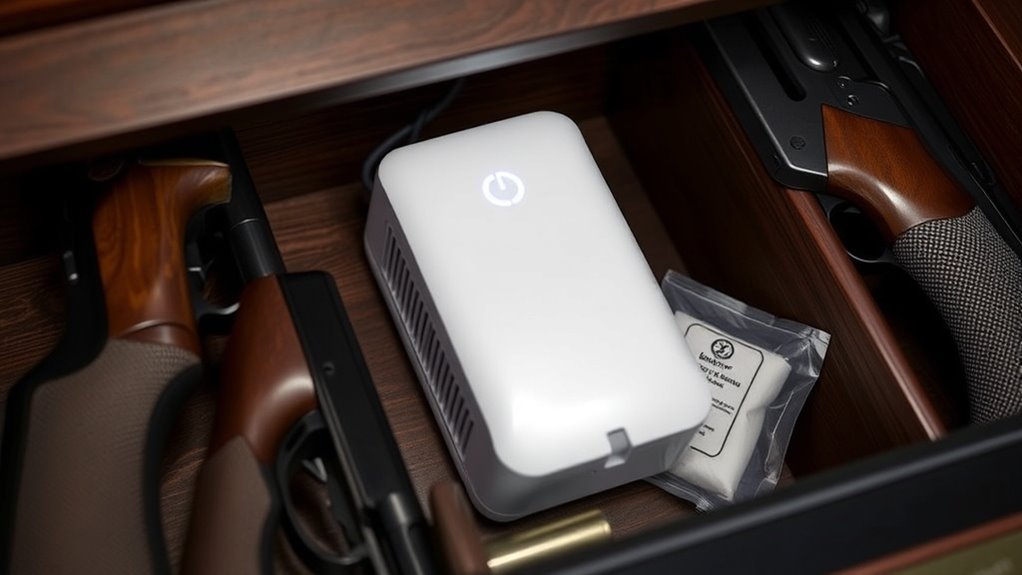
How to Install a Gun Safe Dehumidifier in Five Easy Steps
Many gun owners know the struggle of keeping firearms in perfect condition. Humidity can be a real threat, leading to rust and damage if not managed properly. You’re not alone—many people struggle with maintaining ideal humidity levels inside their gun safes.
To install a gun safe dehumidifier in five easy steps, first make sure your safe is clean, dry, and organized, removing all firearms and accessories.
Measure the interior and choose a suitable dehumidifier that won’t block access.
Place it away from vents and doors for proper airflow and secure it to prevent movement.
Regularly monitor humidity levels with a hygrometer and perform maintenance as needed.
Keep your firearms protected; follow these steps to learn more about ideal humidity control.
Key Takeaways
- Measure the safe’s interior dimensions to find a dehumidifier that fits well and won’t block access or vents.
- Clean and thoroughly dry the inside of the safe before placing the dehumidifier.
- Put the dehumidifier away from doors and vents to ensure even moisture absorption and good airflow.
- Secure the unit so it doesn’t move around, and check that it’s getting power or batteries if needed.
- Keep an eye on humidity levels with a hygrometer and maintain the dehumidifier for ongoing protection.
Why a Dehumidifier Is Essential in Your Gun Safe
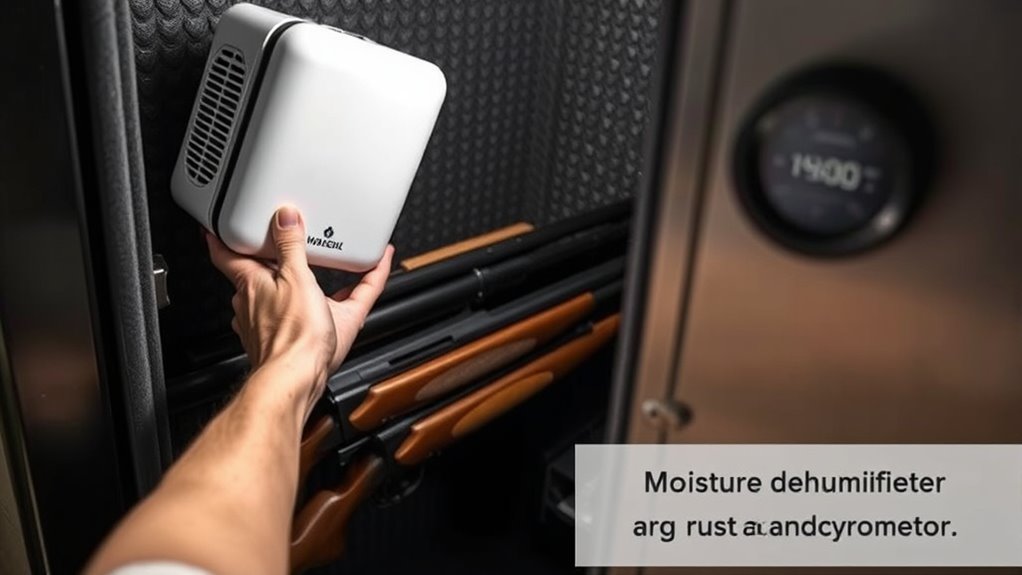
A dehumidifier is essential in your gun safe because moisture can cause rust and corrosion on your firearms over time.
Without proper moisture control, humidity can seep inside, leading to damage that’s costly and hard to fix.
A dehumidifier helps keep the environment consistent by lowering humidity levels, which prevents rust from forming on your guns.
This simple device actively pulls excess moisture from the air, creating a protective barrier around your firearms.
By controlling moisture, you extend the lifespan of your guns and keep them in pristine condition.
Keeping the humidity in check also prevents mold and mildew, which can damage the safe’s interior and your firearm finishes.
Overall, using a dehumidifier in your gun safe is a smart move.
It helps protect your collection and preserves the value and functionality of your firearms over the years.
How to Choose the Right Gun Safe Dehumidifier
When picking out a gun safe dehumidifier, the first thing you want to do is think about the size of your safe. Making sure the unit fits properly is super important so it can do its job effectively.
Next up, you’ll want to decide between a desiccant or an electric dehumidifier. Each type has its own perks, so think about what works best for your setup and how much moisture control you need.
Getting these things right will help keep your guns safe and dry, protecting them from any moisture damage over time.
Size Compatibility Guides
Choosing the right gun safe dehumidifier starts with understanding the size of your safe.
Measure the interior dimensions carefully to determine what capacity you’ll need.
Smaller safes require compact units, while larger ones need higher-capacity dehumidifiers.
Material compatibility is also key; some dehumidifiers are better suited for metal or composite safes, which helps ensure safe operation without damage.
Consider power sources too—some dehumidifiers run on batteries, making them perfect for off-grid safes. Others plug into an outlet.
Make sure the size you select can fit comfortably inside your safe without blocking access or storage.
Proper sizing guarantees efficient moisture control, helping preserve your firearms and gear.
It also prevents over- or under-treatment of humidity levels, keeping everything in good shape.
Type of Dehumidifier
Selecting the right type of dehumidifier depends on how you plan to use your safe and what level of moisture control is necessary. There are different dehumidifier types, including electric, silica gel, and desiccant models, each suited for specific needs.
Electric dehumidifiers are effective for larger safes and continuous use, offering automatic humidity control. Silica gel packs are smaller and work well for casual storage, but they need regular recharging.
Desiccant dehumidifiers absorb moisture without electricity and manage high humidity levels efficiently. Firearm safety is crucial, so pick a dehumidifier that keeps humidity consistently low to prevent corrosion.
Knowing about these types helps you choose the best option for protecting your firearms and keeping your storage safe.
Getting Your Gun Safe Ready for a Dehumidifier
Before installing a dehumidifier, you’ll want to guarantee your gun safe is properly prepared. Start by removing all firearms and accessories, like extra magazines or safe accessories.
Next, give the interior a thorough cleaning to eliminate dust, dirt, or potential mold that could interfere with humidity control.
Check the hinges and locks to make sure they operate smoothly and aren’t trapping moisture.
Finally, ensure the safe is completely dry before moving on.
Choosing the right dehumidifier brand is important, but also consider the size and type suited for your safe.
Once these steps are done, your gun safe will be ready to support the dehumidifier efficiently.
Proper prep helps prevent rust and corrosion, keeping your firearms in top shape.
Making sure your safe is clean, dry, and accessible will give you the best results and keep your valuables protected.
Step-by-Step: Installing a Dehumidifier in Your Gun Safe
To install a dehumidifier in your gun safe, start by placing the unit in a suitable location inside the safe, making certain it’s positioned away from the door and vents for ideal air circulation. This positioning helps maintain consistent humidity levels without obstructing access or airflow.
When choosing where to place the dehumidifier, consider its size and shape to keep the gun safe’s aesthetics clean and organized. You want your dehumidifier to blend seamlessly with your safe’s interior, avoiding clutter or cluttered looks.
Some units come with a sleek design, so select one that complements the overall style of your safe. Once positioned, secure it if necessary to prevent movement. This simple step ensures even moisture absorption and preserves your firearms.
Proper placement balances functionality with aesthetics, keeping your gun safe protected and visually appealing.
Tips for Maintaining Your Dehumidifier for Long-Term Firearm Protection
Maintaining your dehumidifier regularly is essential to guarantee long-term protection for your firearms. Proper upkeep keeps your safe dry, helping prevent rust and corrosion.
To keep your dehumidifier effective and your storage organized, follow these tips:
- Check and replace moisture-absorbing crystals or packs as recommended by the manufacturer. This helps maintain ideal humidity levels for your firearms.
- Clean the dehumidifier’s exterior periodically to prevent dust buildup. It also helps keep it looking tidy and performing well.
- Inspect for signs of mold or corrosion around the unit. Address any issues right away to protect your firearms and keep the interior of your safe in good shape.
- Integrate the dehumidifier seamlessly into your storage setup. Choose a discreet location that doesn’t detract from the look of your gun safe.
Regular maintenance not only prolongs the device’s lifespan but also ensures your firearms stay protected long-term.
Troubleshooting Common Dehumidifier Issues
Dehumidifiers can sometimes have problems that stop them from working properly, but many of these are easy to fix. If you notice a lot of condensation inside your safe, the dehumidifier might not be doing its job right.
First, make sure it’s plugged in and getting power. If it still isn’t working, a sensor could be malfunctioning, leading to incorrect humidity readings and stopping it from running properly. Cleaning or replacing the sensor often helps fix this.
Also, check if the dehumidifier is blocked by dirt or if it’s placed the right way. Poor airflow can cause issues. If it runs all the time but doesn’t reduce moisture, the hygrometer might be faulty or the fan could be broken.
Lastly, look for leaks or cracks in the casing. Fixing these common problems can bring your dehumidifier back to full efficiency and keep your firearms dry and protected.
How to Monitor Humidity Levels in Your Gun Safe
To keep your gun safe properly protected, it’s really important to keep an eye on the humidity levels inside. A good way to do that is by using a hygrometer—it’s a simple little device that tells you exactly how much moisture is sitting inside the safe.
Try to keep the humidity somewhere between 30% and 50%. Staying within this range helps prevent rust and corrosion on your firearms, so they stay in great shape for years to come.
Using a Hygrometer
- Place the hygrometer at eye level inside your safe so you can easily see the readings.
- Check it regularly to spot any sudden spikes in humidity.
- Keep a record of the measurements to notice trends over time.
- If the levels go beyond what’s acceptable, adjust your dehumidifier or other moisture control measures accordingly.
Ideal Humidity Range
Monitoring the humidity levels inside your gun safe helps ensure your firearms and valuables stay protected from moisture damage. The ideal humidity range is typically between 30% and 50%.
If the humidity gets too high, you risk rust, mold, and corrosion. On the other hand, if it’s too low, wood components can crack. Climate change makes humidity levels more variable, so regular checks are more important than ever.
Maintaining stable humidity also helps prevent fires by reducing moisture-related damage that can compromise your gun safe’s integrity. Using a hygrometer to track these levels lets you adjust your dehumidifier as needed.
Staying within this suitable range keeps your guns in top condition and protects your investment from environmental fluctuations and moisture issues. Consistent monitoring makes sure your safe remains reliable and effective over time.
Alternative Ways to Control Humidity in Your Gun Safe
If you’re looking for alternative ways to control humidity in your gun safe, there are several effective methods beyond using dehumidifiers. You can consider the following options:
- Battery powered options: Use rechargeable or replaceable battery-powered dehumidifiers that run quietly and can be placed discreetly inside your safe. They’re portable and don’t require an external power source.
- Chemical absorption: Use silica gel packets or other desiccants that absorb moisture from the air. Regularly replacing or recharging the packets keeps humidity levels in check.
- Ventilation: Properly ventilate the safe by adding small vents or air holes, promoting airflow and preventing excess moisture buildup.
- Climate Control: Maintain a stable environment outside the safe by keeping the room humidity low. This naturally reduces moisture ingress.
These methods serve as practical alternatives to traditional dehumidifiers, especially in situations requiring portable or maintenance-free solutions.
Safety Tips for Installing Your Gun Safe Dehumidifier
When you’re installing your gun safe dehumidifier, it’s really important to wear the right safety gear—things like gloves and safety glasses. It helps protect you from any accidental scrapes or spills.
And don’t forget to carefully follow the instructions that come with it; that way, you’re less likely to run into any problems.
Oh, and be sure to keep the dehumidifier out of children’s reach. Safety first, right?
Use Proper Safety Gear
Before you start installing your gun safe dehumidifier, it’s important to wear the right safety gear.
Protect yourself by following these steps:
- Slip on safety gloves to avoid cuts or scrapes when handling or installing the dehumidifier.
- Wear protective eyewear to keep dust, debris, or splashes out of your eyes.
- Make sure you’re wearing sturdy, closed-toe shoes to prevent injury if you accidentally drop tools.
- If you’re working in a dusty area, consider using a dust mask to protect your lungs.
These safety precautions help lower the risk of injuries and make the job easier. Always double-check your gear before you start, and stay attentive throughout the process. Following proper safety measures keeps you safe and ensures the installation goes smoothly.
Follow Manufacturer Instructions
To guarantee a safe and effective installation, always follow the manufacturer’s instructions carefully. Properly installing your dehumidifier ensures *adequate* control of humidity levels and helps prevent moisture buildup inside your gun safe.
Each unit may have specific needs for placement, power supply, and operation. Ignoring these instructions could cause the dehumidifier to not work properly or even get damaged. Pay close attention to recommended distances from walls or other objects, and check for warnings about overfilling or maintenance needs.
Following these guidelines helps maximize moisture absorption and keeps excess humidity at bay. This reduces the risk of rust forming on your firearms. Reading and sticking to the manufacturer’s instructions guarantees the best performance and keeps your safe’s contents protected.
Keep Away From Children
Have you thought about how important it is to keep your gun safe and its dehumidifier out of children’s reach? Child safety should always come first.
Make sure to always secure your safe with reliable lock mechanisms. Here are some essential tips to help you do that:
- Use high-quality locks that are designed to prevent tampering.
- Keep the dehumidifier inside a locked safe or cabinet.
- Place the safe somewhere children can’t access, like a locked closet or basement.
- Regularly check that the locks are working properly and secure.
Enhance Firearm Preservation With Proper Humidity Control
Maintaining proper humidity levels inside your gun safe is essential for preserving your firearms’ condition over time. Controlling humidity helps prevent rust, corrosion, and other damage that can harm your guns.
Proper humidity also keeps your storage organized, so firearms and accessories stay in good shape and are easy to find. Aim for a relative humidity of around 40-50%, which reduces moisture buildup without encouraging mold.
Using a dehumidifier or moisture absorber ensures consistent control, even in humid environments. Regularly checking humidity levels helps you catch potential issues early.
When your firearms are stored in a stable environment, they remain functional and look good for years. Good humidity regulation supports your overall gun maintenance routine, prolonging the life of your guns and maintaining their value.
An organized safe and regular humidity management make firearm preservation simple and effective.
Frequently Asked Questions
Can I Use a Household Dehumidifier in My Gun Safe?
You should avoid using a household dehumidifier in your gun safe because it may not be designed for safe security and might cause damage or inefficiency. Instead, go for a specialized safe dehumidifier that helps protect your firearms during routine maintenance while preventing rust.
Using the right dehumidifier makes sure your firearm collection stays in top shape. It also enhances your safe’s security by reducing excess moisture that can lead to corrosion.
How Often Should I Replace or Recharge the Dehumidifier?
You should replace or recharge your dehumidifier based on its moisture absorption lifespan, which varies by model and humidity levels. Regular maintenance helps keep it working well.
Check the indicators or refill/recharge as recommended, often every few months.
Watch out for signs like increased moisture or musty smells. These can mean it’s time to take action.
Staying attentive will help you maintain a dry environment, protecting your firearms and ensuring your dehumidifier stays effective.
Is It Safe to Install a Dehumidifier Near Firearms?
Yes, it’s safe to install a dehumidifier near firearms when you follow the manufacturer’s instructions. This helps prevent firearm corrosion and keeps your guns in good shape.
Place the dehumidifier where it won’t physically touch your firearms and make sure there’s proper ventilation. This way, you avoid any accidental damage and keep the environment safe.
Regularly check humidity levels to maintain an ideal environment for your guns. With the right setup, a dehumidifier can protect your firearms effectively without causing safety concerns.
What Size Dehumidifier Is Suitable for Different Safe Sizes?
Choosing the right dehumidifier size depends on your safe’s dimensions and how much moisture you need to control. Don’t worry about over- or under-sizing.
Small safes need compact, desiccant or electronic dehumidifiers, while larger safes benefit from bigger, continuous models. Different dehumidifier types offer varied moisture control options.
Pick one that fits your safe’s size to prevent mold and corrosion. This way, your firearms stay protected and in good condition.
Do Dehumidifiers Emit Any Harmful Fumes or Odors?
Dehumidifiers typically don’t emit harmful fumes or strong odors, so they are generally safe for your gun safe.
However, some models might produce a mild plastic or chemical smell at first, but this usually disappears quickly.
If you notice persistent odors or fumes, check if you’re using a low-quality unit or consider one with activated carbon filters.
Always pick a dehumidifier designed for enclosed spaces and follow the manufacturer’s instructions to reduce any risk of fumes.
Conclusion
Maintaining the right humidity in your gun safe is essential. You’re 40% more likely to experience corrosion without proper moisture control.
By following these five simple steps to install a dehumidifier, you’re actively protecting your firearms from rust and damage. Regular monitoring and maintenance are key to long-term preservation.
Take control now. Your firearms deserve the best care to stay in pristine condition for years to come. Using a gun safe dehumidifier helps ensure they’re protected from moisture and corrosion over time.